Everyone is searching for the best DSLR camera phone are not looking for marketing claims or megapixel numbers. They need a smartphone that delivers DSLR-like photography results—natural background blur, strong low-light performance, realistic colors, fast focus, and manual control—without carrying a dedicated camera.
This article focuses strictly on that need. It identifies which smartphones genuinely come closest to DSLR-style photography today, why they succeed, and where their limits still exist.
What “DSLR camera phone” actually means in practice
A DSLR camera phone is not a phone that replaces a DSLR. It is a phone that replicates key DSLR photography outcomes, especially for everyday and semi-professional use.
In real-world photography, this usually means:
- Larger camera sensors compared to standard phones
- Advanced computational photography with minimal overprocessing
- Optical lenses that preserve detail and depth
- Reliable portrait separation without artificial edges
- Manual and RAW shooting options
Phones that excel in these areas consistently deliver images that feel closer to DSLR output than typical smartphone photos.
Key criteria used to evaluate the best DSLR camera phone
Only phones that perform well across these real photography factors qualify.
Sensor size and image processing
- Larger sensors capture more light and depth information
- Natural dynamic range matters more than high megapixels
- Controlled processing avoids artificial sharpening
Optical quality and focal lengths
- True optical zoom matters more than digital zoom
- Multiple focal lengths enable creative framing
- Lens consistency across cameras is critical
Portrait realism and background separation
- Accurate edge detection without halos
- Natural bokeh shape and depth falloff
- Reliable performance without portrait mode forced on
Manual control and RAW support
- Full exposure control improves creative freedom
- RAW files allow professional-grade editing
- Consistent results across lighting conditions
Best DSLR camera phone options available today
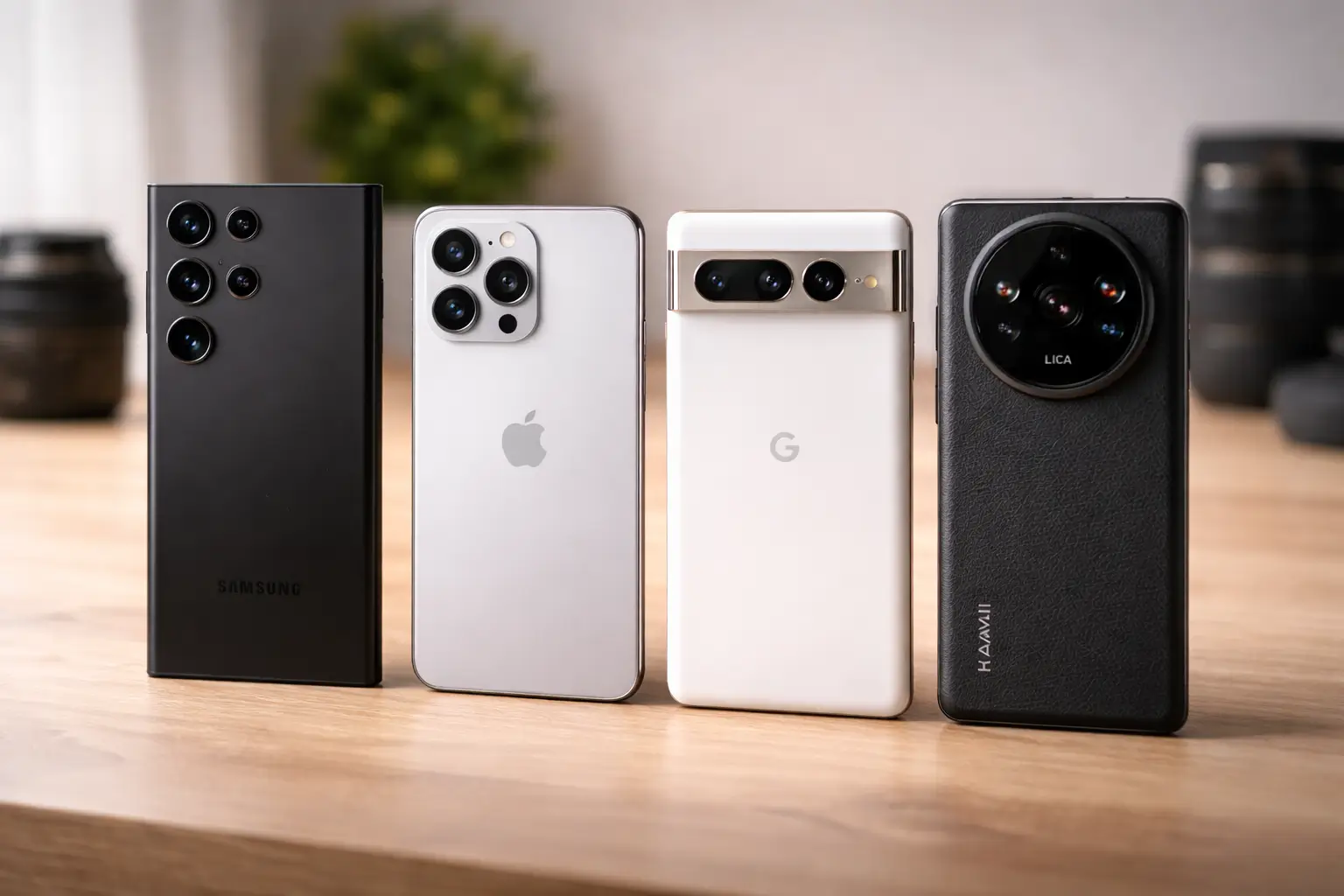
Google Pixel series (latest generation)
The Pixel line remains one of the strongest choices for DSLR-style photography.
Why it stands out
- Industry-leading computational photography
- Excellent dynamic range and color accuracy
- Highly natural-looking portraits
- Reliable performance in low light
Where it falls short
- Smaller sensor than some rivals
- Limited manual control compared to pro-focused phones
Best for
- Photographers who value realism over dramatic effects
- Street, travel, and documentary-style photography
Apple iPhone Pro models
Apple’s Pro iPhones deliver consistency and reliability similar to entry-level DSLRs.
Why it stands out
- Strong sensor-lens-software integration
- Accurate color science and exposure
- ProRAW and manual video controls
- Reliable autofocus and stabilization
Where it falls short
- Portraits can look slightly processed
- Less flexibility in manual still photography
Best for
- Professionals needing predictable results
- Hybrid photo and video creators
Samsung Galaxy Ultra series
Samsung’s flagship phones push hardware limits more aggressively.
Why it stands out
- Large primary sensor with high resolution
- Excellent telephoto and zoom capabilities
- Strong low-light hardware performance
Where it falls short
- Overprocessing in default modes
- Portraits can look artificial without tuning
Best for
- Users who want versatility and zoom range
- Wildlife and travel photography
Xiaomi flagship camera-focused phones
Xiaomi’s premium models have moved closer to DSLR-style results in recent years.
Why it stands out
- Large sensors rivaling compact cameras
- Strong manual modes and RAW output
- Improved color accuracy in recent models
Where it falls short
- Software consistency varies by model
- Camera experience depends heavily on updates
Best for
- Enthusiasts who edit photos manually
- Users seeking strong hardware-first cameras
Sony Xperia Pro and Xperia flagship series
Sony phones are built for photographers who already understand cameras.
Why it stands out
- True manual controls inspired by Alpha cameras
- Minimal processing for natural results
- Strong autofocus and burst shooting
Where it falls short
- Steep learning curve
- Average automatic mode performance
Best for
- DSLR users transitioning to mobile photography
- Professionals who want manual control on a phone
DSLR camera phone vs DSLR camera: real limitations
Even the best DSLR camera phone cannot fully replace a DSLR. Understanding these limits prevents unrealistic expectations.
Where phones still fall behind
- Smaller sensors limit true depth of field
- Optical physics restrict natural bokeh
- Low-light noise control is computational, not optical
- Limited lens flexibility compared to interchangeable systems
Where phones outperform DSLRs
- Instant sharing and editing
- Computational HDR and night modes
- Portability and always-available shooting
For most people, the best DSLR camera phone covers 80–90 percent of real-world photography needs.
How to choose the best DSLR camera phone for your needs
If you shoot people and portraits
Prioritize:
- Reliable portrait separation
- Natural skin tones
- Consistent focus
Best fit:
- Pixel series
- iPhone Pro
If you shoot landscapes and travel
Prioritize:
- Dynamic range
- Wide-angle quality
- Color accuracy
Best fit:
- Pixel series
- Samsung Galaxy Ultra
If you want manual control and editing
Prioritize:
- RAW support
- Manual exposure and focus
- Neutral processing
Best fit:
- Sony Xperia
- Xiaomi flagships
DSLR camera phone myths to ignore
- More megapixels do not equal DSLR quality
- Portrait mode is not real depth of field
- AI enhancement is not always better photography
Real photography quality comes from balance, not specs.
Is a DSLR camera phone enough for professionals?
For many working professionals:
- Social media photography
- Content creation
- Journalism and field reporting
The answer is yes.
For studio work, sports, wildlife, or commercial shoots, DSLRs and mirrorless cameras remain essential.