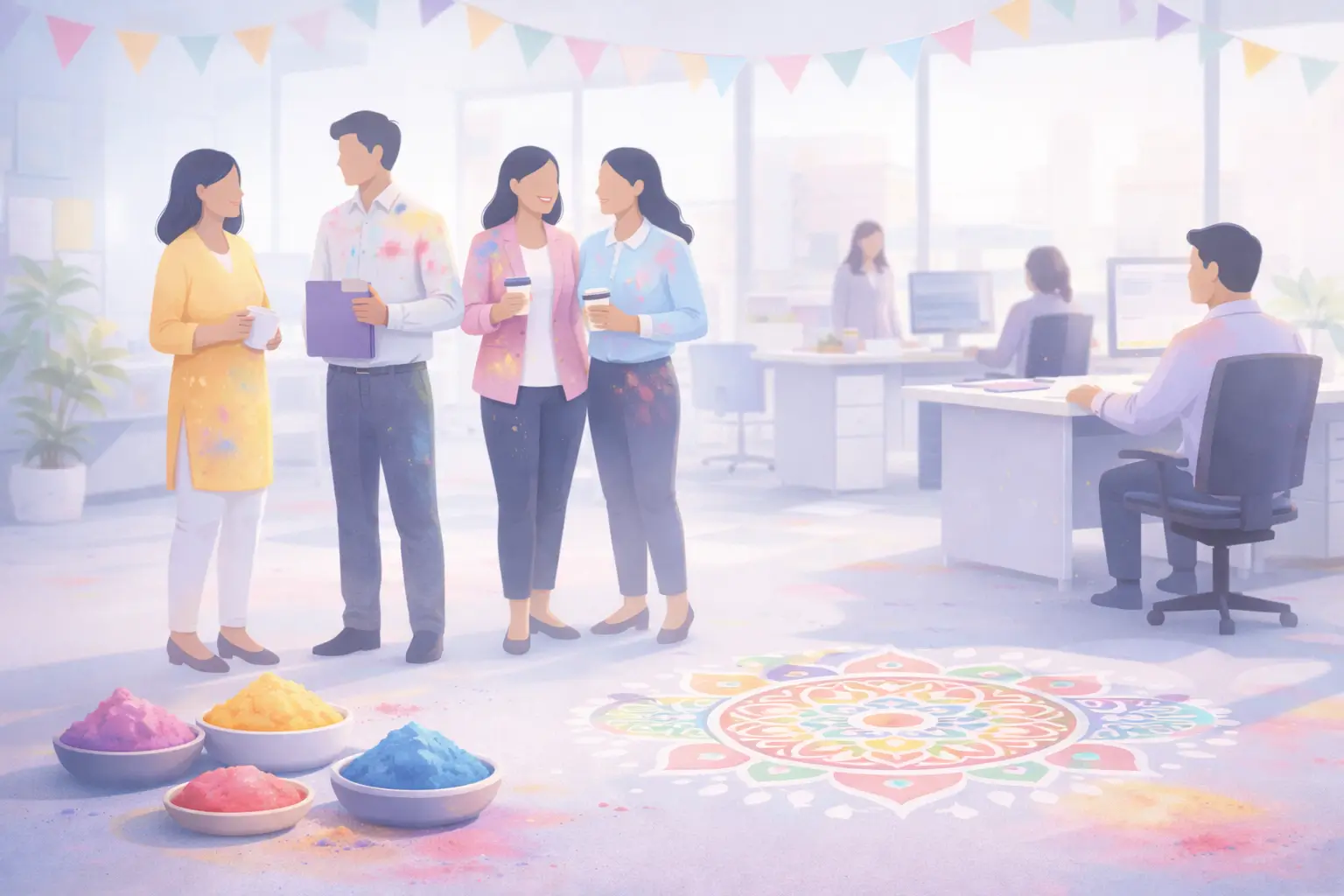
Holi in the workplace has changed. What was once a casual exchange of sweets or colors has become a more thoughtful, structured activity shaped by modern office culture, diverse teams, and evolving expectations around consent and professionalism. Today, a holi celebration in office is less about loud festivity and more about shared culture, respect, and inclusion.
This matters now because offices are no longer uniform spaces. Teams are multicultural, hybrid, and sensitive to personal boundaries. Celebrating Holi well can strengthen morale and belonging. Doing it poorly can create discomfort, HR complaints, or reputational issues. This guide explains how modern workplaces approach Holi—what works, what doesn’t, and why the details matter.
Why Holi Celebration in Office Needs a Modern Approach
In traditional settings, Holi is spontaneous and expressive. Offices, however, operate under different social rules. A modern holi celebration in office balances cultural expression with workplace norms.
Three shifts have changed how offices celebrate Holi:
- Diverse teams: Not everyone celebrates Holi, and not everyone celebrates it the same way.
- Professional boundaries: Physical contact, forced participation, or disruptive behavior are no longer acceptable.
- Hybrid work culture: With remote and hybrid teams, celebrations must adapt beyond physical presence.
Modern offices that acknowledge these realities tend to see higher participation and fewer issues.
What Employees Actually Expect From Holi in Office
Contrary to popular belief, most employees do not expect a full-scale festival at work. They usually look for:
- Recognition of the festival, not obligation
- A positive, relaxed atmosphere
- Inclusion without pressure
- Minimal disruption to work
- Respect for personal comfort
Understanding this expectation is the foundation of a successful holi celebration in office.
The Do’s of a Modern Holi Celebration in Office
1. Keep Participation Voluntary
Participation should always be optional. Some employees may not celebrate Holi for personal, cultural, or health reasons.
Best practices:
- Use language like “optional” and “voluntary” in internal communication
- Avoid singling out non-participants
- Never link participation to team spirit or performance
Voluntary participation builds trust and genuine engagement.
2. Focus on Symbolic, Non-Messy Celebrations
Modern offices increasingly prefer symbolic Holi celebrations over traditional color play.
Office-friendly options include:
- Floral petals instead of powdered colors
- Color-themed dress codes
- Rangoli-making corners
- Decorative elements in common areas
This approach keeps the festive spirit while respecting the work environment.
3. Be Mindful of Physical Boundaries
One of the most critical aspects of holi in office is respecting physical boundaries.
Do:
- Avoid applying colors directly to colleagues
- Discourage hugging or physical play
- Clearly communicate acceptable behavior
Even well-intentioned actions can feel uncomfortable in a professional setting.
4. Prioritize Inclusivity
A modern holi celebration in office should feel welcoming, not exclusive.
Ways to promote inclusivity:
- Explain the cultural significance briefly for non-celebrants
- Include food, music, or activities that everyone can enjoy
- Avoid religious rituals that may exclude some employees
Inclusivity does not dilute tradition; it broadens participation.
5. Set Clear Guidelines in Advance
Clear communication prevents confusion and issues.
Guidelines should cover:
- Time and duration of celebration
- Dress code expectations
- Activities planned
- What is not allowed
Circulating these details in advance signals professionalism and foresight.
6. Align With Workplace Policies
Any holi celebration in office should align with existing HR, POSH, and conduct policies.
Ensure that:
- Harassment policies are reiterated
- Safety and hygiene standards are followed
- Managers are briefed on their role
This protects both employees and the organization.
7. Keep It Time-Bound
Office celebrations should enhance the workday, not derail it.
Recommended approach:
- Celebrate during lunch hours or designated breaks
- Avoid extending festivities into core working hours
- Respect deadlines and workload realities
Short, well-planned celebrations are more appreciated than long disruptions.
The Don’ts of Holi Celebration in Office
1. Don’t Force Festive Participation
Forcing employees to participate—directly or indirectly—is one of the most common mistakes.
Avoid:
- Mandatory attendance
- Peer pressure framed as “team bonding”
- Publicly questioning non-participants
Forced celebration often leads to resentment, not unity.
2. Don’t Use Harmful Colors or Liquids
Traditional colors may cause allergies, stains, or safety issues.
Never allow:
- Chemical colors
- Water balloons or water guns
- Anything that could damage property or clothing
Modern holi in office celebrations should always prioritize safety and comfort.
3. Don’t Ignore Cultural Sensitivities
Jokes, comments, or behavior that may seem harmless can offend others.
Examples to avoid:
- Stereotyping how Holi is “supposed” to be celebrated
- Mocking cultural practices
- Assuming everyone is familiar with the festival
Sensitivity is essential in multicultural workplaces.
4. Don’t Turn It Into a Party Atmosphere
An office is not a festival ground.
Avoid:
- Loud music disrupting work
- Alcohol, even informally
- Behavior that blurs professional boundaries
A restrained, respectful tone ensures the celebration remains appropriate.
5. Don’t Leave Managers Unprepared
Managers play a key role in setting the tone.
Problems arise when:
- Managers are unclear about expectations
- No one intervenes in inappropriate behavior
- Responsibility is diffused
Leadership presence ensures accountability and comfort.
How HR Teams Usually Structure Holi in Office
From experience across corporate environments, HR-led holi celebration in office initiatives often follow a clear structure:
- Pre-event communication outlining scope and rules
- Optional sign-ups or open invitation
- Designated celebration space
- Non-intrusive activities
- Clear end time
This structure minimizes confusion and maximizes participation.
Holi Celebration in Office for Hybrid and Remote Teams
With hybrid work becoming common, traditional celebrations can exclude remote employees.
Modern solutions include:
- Virtual Holi-themed team calls
- Digital greeting cards or internal messages
- Online contests (art, photography, color-themed attire)
- Company-wide acknowledgments
These approaches ensure that holi in office is inclusive, regardless of location.
Benefits of Doing It Right
A thoughtfully planned holi celebration in office can:
- Strengthen team bonding
- Reinforce inclusive workplace culture
- Improve employee morale
- Show cultural awareness
- Enhance employer brand internally
These benefits only materialize when the celebration respects boundaries and diversity.
Common Misconceptions About Holi in Office
“Holi must involve colors”
Not in offices. Symbolic celebration is widely accepted and often preferred.
“Everyone enjoys festive chaos”
Many employees value calm, respectful environments.
“Skipping Holi means lack of team spirit”
Participation choices should never be equated with engagement or loyalty.
FAQ: Holi Celebration in Office
Is it appropriate to celebrate Holi in office?
Yes, if it is inclusive, voluntary, and aligned with workplace policies.
Can offices allow playing with colors?
Most modern offices avoid direct color play due to safety and comfort concerns.
How long should a Holi celebration in office last?
Ideally 30–60 minutes during breaks or lunch hours.
Should managers participate in Holi celebrations?
Managers should be present to support and set behavioral standards, even if they don’t actively participate.
How can HR ensure inclusivity during Holi?
By making participation optional, explaining context, and offering non-religious activities.
Is it okay to skip Holi celebration in office?
Yes. No employee should feel pressured to participate.
What is the safest way to celebrate Holi at work?
Through symbolic gestures like decor, sweets, messages, or themed activities.
Conclusion
A modern holi celebration in office is not about recreating the festival exactly as it is celebrated outside. It is about acknowledging culture while respecting professionalism, diversity, and personal boundaries. When done thoughtfully, Holi at work can be warm, inclusive, and meaningful. When done carelessly, it can create discomfort and risk.
The difference lies in planning, communication, and empathy.
Disclaimer
This article provides general guidance based on common workplace practices. Organizations should always follow their internal policies, legal requirements, and cultural context when planning office celebrations.