Astrology works on patterns that connect planetary motion with lived experience. At the center of that framework sits the ruling planet—the celestial body traditionally associated with each zodiac sign. This association is not symbolic decoration; it is a working principle used by astrologers to interpret temperament, motivation, timing, and decision-making tendencies. Understanding planetary rulership provides a practical lens for reading charts with consistency and context.
This guide explains how planetary rulership functions today, how it is applied sign by sign, and where its usefulness is strongest—without mysticism, hype, or oversimplification.
What a Ruling Planet Represents in Astrology
A ruling planet is the primary planetary influence assigned to a zodiac sign. It acts as a governing force, shaping how a sign expresses energy, processes challenges, and responds to opportunity.
In practice, planetary rulership helps answer questions such as:
- Why two people with the same Sun sign behave differently
- Why certain signs share similar strengths or struggles
- How planetary cycles influence mood, productivity, and focus
Astrologers use rulership as an interpretive anchor, particularly when analyzing a birth chart, assessing planetary influence, or evaluating zodiac compatibility. The system blends classical astrology with modern refinements, retaining structure while allowing flexibility.
How Planetary Rulership Developed and Evolved
The concept of rulership predates modern astrology. Early astrologers matched visible planets to zodiac signs based on observable qualities—speed, brightness, cycles, and perceived temperament. Over time, outer planets were discovered and gradually integrated, adding layers rather than replacing tradition.
Today’s practice balances:
- Traditional rulers (used for centuries)
- Modern co-rulers (used for psychological and generational insight)
This dual approach is common in professional chart interpretation and reflects current editorial consensus across astrology disciplines.
Ruling Planet by Zodiac Sign
Aries — Mars
Mars governs action, initiative, and raw drive. Aries reflects Mars’ decisive and competitive qualities.
- Strengths: courage, leadership, speed
- Challenges: impulsiveness, impatience
- Mars influence favors direct action and independence

Taurus — Venus
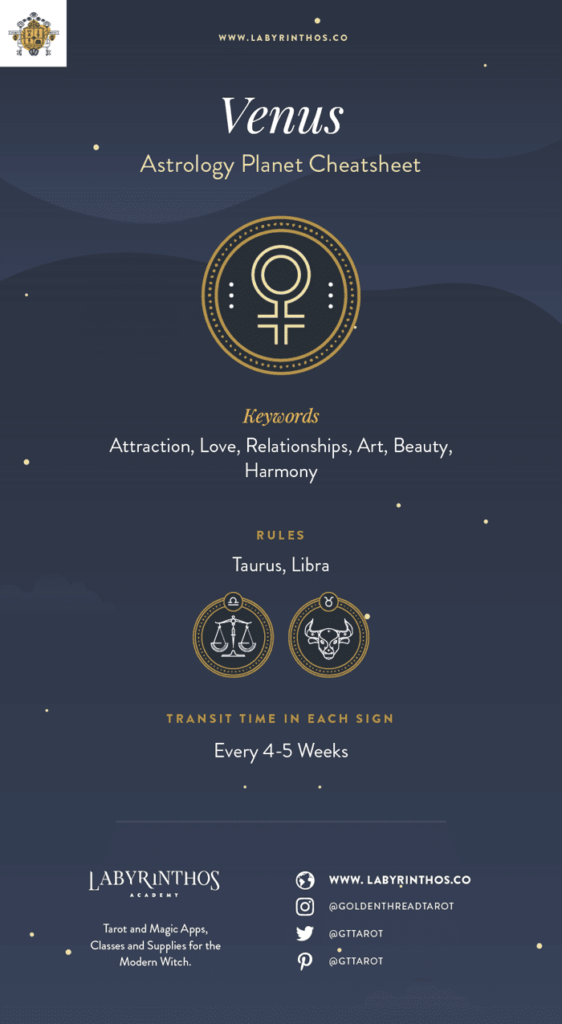
Venus rules value, comfort, and attraction. Taurus expresses Venus through stability and material awareness.
- Strengths: reliability, sensuality, persistence
- Challenges: resistance to change, possessiveness
- Venus influence emphasizes security and enjoyment
Gemini — Mercury
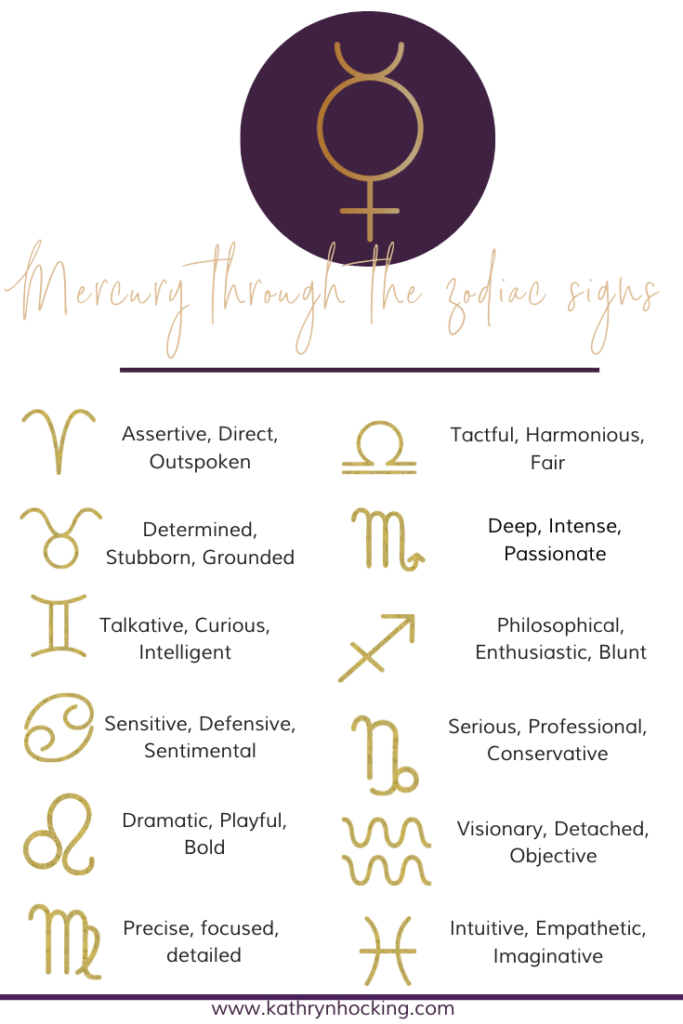
Mercury governs communication, learning, and adaptability. Gemini channels mental agility and curiosity.
- Strengths: versatility, intelligence, articulation
- Challenges: inconsistency, overthinking
- Mercury influence supports networking and information flow

Cancer — Moon
The Moon governs emotion, instinct, and memory. Cancer reflects sensitivity and protective awareness.
- Strengths: empathy, loyalty, intuition
- Challenges: mood fluctuation, emotional withdrawal
- Lunar influence ties behavior closely to environment

Leo — Sun
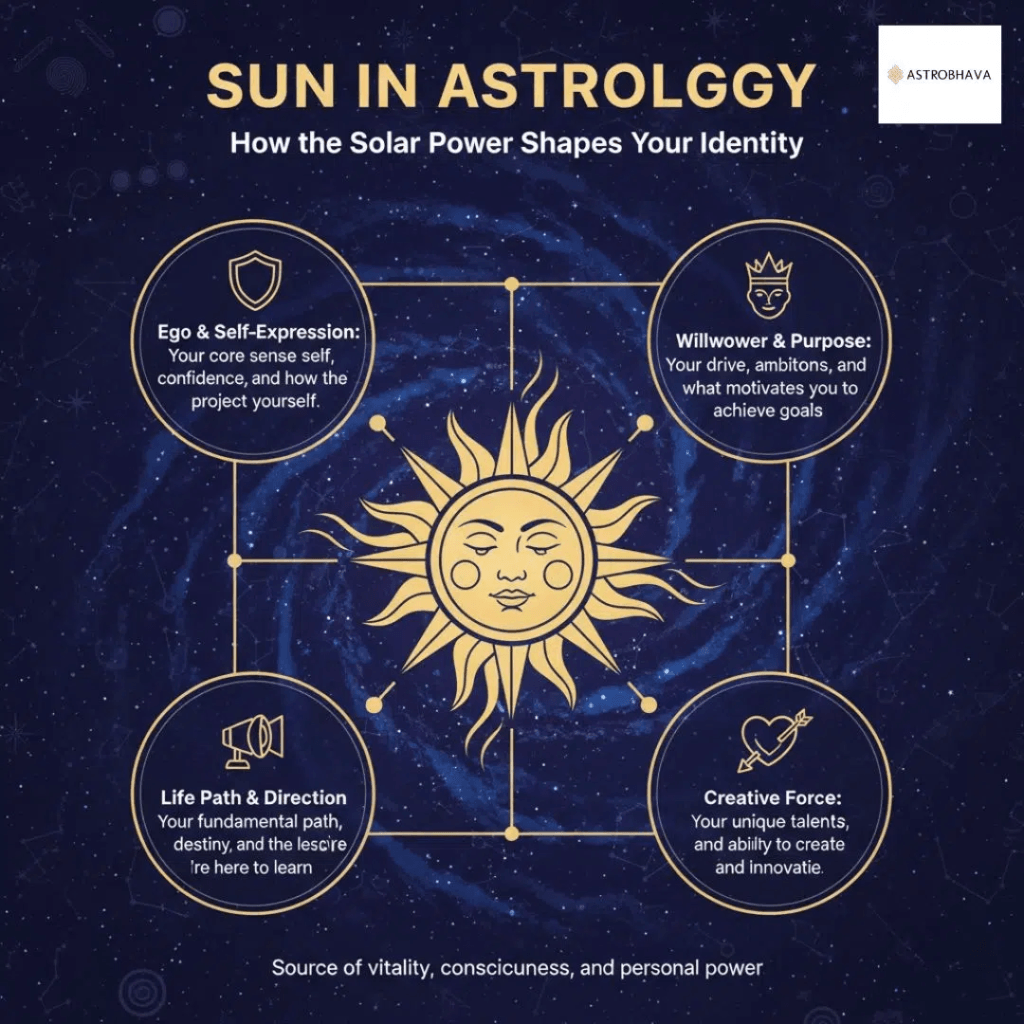
The Sun represents identity, vitality, and creative expression. Leo embodies confidence and visibility.
- Strengths: charisma, leadership, generosity
- Challenges: ego sensitivity, need for recognition
- Solar influence centers on purpose and presence
Virgo — Mercury
Mercury also rules Virgo, expressed through precision and analysis rather than speed.
- Strengths: organization, discernment, service
- Challenges: perfectionism, worry
- Mercury influence supports problem-solving and efficiency
Libra — Venus
Venus governs Libra through harmony, aesthetics, and fairness.
- Strengths: diplomacy, balance, social intelligence
- Challenges: indecision, conflict avoidance
- Venus influence prioritizes relationships and proportion

Scorpio — Mars (traditional), Pluto (modern)
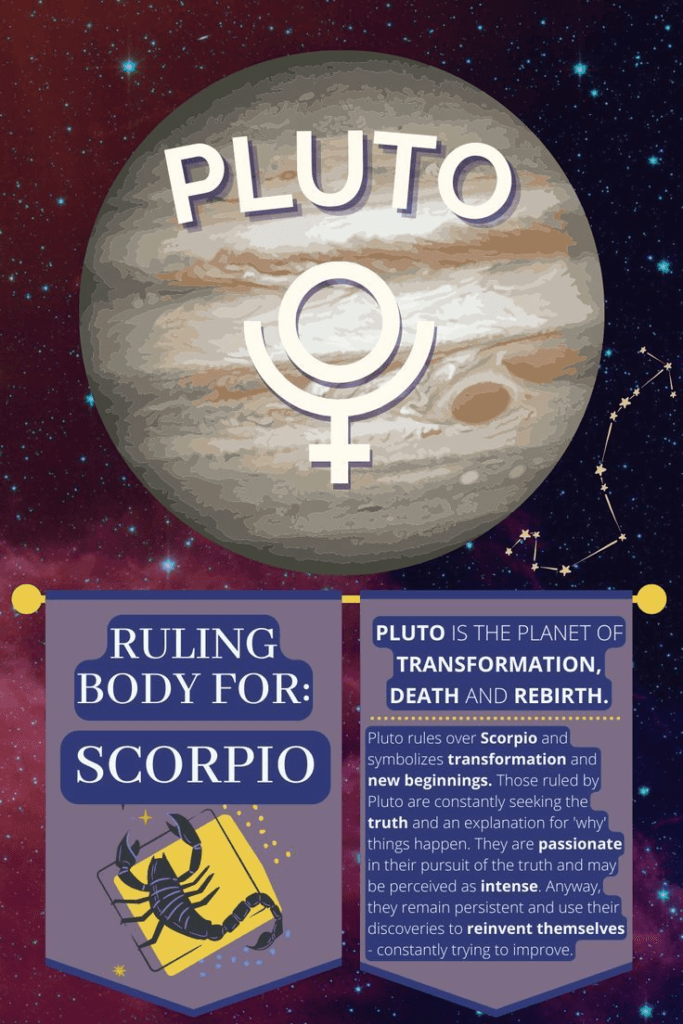
Scorpio blends intensity and transformation.
- Strengths: focus, resilience, depth
- Challenges: control issues, secrecy
- Mars drives determination; Pluto adds psychological power
Sagittarius — Jupiter
Jupiter governs growth, belief, and exploration.
- Strengths: optimism, learning, vision
- Challenges: excess, restlessness
- Jupiter influence supports expansion and meaning

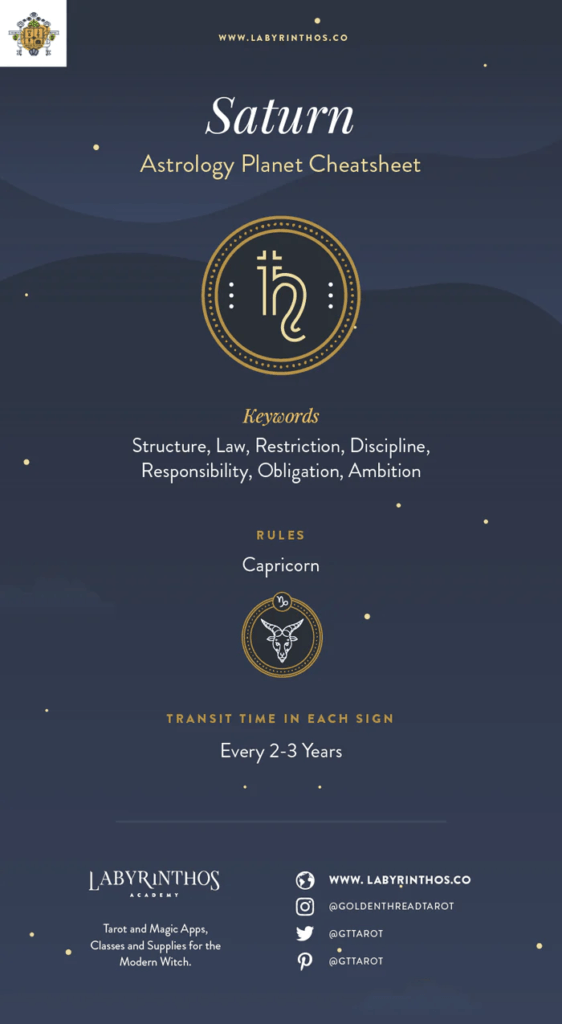
Capricorn — Saturn
Saturn rules structure, discipline, and responsibility.
- Strengths: endurance, leadership, realism
- Challenges: rigidity, pressure
- Saturn influence emphasizes long-term results
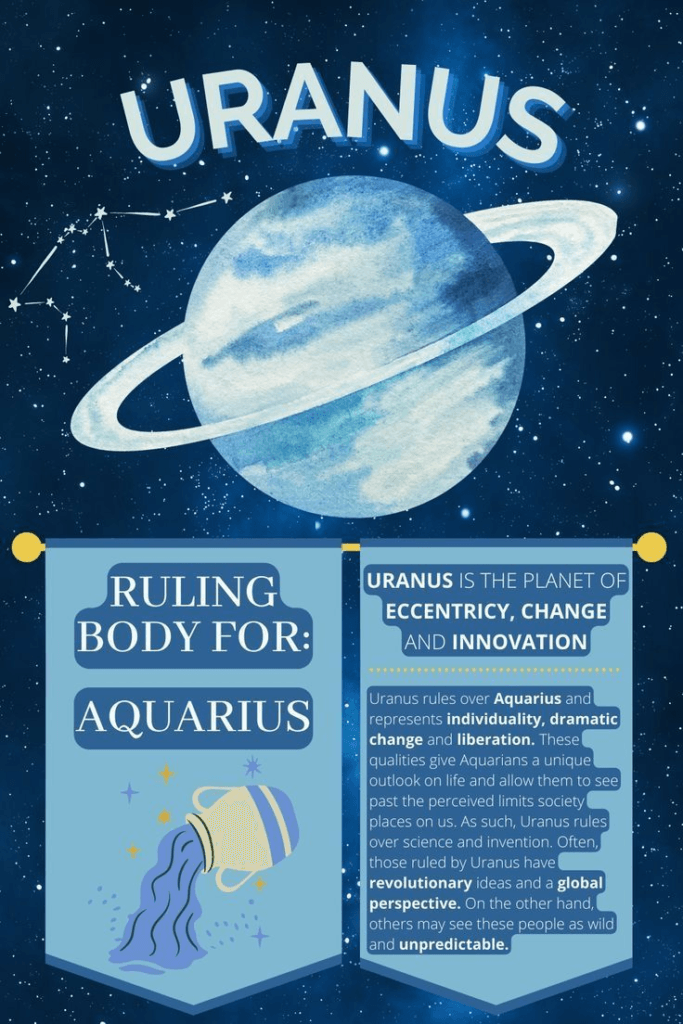
Aquarius — Saturn (traditional), Uranus (modern)
Aquarius merges tradition with innovation.
- Strengths: originality, objectivity, progress
- Challenges: detachment, unpredictability
- Uranus introduces change; Saturn adds structure
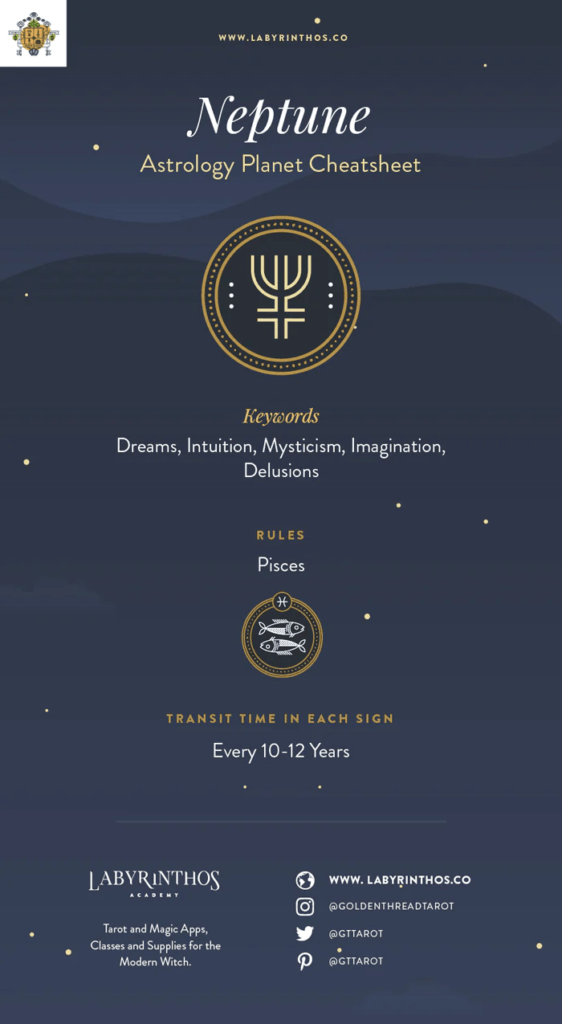
Pisces — Jupiter (traditional), Neptune (modern)
Pisces reflects imagination and sensitivity.
- Strengths: compassion, creativity, intuition
- Challenges: escapism, lack of boundaries
- Neptune shapes spirituality; Jupiter provides meaning
How Ruling Planets Are Used in Real Chart Interpretation
In applied astrology, rulership extends beyond Sun signs. Professionals assess:
- Chart ruler: the planet ruling the Ascendant
- Planetary dignity: how comfortable a planet is in a sign
- Transit analysis: how current planetary motion activates natal rulers
This approach adds depth without complexity overload and is widely used in horoscope analysis, astrological houses, and planetary transits interpretation.
Limits of Ruling Planets—and Why They Still Matter
Rulership is not predictive on its own. It does not override:
- Personal choice
- Cultural context
- Life experience
However, it offers a consistent interpretive baseline. Used responsibly, it clarifies tendencies rather than defining outcomes—an important distinction in ethical astrology.
Disclaimer
This article is intended for informational and educational purposes only. Astrological interpretations vary by tradition and should be viewed as reflective tools rather than factual or predictive certainty.