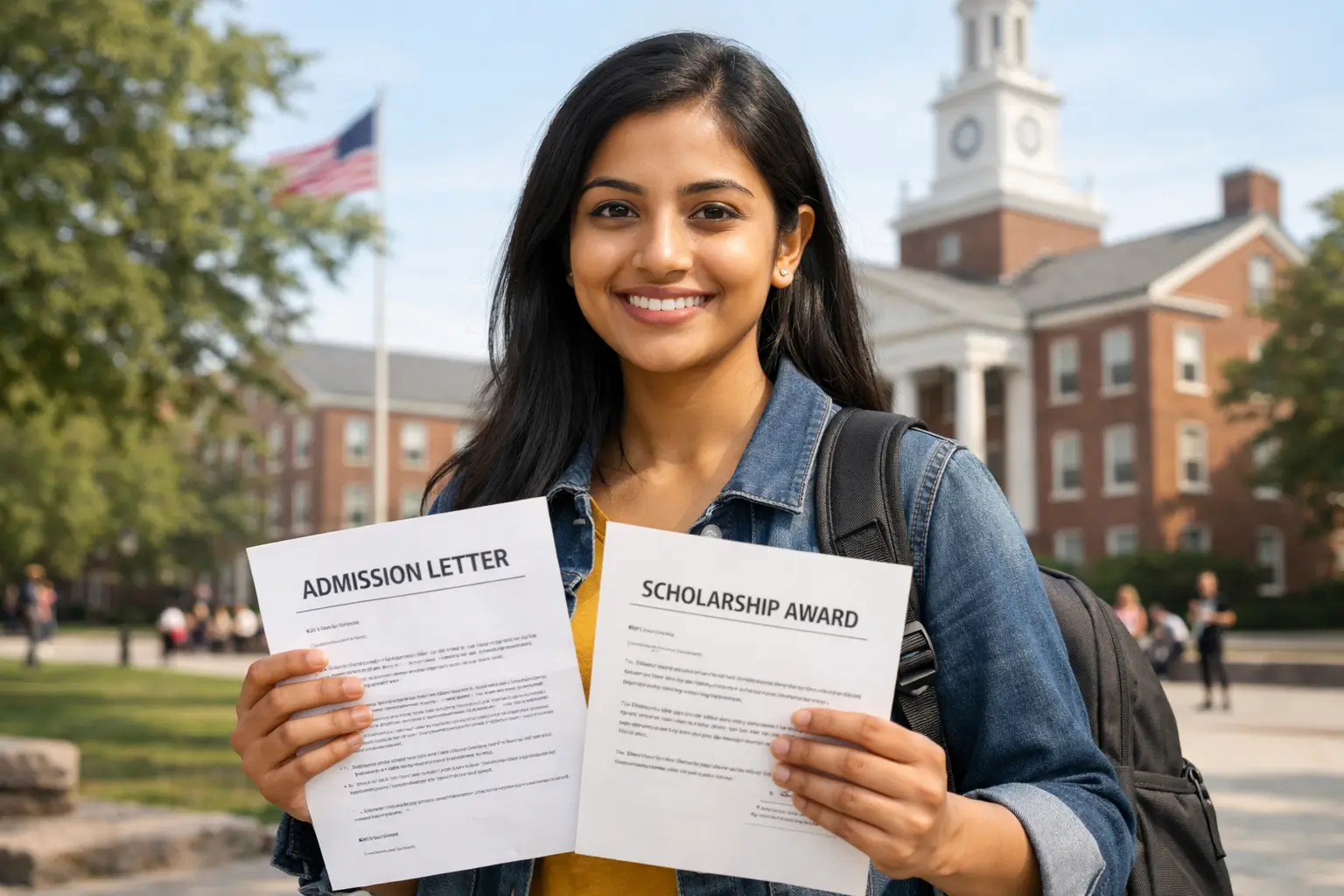
For thousands of Indian students every year, studying in the United States represents more than an academic ambition. It is a pathway to global exposure, advanced research, and long‑term career mobility. Yet, the cost of tuition, living expenses, health insurance, and standardized testing often becomes the single largest barrier.
This is where a well‑chosen scholarship for Indian students in USA can transform an impossible dream into a realistic plan. Beyond financial relief, scholarships signal academic merit, leadership promise, and institutional trust—qualities that matter deeply in American admissions and visa processes.
In this guide, you will find a practical, experience‑based explanation of how scholarships work, what types are available, who qualifies, and—most importantly—how to apply successfully without costly mistakes.
Why Scholarships Matter for Indian Students in the USA
The United States hosts more than 200,000 Indian students annually, making India one of the largest international student communities in American universities. However, average annual costs range from:
- USD 25,000–45,000 for tuition
- USD 10,000–15,000 for living expenses
- Additional costs for health insurance, books, and travel
Without financial support, even highly qualified students struggle to sustain multi‑year programs. A scholarship for Indian students in USA provides:
- Reduced financial burden and loan dependence
- Higher visa approval confidence
- Stronger academic profile on transcripts and resumes
- Access to elite universities otherwise unaffordable
Types of Scholarships for Indian Students in USA
Understanding scholarship categories helps narrow your search and improve success rates.
1. Merit‑Based Scholarships
Awarded for academic excellence, test scores, leadership, or extracurricular achievements.
Common criteria:
- High GPA
- Strong SAT, ACT, GRE, or GMAT scores
- Research publications or competitions
2. Need‑Based Scholarships
Designed for students with demonstrated financial constraints. Universities assess:
- Family income and assets
- Funding sources
- Cost‑of‑attendance gap
3. University‑Specific Scholarships
Many US universities reserve scholarships exclusively for international students, including Indians.
Examples include:
- Dean’s International Scholarships
- Graduate Assistantships
- Departmental fellowships
4. Government and Bilateral Scholarships
Funded by governments or public institutions.
Notable programs:
- Fulbright‑Nehru Fellowships
- Inlaks Scholarship
- National Overseas Scholarship (India)
5. Private and Foundation Scholarships
Offered by trusts, corporations, and philanthropic organizations.
These often focus on:
- Specific fields (STEM, law, public policy)
- Underrepresented communities
- Leadership development
Who Is Eligible for Scholarships in the USA?
Eligibility varies by scholarship, but most programs evaluate a combination of:
Academic Qualifications
- Minimum GPA (usually 3.0+ on 4.0 scale)
- Strong transcripts
- Field‑specific achievements
Standardized Test Scores
- SAT / ACT for undergraduate
- GRE / GMAT for graduate programs
- TOEFL / IELTS for English proficiency
Financial Need (where applicable)
- Family income certificates
- Bank statements
- Affidavits of support
Additional Factors
- Leadership roles
- Volunteer or social work
- Research experience
- Professional background
Importantly, Indian students are eligible for thousands of scholarships, but competition is global. Precision matters more than volume when applying.
Top Scholarships for Indian Students in USA
Below are some of the most reliable and respected options.
Fulbright‑Nehru Master’s Fellowships
- Covers tuition, living costs, airfare
- For outstanding Indian graduates
- Strong focus on leadership and public impact
Inlaks Shivdasani Foundation Scholarship
- For arts, humanities, social sciences
- Full or partial funding
- Highly selective
Tata Scholarship for Cornell University
- For Indian undergraduates
- Covers tuition based on need
- One of the most prestigious options
University‑Funded Scholarships
Examples:
- Stanford Knight‑Hennessy Scholars
- Harvard International Financial Aid
- MIT Fellowships
Step‑by‑Step Guide: How to Apply for a Scholarship
Step 1: Identify Suitable Scholarships Early
Start at least 12–15 months before intake. Shortlist based on:
- Degree level
- Field of study
- Eligibility criteria
- Funding coverage
Reliable sources include:
- University financial aid pages
- Government portals
- Official scholarship websites
Step 2: Prepare Academic and Test Records
Keep ready:
- Transcripts (official and notarized)
- Degree certificates
- Standardized test scores
Consistency between applications and scholarship forms is critical.
Step 3: Build a Strong Profile
Competitive scholarships value more than grades. Strengthen:
- Research projects
- Internships
- Leadership roles
- Community involvement
Step 4: Write a Purpose‑Driven Statement of Purpose
Your SOP should explain:
- Why this field and university
- Career goals
- Social or professional impact
- Why you deserve financial support
Avoid generic narratives. Scholarship committees look for clarity and long‑term purpose.
Step 5: Secure Quality Recommendation Letters
Choose referees who can comment on:
- Academic ability
- Integrity
- Leadership potential
Provide them context, deadlines, and your resume early.
Step 6: Submit Applications Before Deadlines
Late or incomplete applications are the most common reason for rejection.
Track:
- University deadlines
- Scholarship deadlines
- Interview schedules
Common Mistakes Indian Students Should Avoid
- Applying only after admission decisions
- Ignoring smaller departmental scholarships
- Submitting generic SOPs
- Missing financial documentation
- Relying on unofficial websites
A targeted, disciplined approach consistently outperforms mass applications.
Benefits and Limitations of Scholarships
Benefits
- Reduced debt burden
- Stronger academic credibility
- Enhanced visa profile
- Access to top universities
Limitations
- High competition
- Partial funding in many cases
- Renewal dependent on performance
Understanding these realities helps plan supplementary funding through assistantships or loans.
FAQ: Scholarship for Indian Students in USA
1. Can Indian students get full scholarships in the USA?
Yes. Programs like Fulbright‑Nehru, Knight‑Hennessy, and select university fellowships offer full funding.
2. Are scholarships available without IELTS or TOEFL?
Some universities waive language tests for students from English‑medium institutions, but most scholarships still prefer proof of proficiency.
3. When should I start applying for scholarships?
Ideally 12–15 months before your intended intake year.
4. Can I apply for multiple scholarships at once?
Yes, unless explicitly restricted by the scholarship provider.
5. Do scholarships guarantee a US visa?
No, but strong funding significantly improves visa credibility.
6. Are scholarships available for undergraduate students?
Yes, though graduate‑level scholarships are more numerous and better funded.
7. Is work experience important for scholarships?
For professional programs, relevant experience strengthens applications substantially.
8. Are private scholarships safe and legitimate?
Only apply through verified foundations and official university channels.
Conclusion
Securing a scholarship for Indian students in USA is not a matter of luck. It is the result of early planning, precise targeting, academic discipline, and persuasive storytelling.
With thousands of funding options available across universities, governments, and private institutions, Indian students today have more opportunity than ever to study in the United States without lifelong debt. The key lies in understanding the system, respecting deadlines, and presenting a profile that reflects both merit and purpose.
When done correctly, a scholarship becomes more than financial aid—it becomes a long‑term investment in your global future.
Disclaimer
This article is for educational and informational purposes only. Scholarship rules, deadlines, and eligibility criteria change frequently. Always verify details directly from official university or scholarship websites before applying.