International movement today is no longer limited to tourism. Professionals relocate for careers, students cross continents for education, and families travel for extended stays. Behind every such journey stands a legal framework that defines purpose, duration, rights, and restrictions. Understanding the types of visa in current use has become essential not only for travelers, but also for employers, universities, and immigration planners.
Visa systems have grown more specialized over the past decade. Countries now issue highly targeted permits based on employment type, research activity, investment, family status, and even short‑term skills shortages. Choosing the wrong category can delay admission, limit work rights, or trigger refusals that affect future travel history.
What follows is a practical, current, and field‑tested guide to the principal visa categories used globally for work, study, and travel—how they function, who qualifies, and how they shape cross‑border mobility.
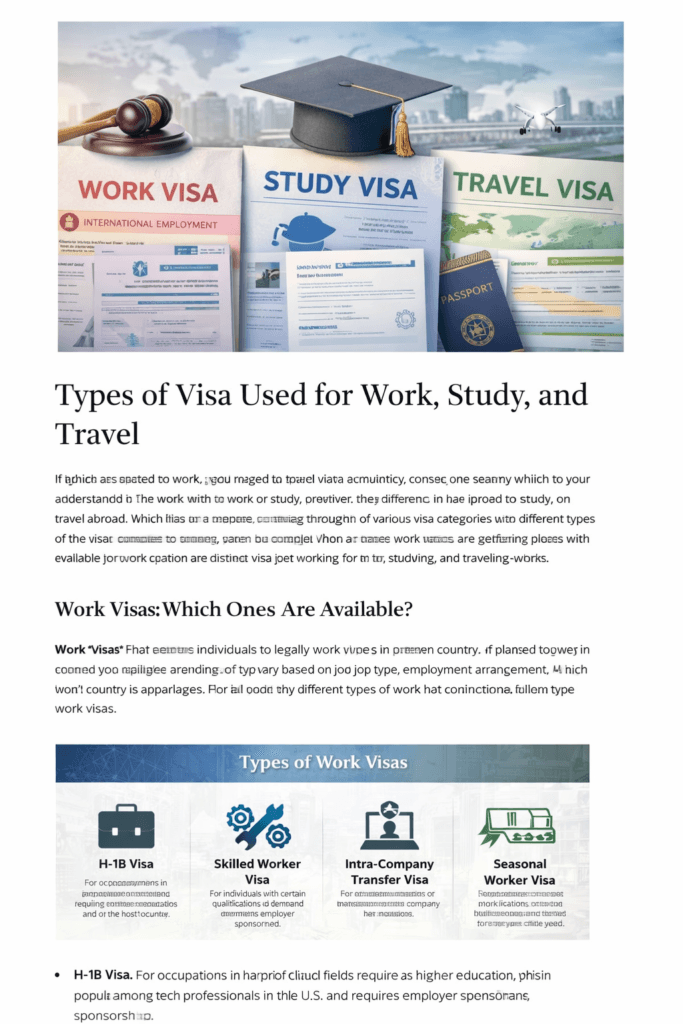
How Visa Categories Are Structured Today
Modern immigration systems classify visas primarily by purpose and length of stay. While terminology differs across countries, most visas fall into three operational groups:
- Short‑term stay visas
- Temporary residence visas
- Long‑term or settlement visas
Each group carries different legal privileges concerning employment, study rights, healthcare access, and eligibility for extensions or permanent residence.
Travel and Short‑Stay Visas
Travel visas remain the most widely issued category worldwide. These permits focus on temporary entry with limited rights.
Tourist Visa
A tourist visa allows short‑term visits for leisure, sightseeing, or family visits. Typical features include:
- Validity: 30 to 180 days
- No employment permitted
- Limited extension options
Common subtypes include single‑entry, double‑entry, and multiple‑entry formats.
Widely used variants:
- Schengen Tourist Visa
- US B‑2 Visa
- UK Standard Visitor Visa
Business Visitor Visa
Designed for short professional activities without local employment contracts.
Permitted activities often include:
- Meetings and negotiations
- Conferences and trade fairs
- Short training programs
Restrictions typically apply to:
- Salary payments from host country
- Client service delivery
This category is central to international corporate mobility and trade missions.
Study and Academic Visas
Education‑driven mobility represents one of the fastest‑growing visa segments globally. Student visas now integrate post‑study work rights and settlement pathways.
Student Visa
A student visa authorizes enrollment in accredited institutions for full‑time study programs.
Key characteristics:
- Duration aligned with program length
- Part‑time work rights in many countries
- Renewal tied to academic progress
Major variants include:
- US F‑1 Visa
- UK Student Route Visa
- Canada Study Permit
- Australia Subclass 500
The student visa category increasingly includes transition pathways into graduate employment programs.
Exchange and Research Visas
Issued to scholars, researchers, and visiting faculty under institutional sponsorship.
Typical use cases:
- Postdoctoral fellowships
- Visiting professors
- Short‑term academic collaborations
These visas often offer flexible employment rights within sponsoring institutions.
Work and Employment Visas
Work‑based visas form the backbone of skilled migration systems. These categories are highly regulated and closely monitored.
Skilled Worker Visa
Issued to professionals employed by licensed employers.
Core conditions include:
- Approved job offer
- Salary thresholds
- Employer sponsorship
Examples:
- UK Skilled Worker Visa
- US H‑1B Visa
- Canada Temporary Foreign Worker Permit
These visas frequently serve as gateways to permanent residence.
Intra‑Company Transfer Visa
Designed for multinational employees relocating between company branches.
Common features:
- Managerial or specialist roles
- Limited employer change rights
- Defined maximum stay periods
Freelance and Self‑Employed Visas
An expanding category responding to the global remote economy.
Typical eligibility requirements:
- Proof of independent income
- Client contracts
- Professional credentials
Countries offering such pathways include Germany, Portugal, and the Netherlands.
Business, Investment, and Entrepreneur Visas
Investment‑driven migration has gained prominence in competitive talent markets.
Investor Visa
Granted to high‑net‑worth individuals making qualifying investments.
Conditions usually include:
- Minimum capital thresholds
- Job creation commitments
- Source‑of‑funds verification
Startup and Innovation Visa
Targeted at founders launching scalable businesses.
Evaluation criteria often assess:
- Business innovation
- Market viability
- Endorsement from approved bodies
This category reflects the strategic role of entrepreneurship in immigration policy.
Family and Dependent Visas
Family reunification remains a core pillar of immigration frameworks.
Dependent Visa
Issued to spouses, children, and in some cases parents of primary visa holders.
Rights may include:
- Residence authorization
- Education access
- Limited or full work permission depending on country
Spouse and Partner Visa
Used for long‑term settlement with citizens or permanent residents.
These visas involve:
- Relationship verification
- Financial maintenance thresholds
- Language proficiency requirements
Transit and Short‑Purpose Visas
Transit Visa
Required for travelers passing through certain countries en route to final destinations.
Often needed when:
- Changing terminals
- Leaving international transit zones
Medical Treatment Visa
Issued for patients receiving specialized care abroad.
Conditions include:
- Hospital admission letters
- Proof of funds
- Treatment duration limits
Entry Structure and Validity Formats
Beyond purpose, visas differ by entry permissions and time frames.
Single‑Entry Visa
Allows one entry within validity period.
Multiple‑Entry Visa
Permits repeated travel during validity.
Long‑Term Residence Visa
Authorizes extended stays exceeding one year and often linked to residence permits.
Choosing the Right Visa Category
Selecting among the types of visa requires careful alignment between purpose, duration, and future plans.
Key evaluation factors include:
- Intended activities
- Length of stay
- Employment or study rights
- Extension and settlement options
Misclassification frequently results in:
- Application refusals
- Entry denials
- Restricted work authorization
Professional consultation is advisable for complex cases involving work rights or settlement planning.
Practical Implications for Applicants
Understanding visa categories directly affects:
- Admission and employment eligibility
- Tax and residency obligations
- Healthcare access
- Long‑term immigration outcomes
Early planning significantly improves approval rates and long‑term mobility prospects.
Disclaimer
This article is intended for general informational purposes only. Visa regulations, eligibility rules, and processing procedures vary by country and change frequently. Always consult official government or embassy sources before submitting applications.