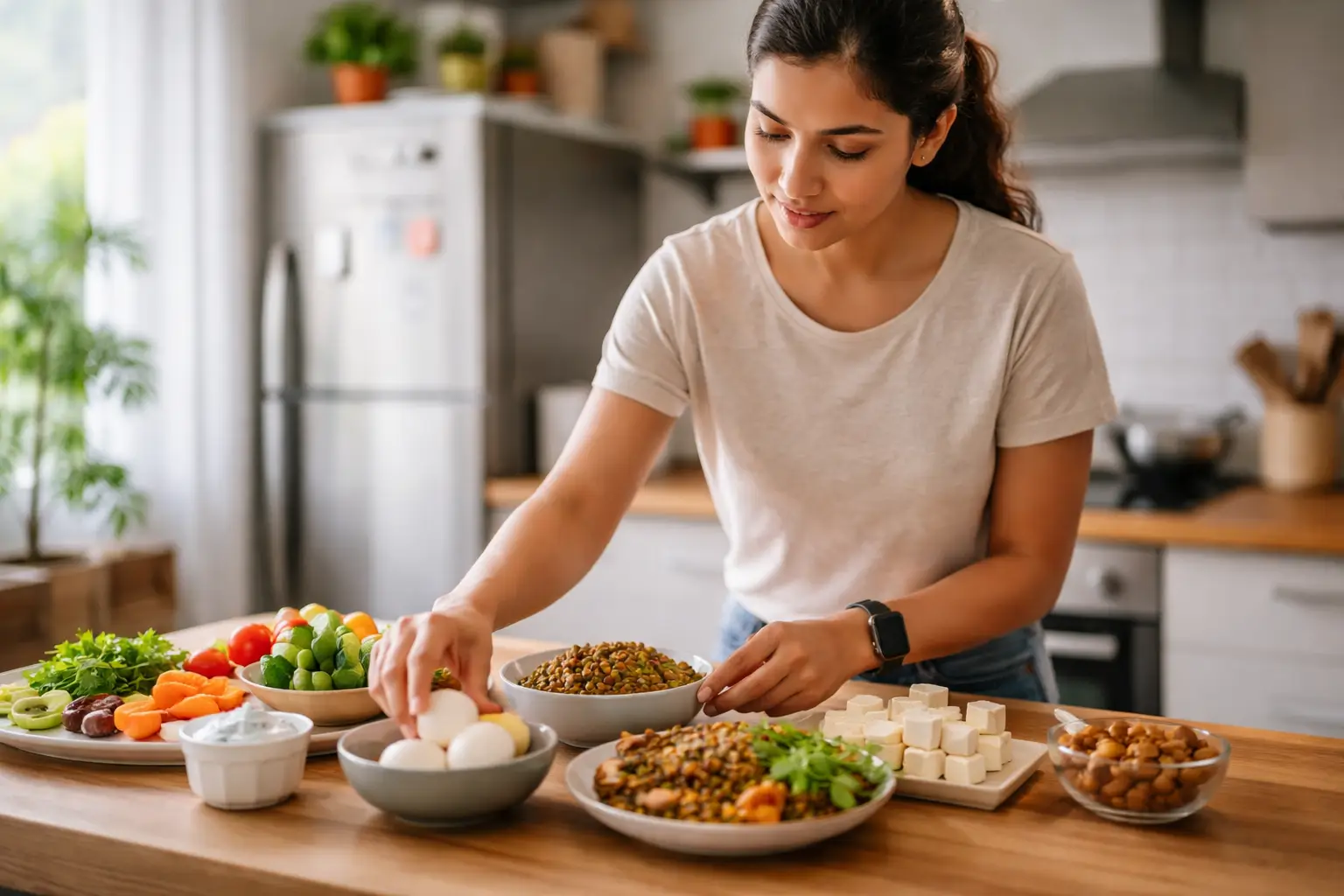
Eating high protein foods has moved from gym culture into everyday kitchens. The reason is practical, not fashionable: people want meals that keep them full, support muscle and metabolic health, and fit busy workdays without complicated cooking. Yet most readers still struggle with two real problems — how much protein they actually need and how to distribute it across normal meals without relying on supplements.
This guide focuses on daily, realistic meal planning using foods you can buy easily — especially relevant for India and mixed global diets — while explaining the science, limits, and trade-offs clearly.
Why high protein foods matter right now
Two trends explain the renewed focus on protein:
- Urban diets are increasingly carbohydrate-heavy and low in protein density
- More people are trying to manage weight, blood sugar, and age-related muscle loss
Protein plays a structural and regulatory role in the body. It supports:
- skeletal muscle maintenance
- immune function
- enzymes and hormones
- satiety and post-meal blood sugar control
What has changed is not the biology — it is how modern meals are structured. Many people consume enough calories but not enough high-quality protein per meal.
What counts as high protein foods?
In everyday nutrition practice, foods are typically considered “high protein” when a meaningful share of their calories comes from protein, not just when they contain protein.
A practical benchmark:
- ~15–25 grams of protein per serving for a main food item
Core categories you will use daily
- animal-based foods
- plant-based protein-dense foods
- mixed dishes combining cereals and legumes
The key is protein density, not simply total portion size.
Understanding your real protein requirement
The most widely used baseline is 0.8 g per kg body weight per day, but this reflects minimum needs for sedentary adults.
For real-world contexts:
- active adults: 1.0–1.2 g/kg
- people training regularly: 1.2–1.6 g/kg
- older adults (to reduce muscle loss): 1.0–1.2 g/kg
This concept is known as dietary protein intake.
The problem is not total daily protein alone — it is how unevenly it is consumed.
Many people eat:
- very little protein at breakfast
- moderate protein at lunch
- a heavy protein-rich dinner
Muscle protein synthesis responds better to evenly spaced protein intake across meals — a concept referred to as protein distribution.
Step-by-step: how to build daily meals with high protein foods
Step 1: Set a realistic per-meal target
Instead of tracking the whole day, aim for:
- 20–30 g protein per main meal
- 8–15 g protein per snack (if needed)
This simplifies planning.
Step 2: Choose one primary protein anchor per meal
A protein anchor is the main item delivering most of your protein.
Common anchors include:
- eggs
- paneer or tofu
- lentils and chickpeas
- Greek-style yogurt or curd
- fish or chicken
- soy products
This ensures the meal is built around protein rather than adding it as an afterthought.
Step 3: Add volume and nutrients without diluting protein
Use:
- vegetables
- fruits
- whole grains
- healthy fats
These support micronutrients and fibre without displacing your anchor.
This combination supports satiety and better appetite control.
Step 4: Balance plant and animal protein wisely
Plant protein sources often contain:
- lower levels of certain essential amino acids
- lower digestibility
This is captured by protein quality and digestibility.
You do not need to eliminate plant foods — you need to combine them strategically.
Step 5: Distribute protein across the day
A simple pattern:
- breakfast: moderate protein
- lunch: moderate-high protein
- dinner: moderate protein
Avoid concentrating most of your intake at night.
Practical daily meal examples (India-friendly and globally adaptable)
High-protein breakfast options
- Vegetable omelette with curd
- Besan chilla with paneer filling
- Greek-style yogurt with nuts and seeds
- Tofu scramble with vegetables
These reduce the common morning gap in protein intake.
High-protein lunch ideas
- Dal + quinoa or high-protein rice alternatives
- Chickpea salad with mixed vegetables and olive oil
- Grilled chicken or fish with roti and vegetables
- Rajma bowl with curd and seeds
High-protein dinner options
- Paneer and vegetable stir-fry
- Fish curry with controlled rice portions
- Lentil-vegetable soup with added tofu or beans
- Egg bhurji with sautéed greens
High-protein snacks (when required)
- roasted chana
- boiled eggs
- cottage cheese cubes
- yogurt with seeds
How plant-based meals can still deliver enough protein
Vegetarian and mostly-plant diets are common in India. The limitation is not protein itself — it is amino acid balance and volume.
Pairings that improve quality:
- rice + dal
- roti + chickpeas
- tofu + grains
- legumes + seeds
This strategy improves amino acid profile and supports muscle maintenance when animal foods are limited.
Protein timing and exercise: what actually matters
The popular idea of a narrow “anabolic window” is overstated.
What does matter:
- total daily protein
- adequate protein within a few hours before or after training
- consistent intake across days
For resistance training, evenly spaced meals improve muscle protein synthesis.
Common mistakes when increasing high protein foods
Relying mainly on supplements
Protein powders are convenient, but they displace:
- fibre
- micronutrients
- chewing-related satiety
Food should remain the foundation.
Ignoring total calories
Adding protein without adjusting carbohydrates and fats can unintentionally increase energy intake.
This affects:
- weight goals
- blood lipid control
Over-restricting plant foods
Eliminating grains, fruits and legumes reduces:
- gut health
- dietary diversity
- long-term adherence
Risks and limitations of very high protein diets
High protein foods are beneficial — but not unlimited.
Potential concerns include:
- digestive discomfort
- inadequate fibre intake
- higher saturated fat intake when animal sources dominate
For people with known kidney disease, medical guidance is essential. For healthy individuals, current evidence does not support routine kidney damage from moderately high protein intake, but extremes are unnecessary.
Special considerations for Indian diets
Cultural meal structure
Traditional thali patterns often emphasize:
- rice or roti as the centre
- small portions of protein dishes
Rebalancing means:
- increasing the portion of dal, paneer, eggs or legumes
- slightly reducing cereal quantity
Budget and access
Affordable high protein foods commonly available:
- eggs
- milk and curd
- lentils
- chickpeas
- soy chunks
These outperform many expensive “high-protein” packaged foods.
How to read labels on packaged high-protein foods
Check:
- protein per serving (not per 100 g only)
- total calories
- added sugars
- saturated fat
A product claiming “high protein” but delivering 5–6 g per serving rarely supports real meal planning.
When high protein foods help most
They are especially useful for:
- people managing body weight
- older adults concerned about strength
- individuals returning to exercise after inactivity
- people with poor appetite but high nutritional needs
Where research and guidelines come from
Global nutrition guidance is informed by organisations such as World Health Organization and Indian Council of Medical Research. Long-term dietary research from Harvard T.H. Chan School of Public Health has also shaped how protein quality and overall dietary patterns are evaluated.
Making high protein foods sustainable long-term
The most effective approach is not maximal intake. It is:
- repeatable meals
- accessible ingredients
- culturally comfortable food choices
- moderate flexibility
Consistency matters more than perfect macros.
Disclaimer
This article is for general informational and educational purposes only. It does not replace personalised medical or nutritional advice. Readers with health conditions should consult a qualified healthcare professional before making significant dietary changes.