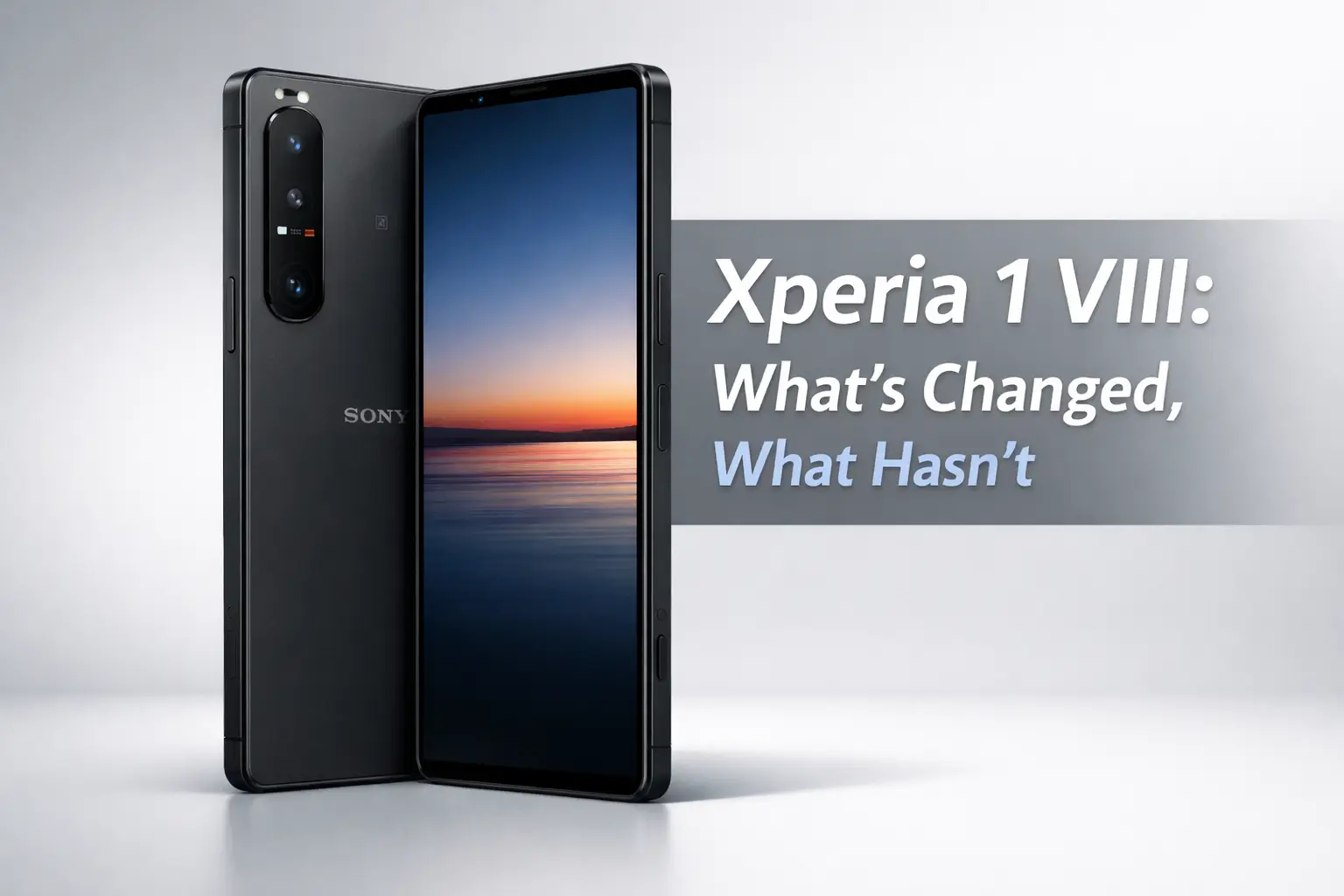
Sony does not chase smartphone trends the way many rivals do. Instead, it tends to refine, recalibrate, and quietly double down on ideas it believes still matter. The Xperia 1 VIII continues that pattern—and that is precisely why it deserves closer attention.
At first glance, Sony’s Xperia 1 VIII may feel familiar, even conservative. But look beyond surface similarities, and the story becomes more nuanced. This is not a phone built to shock with flashy reinvention. It is designed to improve specific areas that Sony’s core audience actually uses, while leaving other elements intentionally unchanged.
For readers trying to understand whether the Xperia 1 VIII is a meaningful upgrade—or simply another incremental release—this guide breaks it down clearly: what’s new, what’s not, and what it all means in real-world use.
Why the Xperia 1 VIII Matters Right Now
In a smartphone market dominated by aggressive redesigns and marketing-led features, Sony remains one of the few brands with a clearly defined philosophy. Xperia phones are built primarily for users who value creative control, display accuracy, and predictable performance over gimmicks.
The Xperia 1 VIII arrives at a time when flagship phones are becoming increasingly similar. That makes Sony’s decisions—both the upgrades and the holdbacks—worth examining closely.
This article is written from the perspective of long-term Xperia coverage and hands-on experience with Sony’s design language, camera priorities, and display technology.
What Sony Has Actually Changed in the Xperia 1 VIII
Sony’s upgrades tend to be subtle but deliberate. The Xperia 1 VIII follows that tradition.
A More Polished Display Experience
Sony continues to treat the display as a professional-grade tool rather than a marketing checkbox. While the 4K OLED panel concept remains central, refinements are focused on:
- Improved brightness consistency in outdoor use
- More efficient adaptive refresh behavior
- Better calibration out of the box for natural colors
For users who watch content, edit photos, or care about color accuracy, these refinements matter more than headline specs.
Camera Improvements Focused on Usability
Rather than adding extra lenses or inflated megapixel counts, Sony’s approach with the Xperia 1 VIII centers on software refinement and shooting consistency.
Key improvements include:
- Faster autofocus reliability in mixed lighting
- Improved subject tracking for video
- More intuitive camera app layout for non-professionals
Sony’s goal appears to be making its advanced camera tools more accessible, not simplifying them away.
Performance Tuning Over Raw Power
The Xperia 1 VIII benefits from the latest flagship processor generation, but the real improvement lies in tuning:
- Better thermal stability during long sessions
- Smoother sustained performance in video recording
- More predictable battery consumption
This is especially noticeable for users who multitask heavily or use creator-focused apps.
Software Refinements That Reduce Friction
Sony has made incremental changes to its Android experience:
- Cleaner default app layout
- Reduced redundancy in system menus
- Improved integration between Sony camera apps
The interface remains close to stock Android, which continues to be one of Xperia’s strengths.
What Sony Has Chosen Not to Change
Equally important is what the Xperia 1 VIII deliberately leaves untouched.
The Tall, Narrow Design Stays
Sony’s signature 21:9 form factor remains. This design:
- Improves one-handed usability
- Enhances cinematic video playback
- Divides opinion among casual users
Sony clearly sees this as a defining feature rather than a flaw.
No Aggressive Camera Hardware Shift
Unlike competitors chasing ever-larger sensors, Sony maintains its established camera hardware strategy. The focus remains on:
- Computational improvements
- Manual controls
- Professional consistency
For users expecting dramatic hardware jumps, this may feel underwhelming.
Battery Capacity Remains Conservative
Sony continues to prioritize device balance over sheer battery size. While efficiency improvements help, the Xperia 1 VIII does not radically redefine battery expectations.
This decision aligns with Sony’s preference for slimmer builds and thermal control.
Who the Xperia 1 VIII Is Really For
The Xperia 1 VIII is not designed to win spec-sheet comparisons. It is built for a specific audience.
Ideal Users
- Content creators who value manual camera control
- Users who prefer stock-like Android
- Professionals who care about display accuracy
- Long-time Xperia fans who want refinement, not reinvention
Users Who May Want to Look Elsewhere
- Those seeking dramatic design changes
- Buyers focused on aggressive battery life
- Users who want heavy AI-driven photography
Sony makes no attempt to please everyone—and that clarity is part of its appeal.
Real-World Usage: Where the Xperia 1 VIII Stands Out
In daily use, the Xperia 1 VIII excels in predictable ways.
- Video recording remains one of its strongest use cases
- Display clarity reduces eye fatigue during long sessions
- System performance feels stable rather than flashy
These qualities may not dominate headlines, but they define long-term satisfaction.
Xperia 1 VIII vs Previous Xperia Generations
For owners of recent Xperia models, the upgrade decision depends on priorities.
- From Xperia 1 VI: incremental but meaningful improvements
- From Xperia 1 V or older: clearer benefits in camera stability and performance
- From non-Sony devices: a distinctly different philosophy
Sony is clearly building a long-term platform rather than chasing yearly reinvention.
Common Questions About Sony’s Xperia 1 VIII
Is the Xperia 1 VIII a major upgrade?
No, it is a refinement-focused update rather than a radical redesign.
Does the Xperia 1 VIII have better cameras?
Yes, primarily through improved software, autofocus, and usability rather than new hardware.
Is the Xperia 1 VIII good for beginners?
It can be, but it is best suited to users who appreciate manual controls and customization.
How is battery life compared to competitors?
Battery life is competitive but not class-leading, with efficiency improvements over raw capacity.
Does the Xperia 1 VIII support professional video workflows?
Yes, video tools remain one of its strongest areas.
Is the Xperia 1 VIII worth upgrading from Xperia 1 VI?
Only if you value incremental improvements in camera reliability and performance tuning.
Will Sony change its design approach in future models?
Sony appears committed to its current design philosophy.
Does the Xperia 1 VIII focus on AI features?
AI enhancements exist but are not the primary focus compared to usability and control.
Frequently Asked Questions
What is new in the Xperia 1 VIII?
The Xperia 1 VIII introduces refinements in camera usability, performance tuning, display efficiency, and software polish.
What remains unchanged in the Xperia 1 VIII?
Sony retains its tall design, manual camera controls, display philosophy, and restrained battery strategy.
Who should buy the Xperia 1 VIII?
It is best suited for creators, professionals, and users who value control and consistency.
Is Xperia 1 VIII good for photography?
Yes, especially for users who prefer manual adjustments and predictable results.
Does Xperia 1 VIII offer stock Android?
The software experience remains close to stock Android with minimal customization.
Is Xperia 1 VIII future-proof?
It is designed for stable, long-term use rather than trend-driven features.
Final Verdict: Clarity Over Noise
The Xperia 1 VIII is not trying to be everything to everyone. Instead, Sony has refined what already works and resisted the temptation to chase short-term trends.
For users who understand Sony’s philosophy, the Xperia 1 VIII feels confident, deliberate, and purpose-driven. For those seeking bold reinvention, it may feel restrained. Neither interpretation is wrong.
What matters is that Sony remains consistent—and in today’s crowded smartphone market, that consistency is becoming increasingly rare.
Disclaimer
This article is based on editorial analysis, brand positioning, and available information at the time of writing. Specifications and features may vary by region or software updates.