Blood clotting sits at the centre of everyday safety and serious medical risk at the same time. It prevents dangerous bleeding after injury, surgery, and childbirth. But when the system is disrupted—by illness, medication, dehydration, prolonged immobility, or inherited disorders—it can increase the risk of stroke, heart attack, or pulmonary embolism.
Across many countries, including India and other rapidly urbanising regions, public interest in “natural” ways to manage blood clotting has grown sharply. Home remedies circulate widely through social media and wellness blogs, often promising safer or gentler alternatives to medical care. The problem is not curiosity—it is confusion. Most people are unsure what can realistically help, what may interfere with treatment, and what could quietly increase risk.
This article examines what natural home remedies can—and cannot—do for blood clotting, using current clinical understanding, real-world practice, and public health guidance.
Understanding blood clotting in real life, not theory
Blood clotting (coagulation) is not a single reaction. It is a tightly regulated biological cascade involving:
- platelets
- clotting factors produced mainly by the liver
- the blood vessel wall
- the body’s own clot-dissolving system (fibrinolysis)
When you cut your finger, these systems work together to form a temporary plug and then repair the vessel.
At the same time, the body actively prevents clots from forming where they are not needed. This balance is critical.
In practical terms, blood clotting becomes a concern in three everyday situations:
- excessive bleeding (for example after injury, surgery, dental work, or in people with clotting disorders)
- excessive clotting (for example deep vein thrombosis, stroke, or heart attack)
- medication-controlled clotting (people taking anticoagulants or antiplatelet drugs)
Natural remedies are often discussed without clarifying which of these situations applies.
That distinction matters.
Why people look for natural home remedies
In real clinical practice, three motivations come up repeatedly:
- fear of long-term medication side effects
- desire to “support” the body after surgery or illness
- cultural and family traditions involving food-based or herbal approaches
These motivations are understandable. The risk comes from assuming that anything natural is automatically gentle, safe, or compatible with medical treatment.
What “natural remedies” usually mean in blood clotting discussions
Most home-based approaches fall into four categories:
- foods believed to “thin” or “improve” blood
- herbs or supplements promoted for circulation
- hydration and lifestyle practices
- stress and activity patterns
Each interacts with clotting in different—and often misunderstood—ways.
Food and blood clotting: what actually influences the system
Vitamin K and clot formation
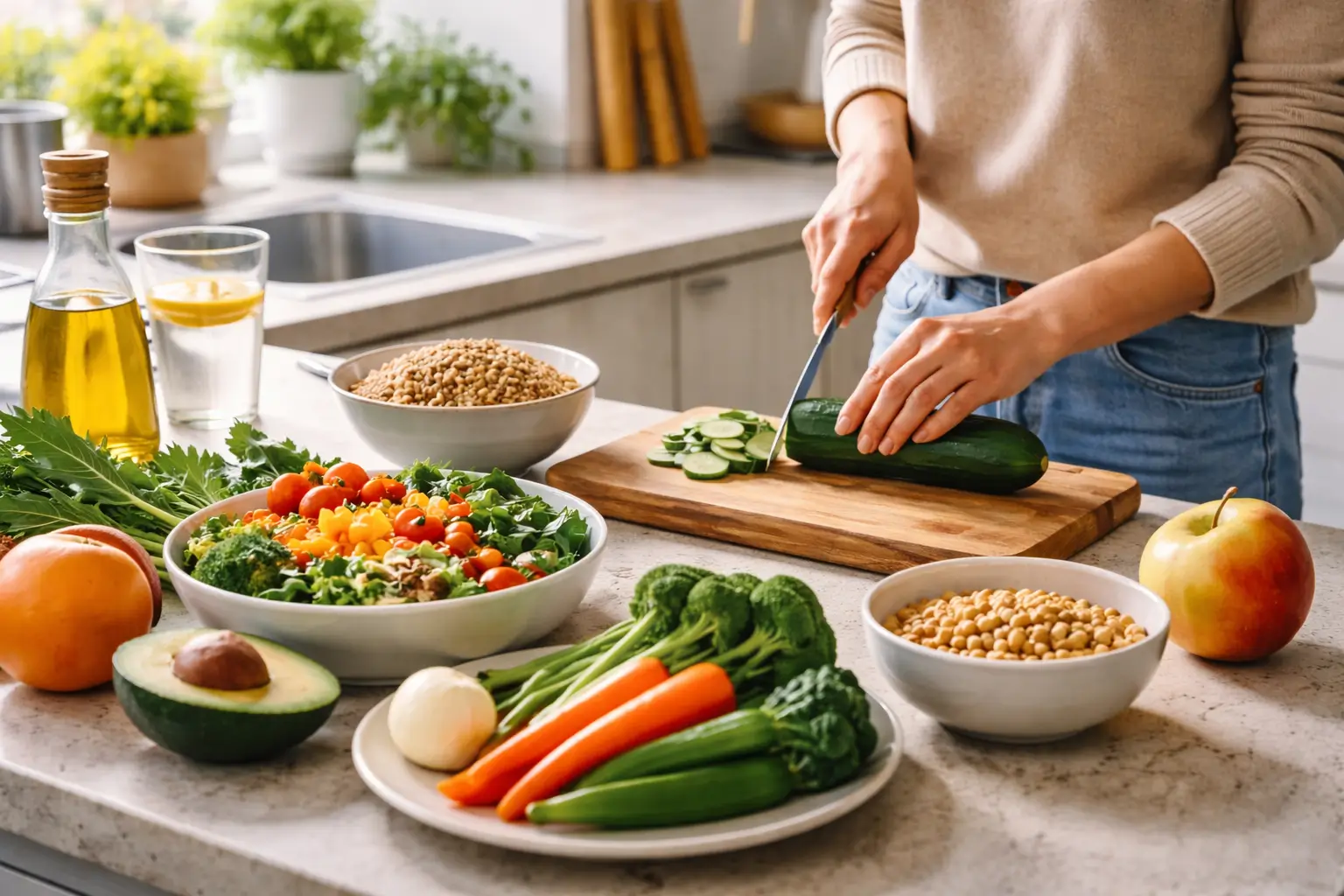
Vitamin K is essential for the production of several clotting factors. Leafy greens such as spinach, kale and broccoli are common dietary sources.
The issue is not that vitamin K foods are dangerous.
The real concern applies to people taking vitamin K–dependent anticoagulants (such as warfarin). In these patients, sudden changes in vitamin K intake can make medication either less effective or too strong.
In everyday practice, the goal is consistency, not elimination.
Garlic, ginger and turmeric
These foods are widely promoted as natural blood thinners.
Laboratory and small clinical studies show mild effects on platelet activity. However:
- the effect is modest
- the response varies between individuals
- doses used in supplements often far exceed normal cooking amounts
For healthy people, culinary use is not a problem. For people undergoing surgery or taking blood-thinning medication, high-dose supplements may increase bleeding risk.
Fatty fish and omega-3 fatty acids
Omega-3 fatty acids influence platelet aggregation and inflammation. Diets including fish can be part of overall cardiovascular risk reduction.
They are not substitutes for medical therapy in people at high risk of thrombosis.
Hydration and circulation: a misunderstood link
Dehydration can increase blood viscosity and may contribute to clot risk, particularly in:
- elderly adults
- people travelling long distances
- people with acute illness or fever
Adequate hydration supports circulation and general vascular health. It does not correct clotting disorders, nor does it reverse established clots.
Movement and posture: one of the few truly protective “home” measures
Among all non-medical strategies, regular movement has the strongest real-world relevance for clot prevention.
Prolonged immobility—long flights, desk-based work, recovery after illness—contributes directly to venous stasis.
Simple practices that matter:
- standing or walking every 30–60 minutes during long sitting periods
- ankle and calf exercises during travel
- early mobilisation after illness or surgery when medically permitted
These measures reduce risk through mechanical circulation, not through changing the blood itself.
Herbal remedies: where most of the risk lies
Herbs commonly promoted for blood clotting or circulation include:
- ginkgo biloba
- ginseng
- dong quai
- fenugreek
- horse chestnut
The problem is not only limited scientific evidence. It is interaction.
Many of these herbs affect platelet function, liver enzymes, or drug metabolism. In people taking anticoagulants, antiplatelet drugs, or even some pain medications, this can:
- amplify bleeding risk
- destabilise INR control
- interfere with post-surgical recovery
These interactions are well documented in clinical pharmacology, but rarely discussed in consumer wellness material.
Why natural remedies cannot replace medical treatment for clotting disorders
Blood clotting disorders are not uniform.
They include:
- inherited deficiencies of clotting factors
- autoimmune conditions
- liver disease
- cancer-related clotting abnormalities
- medication-induced changes
Each requires targeted diagnosis and monitoring.
No dietary change or herbal preparation can replace:
- anticoagulation for atrial fibrillation
- secondary prevention after stroke
- treatment of deep vein thrombosis
- management of haemophilia or factor deficiencies
This is not a philosophical position. It reflects how the clotting cascade functions biologically.
The real danger: mixing home remedies with prescription therapy
In practice, the most common safety incidents occur when people combine:
- herbal supplements
- high-dose nutraceuticals
- abrupt dietary changes
with prescribed blood-thinning medication.
Clinicians regularly see:
- unexplained bruising
- nosebleeds
- gastrointestinal bleeding
- unstable laboratory values
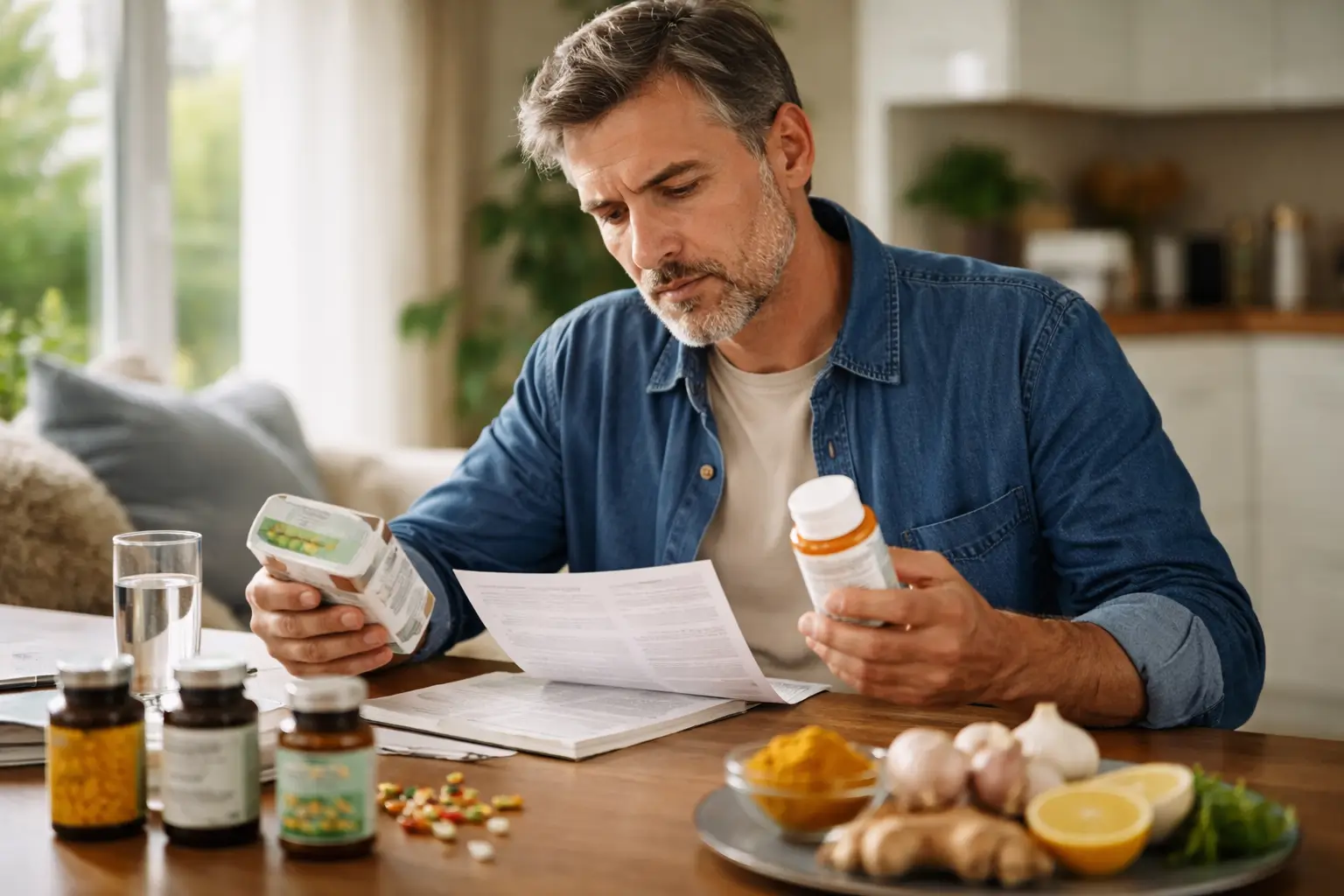
The cause is often not the drug alone, but unreported supplement use.
Public health authorities such as World Health Organization and the U.S. Food and Drug Administration repeatedly highlight that “natural” products are not evaluated for safety or interactions to the same standard as medicines.
When natural approaches can play a supportive role
There are narrow, legitimate roles for lifestyle-based support around blood clotting:
Supporting vascular health over the long term
- balanced diet rich in vegetables, whole grains, and unsaturated fats
- regular physical activity
- smoking cessation
- weight management
These influence cardiovascular risk factors rather than clotting mechanics directly.
Recovery after illness or surgery
When guided by clinicians:
- early safe mobilisation
- hydration
- nutrition to support healing
These do not treat clotting abnormalities, but they reduce secondary risks.
Current patterns and public health concern
Globally, hospitals continue to report high rates of preventable venous thromboembolism in immobilised and post-operative patients.
Major public health bodies such as the Centers for Disease Control and Prevention emphasise early movement and risk assessment as core prevention strategies.
At the same time, consumer use of herbal supplements continues to grow, often without disclosure to healthcare providers. This gap between formal medical care and informal home practices represents a significant safety challenge.
Practical guidance for readers considering natural home remedies
If you do not have a diagnosed clotting condition
- normal culinary use of herbs and spices is generally safe
- focus on physical activity, hydration, and balanced diet
- avoid high-dose supplements marketed as “blood thinners”
If you have a clotting disorder or take blood-thinning medication
- do not introduce supplements without medical review
- maintain stable vitamin K intake
- report all non-prescription products to your clinician or pharmacist
If you are preparing for surgery or dental procedures
- stop non-essential herbal supplements at least one to two weeks beforehand, unless advised otherwise
- disclose all products during pre-procedure assessment
Limits of current evidence
Many popular natural remedies rely on:
- laboratory studies
- animal research
- small uncontrolled trials
These cannot reliably predict real-world outcomes in complex patients with multiple conditions or medications.
Where evidence is uncertain, responsible guidance requires acknowledging those limits.
Reader questions
Can home remedies safely thin the blood without medicine?
No. Foods and lifestyle practices can support general vascular health, but they do not reliably or predictably thin blood in the way medical anticoagulants do. In people at risk of stroke or thrombosis, relying on home remedies instead of prescribed treatment can leave the underlying risk unchanged and potentially dangerous.
Should people on blood thinners completely avoid leafy greens?
No. The key issue is consistency of vitamin K intake, not avoidance. Sudden large changes in consumption can destabilise medication effects, especially with warfarin. A stable, balanced diet is usually safer than eliminating vegetables.
Are herbal blood-thinning supplements safer than prescription drugs?
Not necessarily. Many herbal products affect platelet function or drug metabolism, and their strength varies widely between brands. Unlike prescription medicines, their safety, dosage and interactions are not consistently regulated or clinically monitored.
Can dehydration really increase clot risk?
Yes, especially in vulnerable people such as older adults, those with acute illness, and those immobilised for long periods. Hydration supports circulation but does not replace medical prevention measures when clot risk is high.
Is it safe to use natural remedies during pregnancy?
This requires caution. Pregnancy already alters clotting physiology. Many herbs have unknown safety profiles in pregnancy and may interact with obstetric medications. Any supplement use should be discussed with a qualified healthcare professional.
Do natural remedies help dissolve existing clots?
No. Once a clinically significant clot has formed, medical management is required. Diet or supplements cannot reliably break down established clots.
Disclaimer
This article is for informational purposes only and does not replace professional medical, legal or financial advice. Always consult a qualified healthcare professional before making decisions related to blood clotting, supplements or prescribed medication.