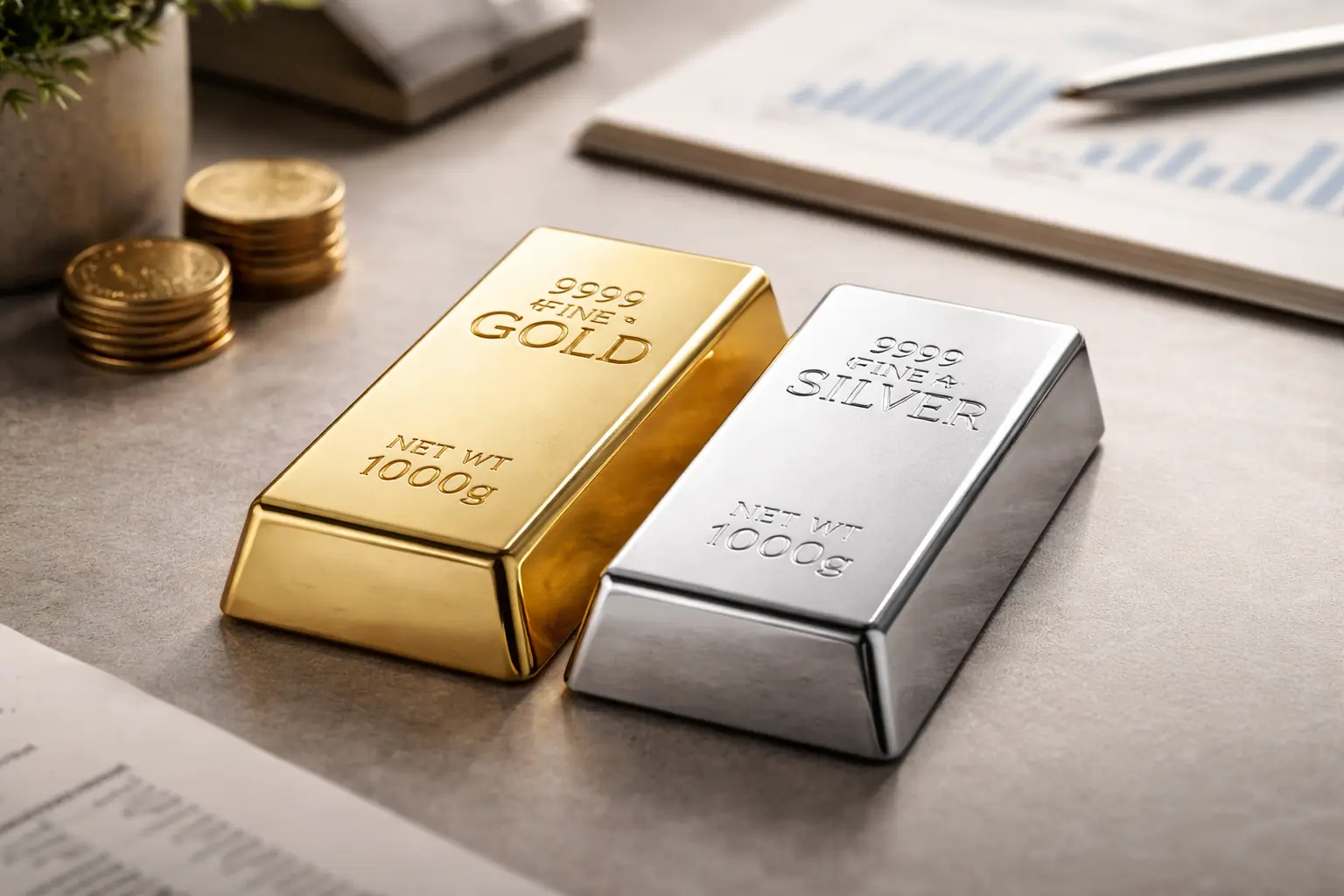
Gold and silver prices rarely move in perfect sync for long periods. Each metal has its own demand drivers, investor base, and industrial use. Yet in recent months, market watchers have noticed something familiar: gold and silver prices are once again moving in tandem, often rising and falling on the same cues.
This matters because when these two metals align, it usually signals deeper forces at work—forces tied to economic uncertainty, monetary policy, and investor psychology. For everyday readers, beginners, and seasoned professionals alike, understanding why this is happening now offers valuable insight into where markets may be heading next.
The Historical Relationship Between Gold and Silver Prices
Gold and silver have shared a monetary and cultural role for thousands of years. While modern markets treat them as separate assets, their prices have long been connected.
A shared role as monetary metals
Both metals are:
- Seen as stores of value during uncertainty
- Used as hedges against inflation and currency weakness
- Traded globally with high liquidity
When macroeconomic stress increases, investors often buy both simultaneously, pushing gold and silver prices higher together.
Where they usually diverge
Despite their similarities, silver often behaves differently because:
- It has significant industrial demand
- It is more volatile than gold
- It reacts faster to economic growth expectations
When growth optimism rises, silver can outperform gold. When fear dominates, gold usually leads. Tandem movement suggests a specific market mindset: caution with selective risk.
Why Gold and Silver Prices Today Are Moving Together
Several overlapping forces are driving the current alignment. None operate in isolation, but together they explain why the metals are behaving in sync.
Persistent global economic uncertainty
Markets are navigating a period of mixed signals:
- Slowing growth in some major economies
- Sticky inflation pressures
- Ongoing geopolitical tensions
In such conditions, investors often reduce exposure to riskier assets and rotate into defensive ones. Gold and silver both benefit from this shift, lifting gold and silver prices today at the same time.
Central bank policy expectations
Interest rate expectations play a major role in precious metals pricing.
When investors believe:
- Rate cuts may arrive sooner than expected, or
- Rates will stay high but inflation remains elevated
Precious metals become more attractive relative to cash and bonds. Because both gold and silver are sensitive to real interest rates, they often respond together to these expectations.
Currency movements, especially the US dollar
Gold and silver are priced globally in US dollars. When the dollar weakens:
- Both metals become cheaper for non-dollar buyers
- Demand increases across global markets
A softer dollar environment tends to lift both metals simultaneously, reinforcing tandem price movement.
Investor Behavior Is a Key Driver
Price action is not just about data—it is about how people interpret that data.
The return of “basket buying”
Institutional and retail investors alike increasingly view gold and silver as part of the same defensive basket. Instead of choosing one over the other, many allocate to both.
This behavior leads to:
- Similar inflows into gold and silver funds
- Parallel futures positioning
- Correlated price movements
Retail participation and sentiment
Silver often attracts retail interest because of its lower price per unit. When gold draws headlines, silver typically follows as:
- A perceived “accessible” alternative
- A leveraged play on precious metals sentiment
This dynamic pulls silver along when gold moves, tightening the link between gold and silver prices.
Supply-Side Factors Supporting Tandem Movement
While demand gets most of the attention, supply conditions also matter.
Limited new supply growth
Mining output for both metals has grown slowly in recent years due to:
- Rising production costs
- Regulatory hurdles
- Fewer large new discoveries
When supply growth is constrained, demand shifts—especially sudden ones—have a larger impact on prices for both metals at once.
Recycling and secondary supply pressures
Recycled supply, particularly for silver, depends on industrial activity and price incentives. When prices rise together, recycling responds slowly, reinforcing price strength rather than capping it.
The Role of Inflation Expectations
Inflation expectations sit at the heart of the current trend.
Inflation hedging behavior
Gold has long been associated with inflation protection. Silver, while more industrial, often benefits from the same perception during inflationary cycles.
When inflation expectations remain elevated:
- Investors seek tangible assets
- Both metals attract inflows
- Prices move in tandem rather than diverging
Real yields matter more than headline inflation
What truly drives precious metals is the relationship between inflation and interest rates. When real yields fall or remain low, holding non-yielding assets like gold and silver becomes more attractive at the same time.
Where Gold and Silver Still Differ
Despite the current alignment, important differences remain—and they will matter again.
Volatility and sensitivity
Silver remains more volatile than gold. In sharp market moves:
- Silver tends to exaggerate trends
- Gold usually moves more steadily
This means tandem movement may not last indefinitely.
Industrial exposure
Silver’s use in electronics, solar panels, and manufacturing can eventually cause divergence if:
- Industrial demand weakens
- Economic growth slows sharply
For now, defensive demand is dominating these differences.
What This Means for Different Types of Readers
Understanding why gold and silver prices are moving together helps different audiences make sense of market behavior.
For general readers
The tandem movement signals:
- Broad economic caution
- Investor preference for stability
- Uncertainty about near-term growth
For beginners
It highlights:
- How macroeconomic factors affect multiple assets
- Why diversification within precious metals is common
- The importance of watching interest rates and currency trends
For professionals
It reinforces:
- The role of correlations in portfolio construction
- The need to monitor when and why correlations may break
- Signals about broader risk sentiment in financial markets
Could the Tandem Movement Break Again?
History suggests it will—eventually.
Conditions that could cause divergence
Gold and silver prices may decouple if:
- Strong economic growth returns
- Industrial demand accelerates sharply
- Inflation expectations fall faster than rates
In such scenarios, silver could outperform or underperform gold depending on growth dynamics.
Why the current alignment may persist
For now, uncertainty remains unresolved. Until markets gain clarity on:
- Inflation trajectories
- Central bank policy paths
- Global growth stability
Gold and silver are likely to continue responding to the same signals.
Frequently Asked Questions
Why do gold and silver prices often move together?
They share similar roles as safe-haven assets and inflation hedges, causing investors to buy or sell both in response to macroeconomic trends.
Are gold and silver prices today driven by inflation?
Inflation expectations matter, but real interest rates and currency movements are often more influential.
Is silver a better investment than gold?
Neither is inherently better. Gold offers stability, while silver provides higher volatility and potential upside during certain cycles.
How do interest rates affect gold and silver prices?
Rising real interest rates tend to pressure both metals, while falling or low real rates support higher prices.
Can gold and silver prices move independently?
Yes. Differences in industrial demand and volatility can cause divergence, especially during strong economic growth.
Does a weaker dollar always raise gold and silver prices?
Not always, but a weaker dollar generally supports higher prices by increasing global demand.
Are current gold and silver prices a sign of recession?
They signal caution and uncertainty, not necessarily an imminent recession.
Conclusion
The renewed tandem movement in gold and silver prices is not a coincidence. It reflects a market environment shaped by uncertainty, cautious optimism, and unresolved questions about inflation, growth, and monetary policy. When investors struggle to find clarity, they often return to familiar anchors—and gold and silver remain among the most trusted.
Understanding this relationship helps readers interpret not just precious metals, but the broader mood of global markets.
Disclaimer
This article is for informational purposes only and does not constitute financial or investment advice. Market conditions can change rapidly, and readers should consider their own circumstances or consult a qualified professional before making financial decisions.