The Indian smartphone market has become one of the most competitive and fast-moving technology ecosystems in the world. New launches arrive almost every month, specifications evolve rapidly, and price bands shift with each festival sale or chipset release. Against this backdrop, lists of the top 10 phones in India often look impressive — but they rarely answer the question that matters most: which one is right for you.
Choosing a phone today is no longer about chasing the highest numbers on a spec sheet. It is about balancing performance, longevity, camera reliability, software support, network readiness, resale value, and everyday usability in a market shaped by 5G rollout, aggressive pricing, and rising expectations.
This guide explains how to evaluate the top contenders intelligently, so your decision remains sound not just on launch day, but two or three years later.
Why “Top 10” Lists Often Mislead Buyers
Ranked phone lists are useful starting points, but they hide several structural problems.
First, rankings change frequently. A phone that leads today may drop within weeks after a competitor launches or prices fall during sales.
Second, lists usually mix categories. Flagships, upper-midrange models, gaming phones, and camera-centric devices often appear together, even though they serve very different users.
Third, headline specifications dominate. Numbers such as megapixels, refresh rates, and charging wattage are highlighted, while software quality, long-term updates, and service reliability receive little attention.
The result is a short-term view of performance rather than a long-term ownership perspective.
Choosing wisely requires understanding what actually determines satisfaction after months of daily use.
Understanding the Current Smartphone Landscape in India
Before comparing models, it helps to understand what defines today’s market.
Three shifts are shaping phone choices in India right now:
- Widespread rollout of 5G smartphones across price segments
- Rising importance of software update policy and security support
- Increasing focus on camera consistency rather than raw sensor size
At the same time, buyers face trade-offs:
- High refresh displays versus battery endurance
- Fast charging versus battery health over time
- Performance peaks versus thermal stability
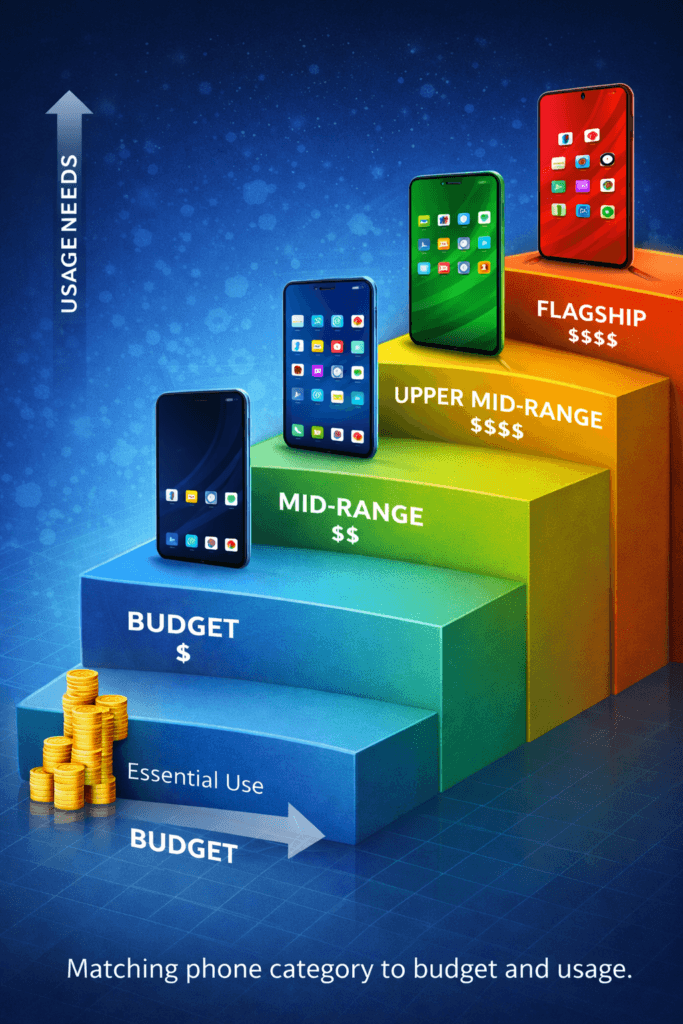
Price tiers have also become more granular:
- Budget segment: under ₹15,000
- Value mid-range: ₹15,000–₹25,000
- Upper mid-range: ₹25,000–₹40,000
- Flagship: ₹40,000 and above
Phones that appear together in a “top 10” list often belong to completely different classes. Treat rankings as categories, not hierarchies.
Start with Use Case, Not Brand or Rank
The most reliable way to choose from the top 10 phones in India is to define how the phone will be used.
Consider these primary usage patterns:
Everyday Productivity and Communication
If your usage is dominated by:
- Messaging
- Calls and video meetings
- Browsing and payments
- Light photography
Then stability, battery efficiency, and clean software matter more than flagship processors.
Mid-range models with strong optimization often deliver better day-to-day experience than powerful but thermally constrained flagships.
Photography and Video Creation
If the camera is central to your choice, evaluate:
- Sensor quality and consistency across lenses
- Night photography reliability
- Video stabilization and dynamic range
- Software processing, not just megapixels
Look for phones known for computational photography, not merely high-resolution sensors.
Gaming and Performance-Intensive Use
For sustained gaming or heavy multitasking, prioritize:
- Thermal management system
- Sustained performance benchmarks
- Display refresh stability
- Battery drain under load
Peak benchmark numbers mean little if performance throttles after ten minutes.
Long-Term Ownership and Reliability
If you plan to keep the phone for three or four years, focus on:
- Software update guarantees
- Build quality and water resistance
- Service network reach
- Spare part availability
These factors often outweigh marginal performance gains.
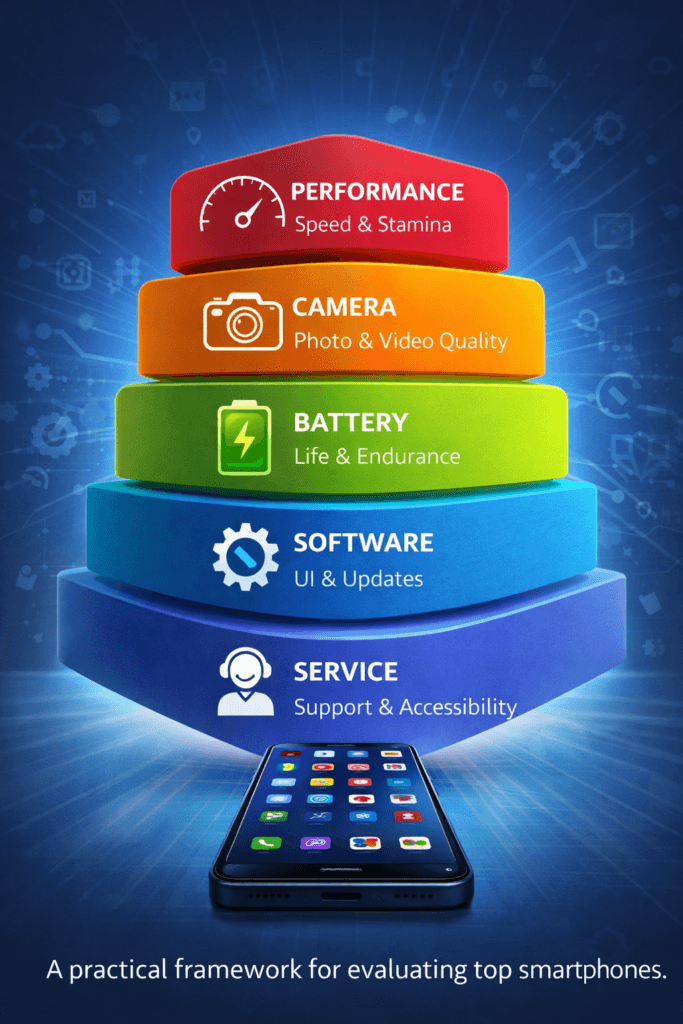
Key Evaluation Criteria That Matter in Real Use
Processor and Performance Stability
Instead of chasing the latest chipset, assess:
- Sustained performance under heat
- Power efficiency
- Day-to-day smoothness
Flagship chips may throttle aggressively in thin designs. Well-tuned mid-range processors often deliver more consistent real-world performance.
Display Quality Beyond Refresh Rate
High refresh rates are now common, but consider:
- Brightness consistency outdoors
- Color calibration
- Touch latency
- PWM dimming behavior for eye comfort
A stable 120 Hz panel with good calibration is preferable to an unstable 144 Hz screen with aggressive dimming.
Battery Endurance and Charging Trade-offs
Fast charging is attractive, but long-term health matters.
Evaluate:
- Real-world screen-on time
- Charging speed versus heat generation
- Battery degradation protection features
Phones with moderate fast charging often preserve battery capacity better over time.

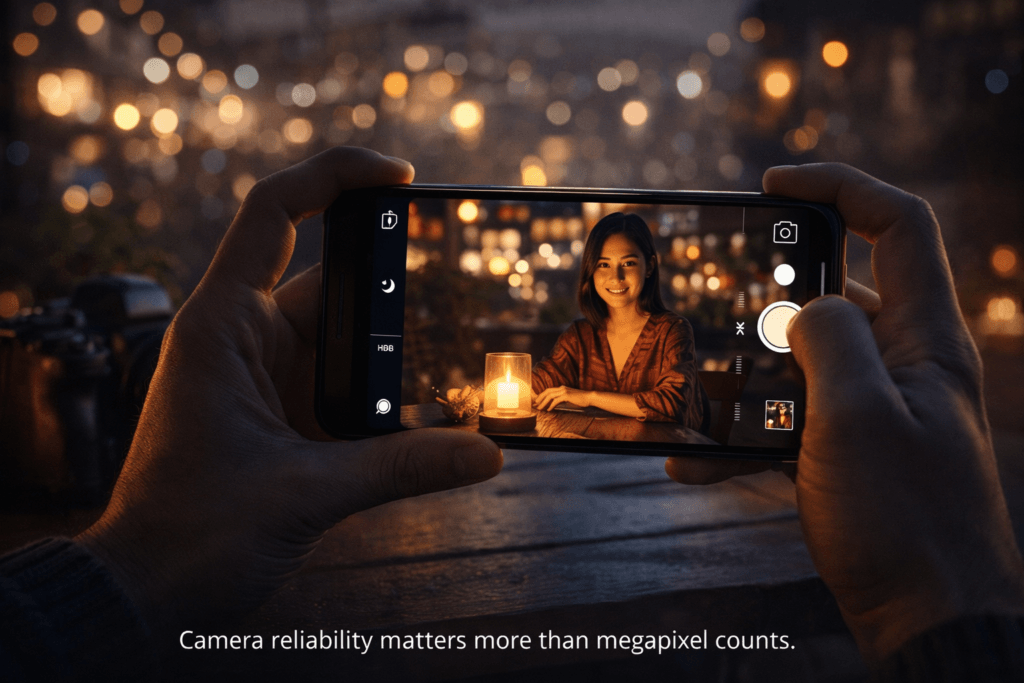
Camera Systems: Reliability Over Resolution
Modern cameras succeed through:
- Image processing algorithms
- Autofocus reliability
- Color science consistency
- Lens quality
A 50 MP sensor with excellent processing will outperform a poorly tuned 200 MP setup.
Software Experience and Update Policy
Software now defines longevity more than hardware.
Check for:
- Guaranteed Android version updates
- Security patch frequency
- UI stability and bloatware control
- Long-term feature support
Phones with four to seven years of updates now exist in multiple price segments.
Network Readiness and Connectivity
With expanding 5G infrastructure, confirm:
- Supported 5G bands for India
- Carrier aggregation compatibility
- Wi-Fi standards and Bluetooth version
A phone lacking proper band support may underperform despite having 5G branding.
Price-to-Value Analysis: Avoid Paying for the Wrong Features
In India, pricing fluctuates heavily due to:
- Festival discounts
- Bank offers
- Exchange bonuses
The effective price often matters more than the MRP.
When comparing phones:
- Compare street price, not launch price
- Evaluate storage and RAM configurations
- Factor warranty extensions and service costs
Many phones enter the “top 10” only because of short-term pricing drops.
Brand Reliability and After-Sales Ecosystem
Hardware excellence is meaningless without service access.
Assess:
- Authorized service center density
- Turnaround time reputation
- Spare parts availability
- Warranty enforcement quality
In Tier-2 and Tier-3 cities, service coverage often determines ownership satisfaction more than specifications.
Common Mistakes Buyers Make
Several patterns lead to regret:
- Choosing based only on processor ranking
- Ignoring update policy
- Overpaying for camera megapixels
- Underestimating heating behavior
- Buying near product refresh cycles
Another frequent mistake is selecting a flagship for casual use, where mid-range phones deliver equivalent experience at half the cost.
Reading Between the Lines of Reviews and Rankings
When evaluating expert lists and reviews:
- Separate short-term testing from long-term ownership
- Look for battery drain tests and thermal graphs
- Observe camera consistency across lighting conditions
- Check update track record, not just promises
User feedback after three to six months often reveals more than launch reviews.
How to Finalize Your Choice Confidently
Before purchasing, complete this checklist:
- Confirm your primary usage category
- Set a realistic long-term budget
- Verify update policy and service coverage
- Compare real-world battery performance
- Validate camera reliability through sample sets
- Check current effective pricing
If a phone satisfies these six criteria, it belongs on your personal version of the top 10 phones in India, regardless of its rank on public lists.
Disclaimer
This article is intended for general informational purposes only. Product availability, pricing, and specifications may vary by region and over time. Readers should verify details with manufacturers and authorized retailers before making a purchase decision.