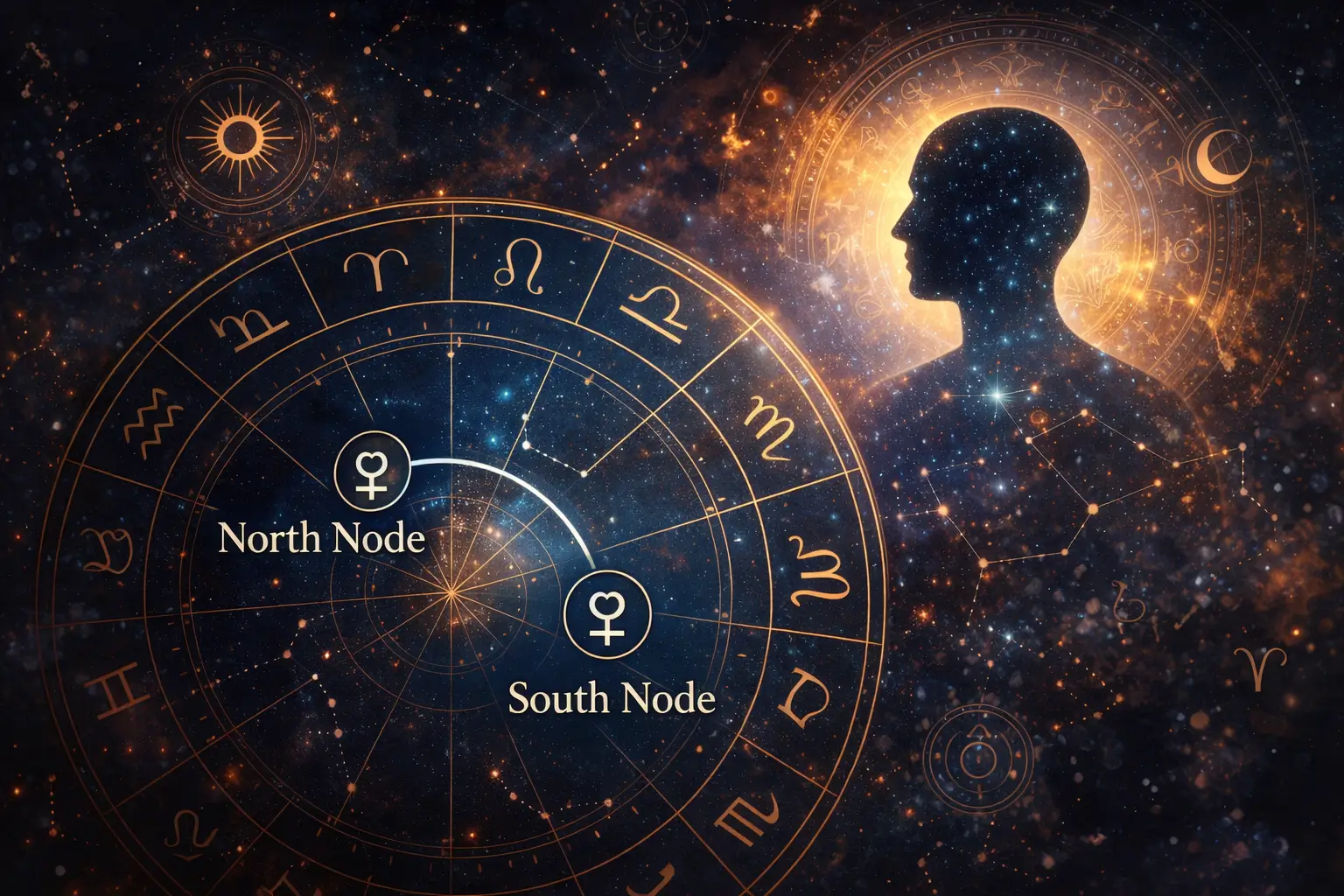
Few concepts in astrology are as misunderstood—and as quietly influential—as the karma sign. It is not about prediction or reward. It is about patterns. The karma sign points to recurring themes in life that feel familiar, unavoidable, and formative. These patterns shape decisions, relationships, fears, and growth, often long before they are consciously recognized.
Identifying your karma sign accurately requires more than knowing a Sun sign or reading a brief horoscope. It involves examining deeper chart factors, behavioral tendencies, and lived experiences that reveal how past conditioning interacts with present choices.
What the Karma Sign Represents in Astrology
In astrological practice, the karma sign is not a standalone label but a derived understanding. It emerges from specific placements and axes within a birth chart that describe inherited tendencies, unresolved lessons, and ingrained responses.
At its core, the karma sign reflects:
- Behavioral defaults that feel instinctive
- Life situations that repeat with similar emotional themes
- Comfort zones that are difficult to leave, even when limiting
- Strengths that come naturally but may also restrict growth
This is why karma sign meaning is often associated with past conditioning rather than future outcomes.
The Astrological Foundations Behind the Karma Sign
Accurate identification begins with recognizing which chart components carry karmic weight. Professional astrologers consistently focus on the following areas.
Lunar Nodes as the Primary Indicator
The most widely accepted karmic markers are the North Node and South Node. The South Node, in particular, is closely linked with karmic patterns.
- The South Node indicates ingrained habits, talents, and emotional reflexes
- The sign it occupies strongly influences karmic expression
- This sign is often referred to informally as the karma sign
The North Node, by contrast, points toward conscious growth and unfamiliar territory.
Why the South Node Sign Matters Most
The South Node sign shows what comes easily—but not always helpfully. These traits feel safe, even when they create stagnation.
Examples include:
- Repeating relationship dynamics
- Familiar emotional reactions under stress
- Default roles assumed in work or family life
Understanding this sign provides insight into karmic patterns in astrology that otherwise appear random.
Step-by-Step: How to Identify Your Karma Sign
Step 1: Obtain an Accurate Birth Chart
Precision matters. Even small errors in birth time can shift nodal positions.
Ensure you have:
- Correct date of birth
- Exact time of birth (from official records if possible)
- Accurate place of birth
A professionally generated chart will clearly display the lunar nodes.
Step 2: Locate the South Node in Your Chart
In most charts, the South Node is marked as a horseshoe-like symbol, always opposite the North Node.
Note carefully:
- The zodiac sign of the South Node
- The house placement (secondary but meaningful)
The karma sign in astrology is most often associated with this zodiac sign.
Step 3: Study the Sign’s Core Traits—Without Idealizing Them
Each zodiac sign carries both strengths and limitations. When expressed karmically, even positive traits can become rigid.
For example:
- A karmic Taurus tendency may resist change excessively
- A karmic Scorpio pattern may default to control or secrecy
- A karmic Gemini influence may overthink instead of commit
Accuracy comes from honest assessment, not flattery.
Behavioral Clues That Confirm Your Karma Sign
Charts explain potential. Life confirms patterns. The following real-world indicators often align strongly with the karma sign.
Repeating Emotional Triggers
Notice situations that reliably provoke disproportionate reactions:
- Criticism
- Abandonment
- Loss of control
- Uncertainty
These triggers often reflect unresolved karmic conditioning rather than present circumstances.
Familiar Roles You Slip Into Automatically
Many people unconsciously replay roles tied to their karma sign:
- The caretaker
- The authority figure
- The mediator
- The rebel
These roles feel natural—but may also limit flexibility.
The Difference Between Karma Sign and Zodiac Sign
A common misconception is equating the karma sign with the Sun sign. They operate on different layers.
| Aspect | Zodiac Sign | Karma Sign |
|---|---|---|
| Basis | Sun position | South Node sign |
| Focus | Identity expression | Habitual patterns |
| Nature | Conscious traits | Automatic tendencies |
| Changeability | Evolves gradually | Requires active awareness |
Understanding this distinction is essential when interpreting birth chart karma accurately.
House Placement: Refining Karma Sign Interpretation
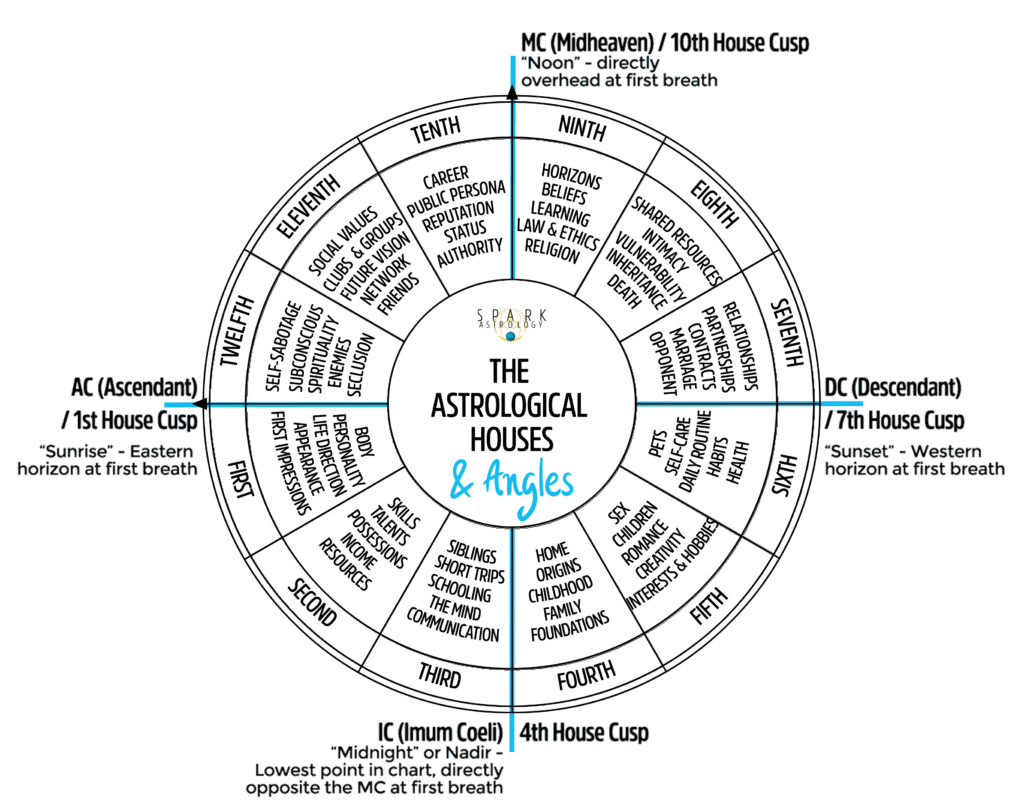
While the sign shows how karma expresses itself, the house shows where it plays out.
Examples:
- South Node in the 7th house: karmic focus on relationships
- South Node in the 10th house: identity tied to status or authority
- South Node in the 4th house: deep emotional and familial conditioning
This layer adds practical clarity to karmic astrology signs.
Common Mistakes in Identifying the Karma Sign
Accuracy is often compromised by oversimplification.
Relying Only on Online Calculators
Automated tools provide data, not understanding. Without interpretation, results remain shallow.
Confusing Karma With Punishment
Karma is not a moral judgment. It is a momentum of habit and awareness.
Ignoring Real-Life Evidence
Astrology should reflect lived experience. If an interpretation does not align with observable patterns, it needs refinement.
How the Karma Sign Influences Relationships
Karmic tendencies are most visible in close relationships.
Patterns may include:
- Repeated attraction to similar partners
- Conflicts around the same themes
- Difficulty letting go of certain dynamics
Recognizing the karma sign allows conscious interruption of these cycles, a key principle in karmic life patterns.
Professional Astrological Context vs Popular Interpretations
Professional astrologers treat the karma sign as:
- One component of a broader karmic framework
- Interconnected with aspects, houses, and planetary rulers
- Subject to nuance and personal agency
Popular astrology often reduces it to a label. Depth comes from synthesis, not isolation.
Practical Use of Karma Sign Awareness
Once identified accurately, the karma sign serves as a diagnostic tool—not a verdict.
It helps in:
- Recognizing default reactions before acting on them
- Making intentional choices under stress
- Developing flexibility beyond comfort zones
- Understanding why certain lessons repeat
This is where astrology becomes practical rather than symbolic.
Disclaimer
This article is intended for informational and educational purposes. Astrological interpretations vary by methodology and tradition and should be understood as reflective frameworks, not fixed determinations or guarantees.