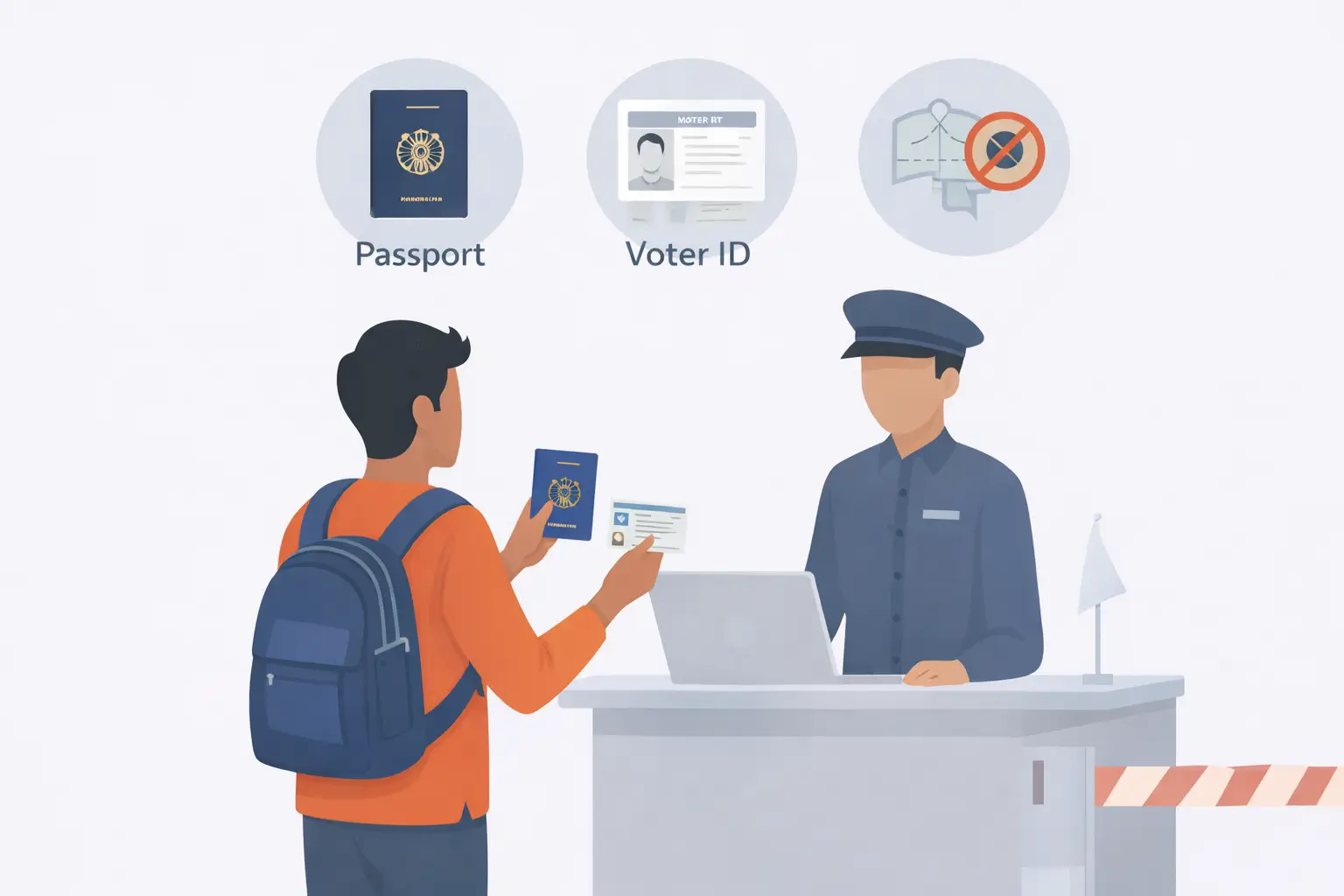
The short answer is clear: Indian citizens generally cannot visit another country without a valid passport. However, there are limited, rule-based exceptions where cross-border travel is allowed using alternative government-issued documents. Understanding these rules precisely matters, because attempting international travel without proper documents can lead to denial of entry, fines, or detention.
This article explains the exact rules, exceptions, and limitations governing without passport visiting countries from India, without assumptions or myths.
The basic legal rule for Indian citizens
Under Indian law and international travel norms:
- A valid passport is mandatory for international travel
- Airlines, immigration authorities, and foreign governments enforce this strictly
- Visa-free travel still requires a passport
There is no general provision allowing Indians to freely visit foreign countries without a passport.
Limited exceptions where passport is not required
While rare, some specific scenarios allow cross-border movement without a standard passport. These are exceptions, not alternatives.
India–Nepal travel rules without a passport
India and Nepal share a special bilateral arrangement.
What is allowed
Indian citizens can travel to Nepal without a passport using one of the following:
- Voter ID card issued by Election Commission of India
- Valid Indian passport (optional, but preferred)
Conditions
- Travel must be direct between India and Nepal
- Air travel usually requires stricter ID checks
- Children and students may need additional verification
What is not allowed
- Aadhaar card alone is not accepted for international air travel
- Entry for employment or long stays may require a passport
India–Bhutan travel rules without a passport
Bhutan is the second major exception.
What is allowed
Indian citizens may enter Bhutan without a passport using:
- Voter ID card
- Passport (recommended but not mandatory for short visits)
Conditions
- Entry permits are issued at border or designated offices
- Travel is restricted to approved regions without additional permits
Limitations
- Passport may still be required for air travel
- Work, study, or long-term stays require formal documentation
Border-area movement under local permits
In certain border regions, residents may cross into neighboring countries under local border agreements.
Key points
- Applies only to residents of notified border districts
- Requires special border passes issued by authorities
- Travel area and duration are strictly limited
These permits do not replace passports and are not valid for general tourism.
Emergency travel documents: not a substitute
In emergencies, Indian missions abroad may issue temporary travel documents.
Important clarification
- Emergency certificates are used for returning to India, not outbound travel
- They do not allow tourism or free movement
- Acceptance depends on bilateral arrangements
They are not a legal method for without passport visiting countries from India.
Situations where travel without passport is not allowed
There are no exceptions in the following cases:
- Travel to any country other than Nepal or Bhutan
- International flights operated by foreign airlines
- Visa-on-arrival destinations
- Cruise travel
- Transit through third countries
Claims suggesting otherwise are incorrect.
Documents that do NOT replace a passport
Many travelers mistakenly believe these are valid substitutes. They are not:
- Aadhaar card
- PAN card
- Driving licence
- Birth certificate
- Ration card
None of these are recognized as international travel documents.
Airline and immigration enforcement
Even where bilateral rules exist:
- Airlines may refuse boarding without a passport
- Immigration officials may apply stricter checks
- Rules can change based on security advisories
Travelers bear full responsibility for compliance.
Risks of attempting travel without a passport
Attempting international travel without valid documentation can result in:
- Denied boarding
- Entry refusal at border
- Fines or penalties
- Temporary detention
- Forced return at own expense
These risks apply even if misinformation was received from third parties.
Practical guidance for travelers
If you are considering travel without a passport:
- Verify current rules through official government sources
- Confirm airline documentation requirements in writing
- Carry multiple forms of approved ID where permitted
- Avoid relying on verbal assurances or social media claims
When in doubt, apply for a passport. It remains the only universally accepted document.