Transparent technology has quietly resurfaced in smartphone conversations, not through mass-market launches but through concept videos, patent filings, and experimental demos that keep appearing across social platforms and tech news feeds. The idea of a transparent mobile taps into something deeper than novelty—it challenges how people imagine the future of personal devices. At a time when most smartphones look and feel similar, transparency represents a visible break from routine design thinking.
The curiosity is not accidental. It is shaped by visual culture, emerging display research, and a broader shift toward futuristic minimalism in consumer electronics.
The psychological appeal of a transparent mobile
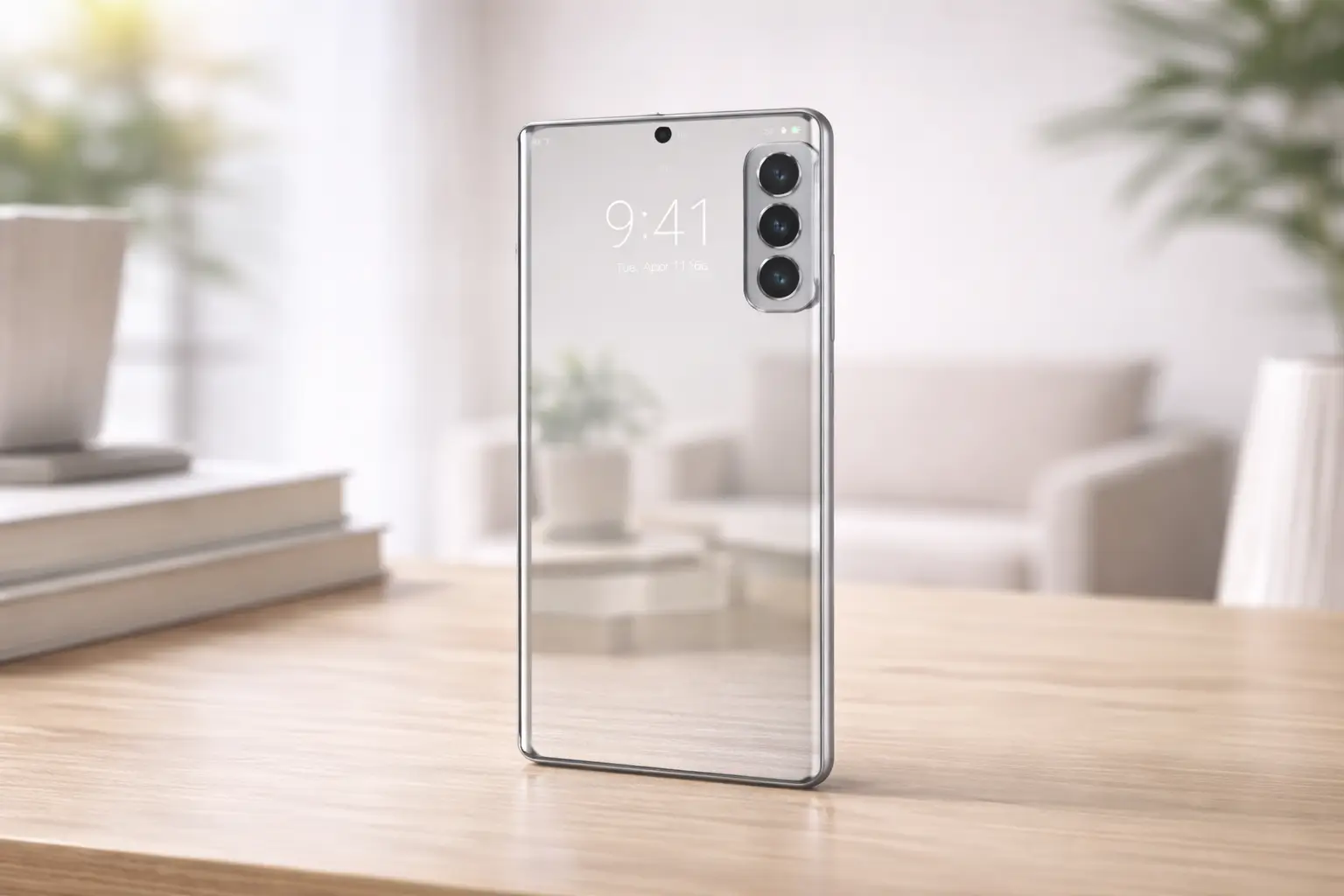
The human brain is naturally drawn to what feels new yet familiar. A transparent mobile phone looks like a regular device, but it removes the visual barrier between technology and the user.
Why transparency feels futuristic
- It reveals internal structure instead of hiding it
- It aligns with sci-fi imagery people already recognize
- It suggests honesty and openness in design
Even when the technology behind transparent displays is limited, the visual impact alone is enough to spark interest.
Transparency as a design statement
For many users, a transparent mobile represents a rejection of the opaque, sealed-box aesthetic that has dominated smartphones for more than a decade. The appeal is emotional as much as technical.
How social media drives interest in transparent mobile concepts
Short-form video platforms have played a major role in amplifying curiosity.
Viral loops and visual impact
Transparent mobile videos perform well because they:
- Stop scrolling instantly
- Require no technical explanation to impress
- Look believable enough to raise questions
Many viral clips are conceptual or experimental, but the audience reaction is real.
The gap between concept and reality
What people often see online includes:
- Prototype demonstrations
- Design renders
- Modified phones with transparent backs
This gap between expectation and practicality fuels ongoing discussion rather than shutting it down.
The technology behind transparent mobile displays
Transparency in smartphones is not a single technology—it is a collection of trade-offs.
Transparent OLED and micro-LED research
Some display technologies allow partial transparency by:
- Reducing pixel density
- Using light-emitting materials selectively
- Placing components behind non-active areas
These approaches work in controlled environments but struggle with brightness, battery efficiency, and durability.
Why full transparency is still difficult
A truly transparent mobile would require:
- Transparent batteries
- Invisible wiring
- See-through sensors and cameras
These components are still in early research stages, which is why most transparent mobile phones remain conceptual.
Real-world examples that fuel curiosity
People are not just reacting to abstract ideas. Several real-world developments keep the topic alive.
Transparent electronics beyond phones
Consumers have already seen:
- Transparent TVs in exhibitions
- Clear earbuds and gadgets
- Industrial transparent displays
These products reinforce the idea that a transparent mobile is not impossible—just not practical yet.
Modified and experimental devices
Some creators showcase transparent-looking phones by:
- Replacing back panels with clear materials
- Removing decorative layers
- Highlighting internal components
While not functionally transparent, these devices strengthen visual fascination.
What a transparent mobile symbolizes in today’s tech culture
The popularity of the transparent mobile concept reflects broader trends.
Fatigue with incremental smartphone updates
Many users feel that modern phones differ only in:
- Camera count
- Processor upgrades
- Software features
A transparent mobile feels like a meaningful departure from that cycle.
Design as identity
Phones are personal objects. Transparency allows users to:
- Signal interest in innovation
- Stand out visually
- Align with futuristic aesthetics
This symbolic value matters even if the product is not yet practical.
Practical challenges holding back transparent mobile phones
Curiosity does not erase reality. There are significant limitations.
Durability concerns
Transparent materials often:
- Scratch more easily
- Weaken structural rigidity
- Complicate drop protection
For daily-use smartphones, this is a major obstacle.
Battery and thermal management
Batteries generate heat and require shielding. Transparency conflicts with:
- Heat dissipation needs
- Safety standards
- Energy density requirements
This alone prevents mass-market transparent mobile adoption.
User experience trade-offs
Even if the hardware existed, usability questions remain.
Visibility and readability issues
A transparent display can struggle with:
- Contrast in bright environments
- Visual clutter behind the screen
- Eye strain over long usage
Phones are functional tools first, and readability cannot be compromised.
Privacy and distraction
Seeing objects behind the display could:
- Reduce focus
- Create visual noise
- Raise privacy concerns in public spaces
These are not trivial issues for mainstream users.
Why brands still experiment with transparent mobile ideas
Despite the challenges, manufacturers continue exploring transparency.
Concept devices as innovation signals
Brands use transparent mobile concepts to:
- Showcase R&D capabilities
- Test public reaction
- Influence future design language
These experiments shape long-term strategy even if the exact product never launches.
Lessons applied elsewhere
Research into transparent components often benefits:
- Camera module miniaturization
- Display efficiency improvements
- Material science advancements
The transparent mobile is sometimes a means, not the end goal.
The role of nostalgia and retro-futurism
Transparency also connects with older design trends.
Echoes of early tech aesthetics
Clear electronics were popular in:
- Early gaming consoles
- 1990s gadgets
- Educational devices
The modern transparent mobile blends that nostalgia with futuristic ambition.
Why this resonates now
As technology becomes more invisible, people become curious about seeing it again.
What consumers really want from a transparent mobile
Curiosity does not always mean demand.
Common user expectations
Most people are not asking for:
- Fully invisible phones
- Complete transparency
Instead, they want:
- Fresh design language
- Honest materials
- Devices that feel different
Partial transparency or transparent accents may be enough
Likely future of transparent mobile phones
Rather than a sudden breakthrough, change is likely to be gradual.
More realistic near-term outcomes
- Transparent backs or frames
- Semi-transparent displays for specific functions
- Clear internal elements as design highlights
These approaches balance curiosity with practicality.
Long-term implications
Transparent mobile research pushes the industry toward:
- New material standards
- Rethinking internal layouts
- More visually expressive hardware
Even without mass adoption, the influence remains.
Why curiosity persists despite limitations
The transparent mobile sits at the intersection of imagination and engineering.
- It looks possible
- It feels futuristic
- It challenges assumptions
As long as smartphones remain visually predictable, transparency will continue to attract attention—regardless of whether it becomes mainstream.