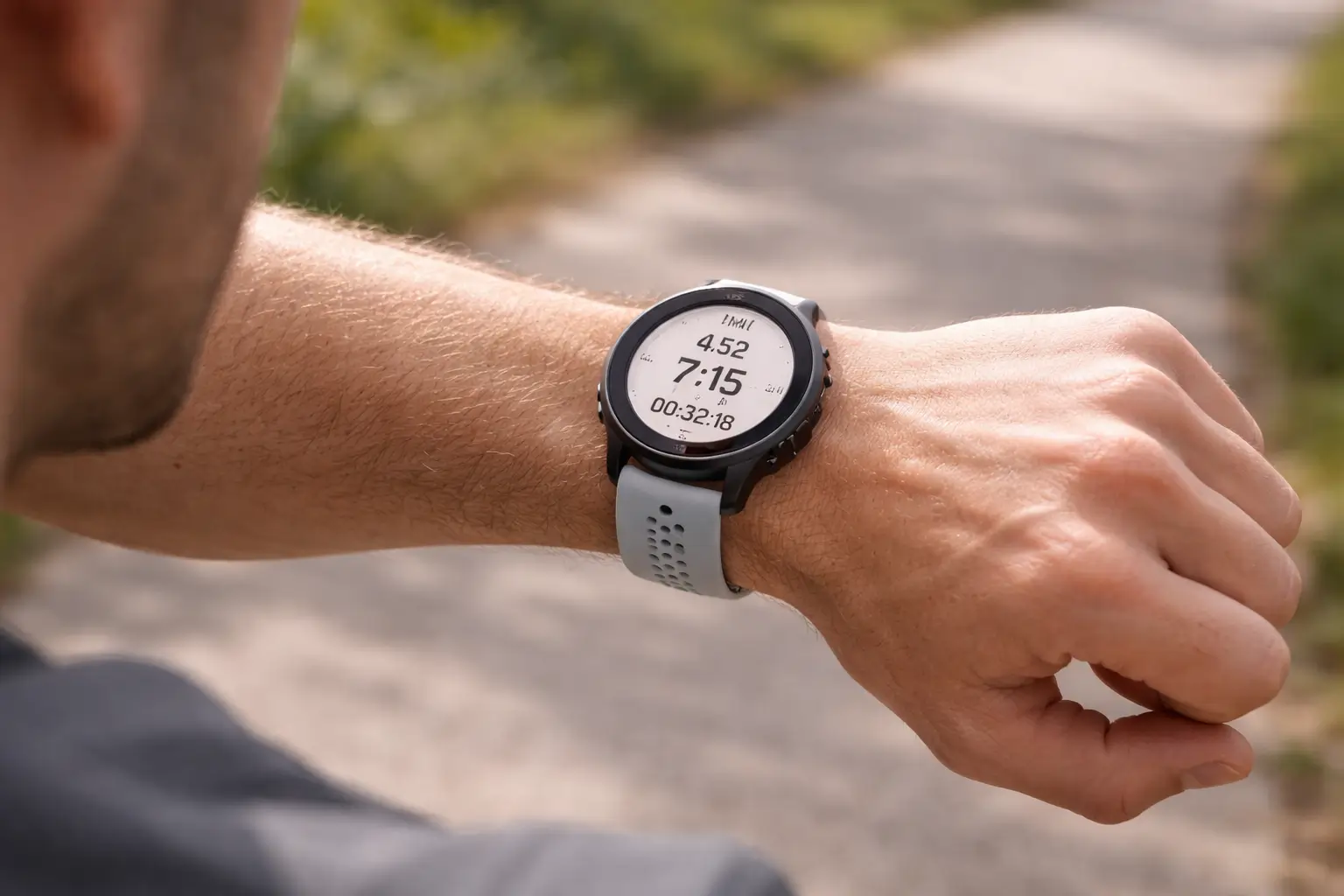
This article focuses strictly on those two criteria—accuracy and comfort—so readers can make confident buying decisions without distraction.
What Accuracy Really Means in Running Watches
Accuracy in a running watch is not limited to GPS distance alone. For runners, it typically includes:
- GPS precision for pace and distance
- Heart-rate accuracy during steady runs and intervals
- Consistency across different environments such as roads, parks, and tracks
Modern running watches use multi-band GNSS, sensor fusion, and improved optical heart-rate sensors to reduce data drift. However, performance still varies significantly between models.
Comfort: The Deciding Factor for Daily Use
Comfort determines whether a watch can be worn for:
- Daily training
- Long runs exceeding one hour
- All-day wear for recovery and sleep tracking
Key comfort factors include:
- Case size and weight
- Strap material and breathability
- Skin irritation during sweat-heavy sessions
For many users—especially those comparing best running watches for men—comfort is often the final deciding factor after accuracy.
Best Running Watches That Balance Accuracy and Comfort
Garmin Forerunner Series
Garmin dominates the running watch category due to consistent GPS performance and lightweight designs.
Why it performs well
- Multi-band GPS on higher-end models
- Reliable pace tracking even under tree cover
- Lightweight polymer cases ideal for long runs
Comfort profile
- Slim, low-profile design
- Silicone straps suitable for extended wear
- Minimal wrist fatigue during marathons
This series remains a top choice for runners who prioritize data reliability without bulky hardware.
Apple Watch (Running-Focused Use)
Apple has significantly improved running accuracy in recent generations.
Why it performs well
- Strong GPS accuracy in open environments
- Reliable heart-rate tracking during steady runs
- Tight integration with fitness and health apps
Comfort profile
- Smooth edges and premium materials
- Wide strap options for different wrist sizes
- Slightly heavier than dedicated running watches
While not built exclusively for runners, it performs well for those who want accuracy combined with everyday wearability.
COROS Pace Series
COROS has gained attention for offering high-end accuracy at competitive pricing.
Why it performs well
- Dual-frequency GPS on newer models
- Stable pace readings during intervals
- Strong battery efficiency without sacrificing precision
Comfort profile
- Extremely lightweight build
- Minimalist design reduces wrist pressure
- Comfortable for runners sensitive to heavier watches
COROS models appeal to runners focused on performance metrics without unnecessary features.
Polar Vantage Series
Polar is known for heart-rate accuracy and training analytics.
Why it performs well
- Excellent optical heart-rate tracking
- Reliable distance measurement on roads and tracks
- Strong consistency across sessions
Comfort profile
- Balanced weight distribution
- Soft straps designed for skin comfort
- Slightly thicker casing on some models
Polar watches are well-suited for runners who value physiological data accuracy as much as GPS.
Suunto Running Watches
Suunto emphasizes durability without compromising accuracy.
Why it performs well
- Stable GPS tracking for long outdoor runs
- Good altitude and route accuracy
- Trusted reliability in varied conditions
Comfort profile
- More rugged build than competitors
- Comfortable for larger wrists
- May feel heavy for minimalist runners
Suunto models suit runners who train in diverse terrains and prefer solid construction.
Accuracy vs Comfort: What to Prioritize
Choosing among the best running watches often comes down to trade-offs:
- High accuracy + lightweight: Ideal for race-focused runners
- Good accuracy + premium comfort: Best for everyday wear
- Maximum battery + accuracy: Suited for ultrarunners
Runners training for performance should prioritize GPS and heart-rate precision, while casual or lifestyle runners may value comfort more.
Best Running Watches for Men: Fit and Wearability
When evaluating best running watches for men, sizing and strap options matter:
- Larger case sizes suit bigger wrists but add weight
- Adjustable straps improve long-run comfort
- Button placement affects usability while running
Men with larger wrists may prefer watches with slightly bigger displays, while still ensuring the watch does not shift during motion.
Practical Buying Considerations
Before choosing a running watch, consider:
- Typical run duration and frequency
- Whether you train indoors, outdoors, or both
- Sensitivity to wrist weight and strap material
- Need for advanced metrics versus simplicity
Accuracy and comfort should always outweigh secondary features like music storage or notifications.
Key Takeaways for Runners
The best running watches excel in both tracking precision and long-term wear comfort
Lightweight design often improves comfort without sacrificing accuracy
Dedicated running brands generally outperform smartwatches for serious training
Comfort becomes more critical as run duration increases