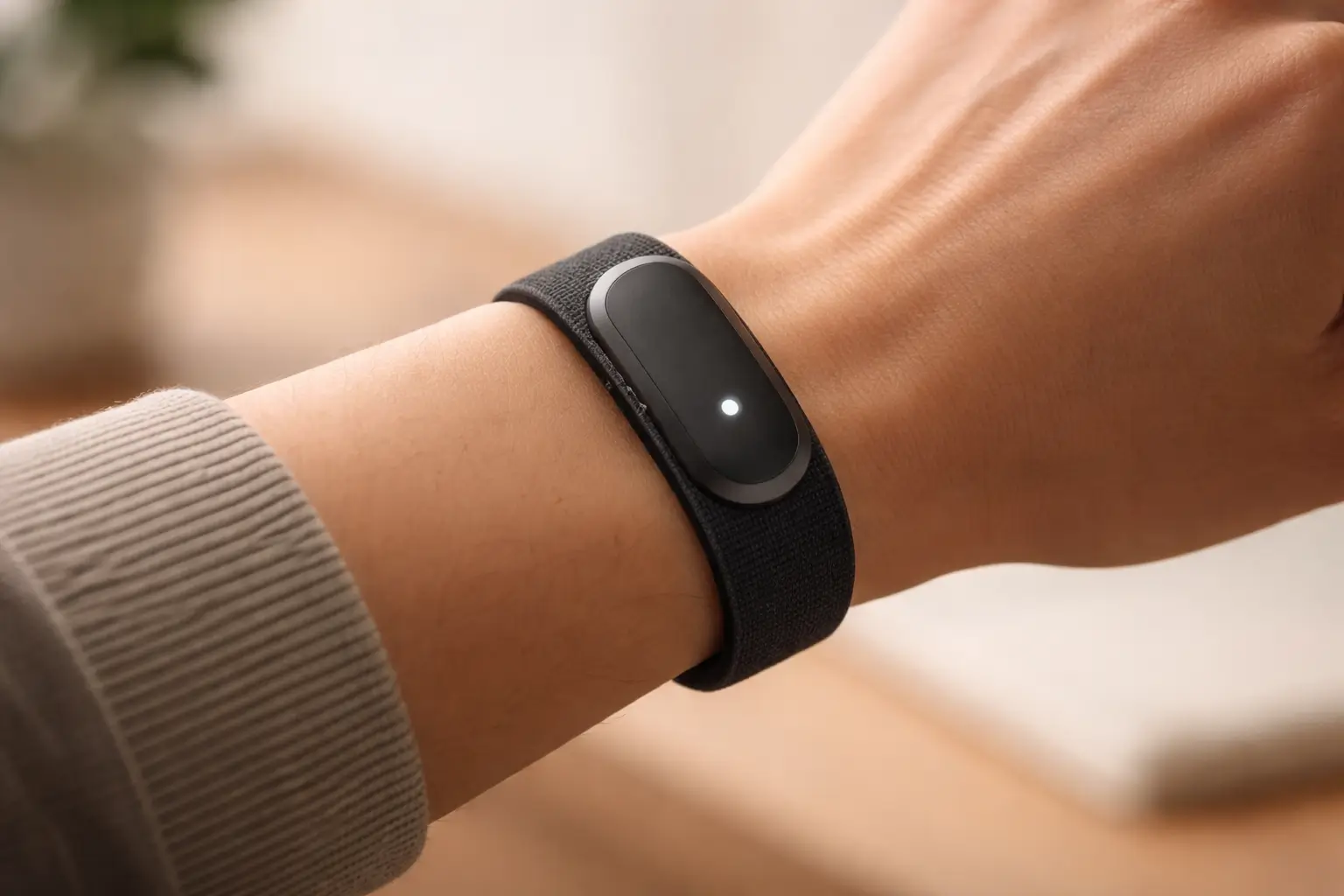
The Amazfit Helio Strap is designed for users who want continuous health and recovery tracking without a screen. It focuses on collecting physiological data in the background and translating it into actionable insights through software, rather than offering notifications, apps, or interactive features on the wrist.
In practical terms, it tracks how your body responds to daily activity, sleep, stress, and training load—and it is built for people who value data accuracy and recovery awareness more than smartwatch-style interaction.
What the Amazfit Helio Strap Tracks
The Helio Strap focuses on passive, continuous biometric monitoring. Its tracking priorities are health baselines and recovery signals rather than real-time workout guidance.
Heart Rate and Heart Rate Variability (HRV)
The strap continuously monitors heart rate throughout the day and night. More importantly, it tracks heart rate variability, a key metric used to assess:
- Recovery status
- Physical stress
- Nervous system balance
HRV trends are used to infer how well your body is adapting to training, sleep, and daily stressors.
Sleep Duration and Sleep Quality
Sleep tracking is a core function. The Helio Strap records:
- Total sleep time
- Sleep stages (light, deep, REM)
- Sleep consistency and recovery impact
The emphasis is not just on how long you sleep, but how effectively your sleep supports recovery.
Stress and Physiological Load
Using heart rate patterns and variability, the device estimates physiological stress levels across the day. This helps identify:
- Prolonged mental or physical strain
- Insufficient recovery between activities
- Patterns that may affect performance or wellbeing
This data is aggregated rather than presented as moment-to-moment alerts.
Activity and Movement Patterns
The Helio Strap tracks general activity such as:
- Steps and movement volume
- Active versus sedentary time
It does not aim to replace a GPS sports watch. Activity data is used mainly to contextualize recovery and load, not to provide detailed workout metrics.
Recovery and Readiness Insights
All collected data feeds into recovery-oriented insights. Instead of focusing on goals or streaks, the platform emphasizes:
- Whether your body is under strain
- Whether rest is sufficient
- How recent activity impacts readiness
This makes the device particularly relevant for users managing training intensity or long-term health.
What the Amazfit Helio Strap Does Not Do
Understanding limitations is essential to deciding if the device fits your needs.
The Helio Strap:
- Has no display
- Does not show notifications
- Does not provide on-device workout guidance
- Does not include built-in GPS
All insights are accessed through the companion app rather than directly on the wrist.
How the Data Is Used
The strap acts as a data collection layer. Interpretation happens in software, where metrics are combined to show trends rather than isolated readings.
This approach prioritizes:
- Long-term patterns over daily numbers
- Contextual health insights rather than gamification
- Recovery management instead of competition
For many users, this is a feature—not a drawback.
Who the Amazfit Helio Strap Is For
Athletes Focused on Recovery
Endurance athletes, strength trainers, and high-volume exercisers who already understand training basics benefit most from recovery-focused tracking.
Users Who Prefer Minimal Wearables
People who dislike screens, notifications, or frequent charging but still want health data will find the minimalist design appealing.
Professionals Managing Stress and Sleep
Users interested in understanding how work stress, travel, and irregular schedules affect recovery can use the strap as a passive monitoring tool.
Users Already in the Amazfit / Zepp Ecosystem
Those familiar with Amazfit’s data presentation and health metrics will adapt quickly to the Helio Strap’s insights.
Who It Is Not For
- Users seeking smartwatch features
- Beginners who want guided workouts or motivation prompts
- People expecting detailed sport-specific metrics
- Users who prefer instant feedback on the wrist
In these cases, a smartwatch or fitness watch is more appropriate.
How It Fits Into the Wearables Landscape
The Helio Strap sits closer to recovery bands than to fitness trackers. Its philosophy aligns with devices that prioritize:
- Continuous monitoring
- Data interpretation over interaction
- Health trends over daily performance scores
This positioning explains both its strengths and its narrow target audience.
Practical Takeaway
The Amazfit Helio Strap is a specialized health and recovery tracker, not a general-purpose wearable. Its value depends entirely on whether the user wants insight over interaction.
If your goal is understanding how your body responds to training, sleep, and stress—with minimal distraction—it fits that role precisely. If your goal is tracking workouts, receiving alerts, or engaging with apps on your wrist, it does not.