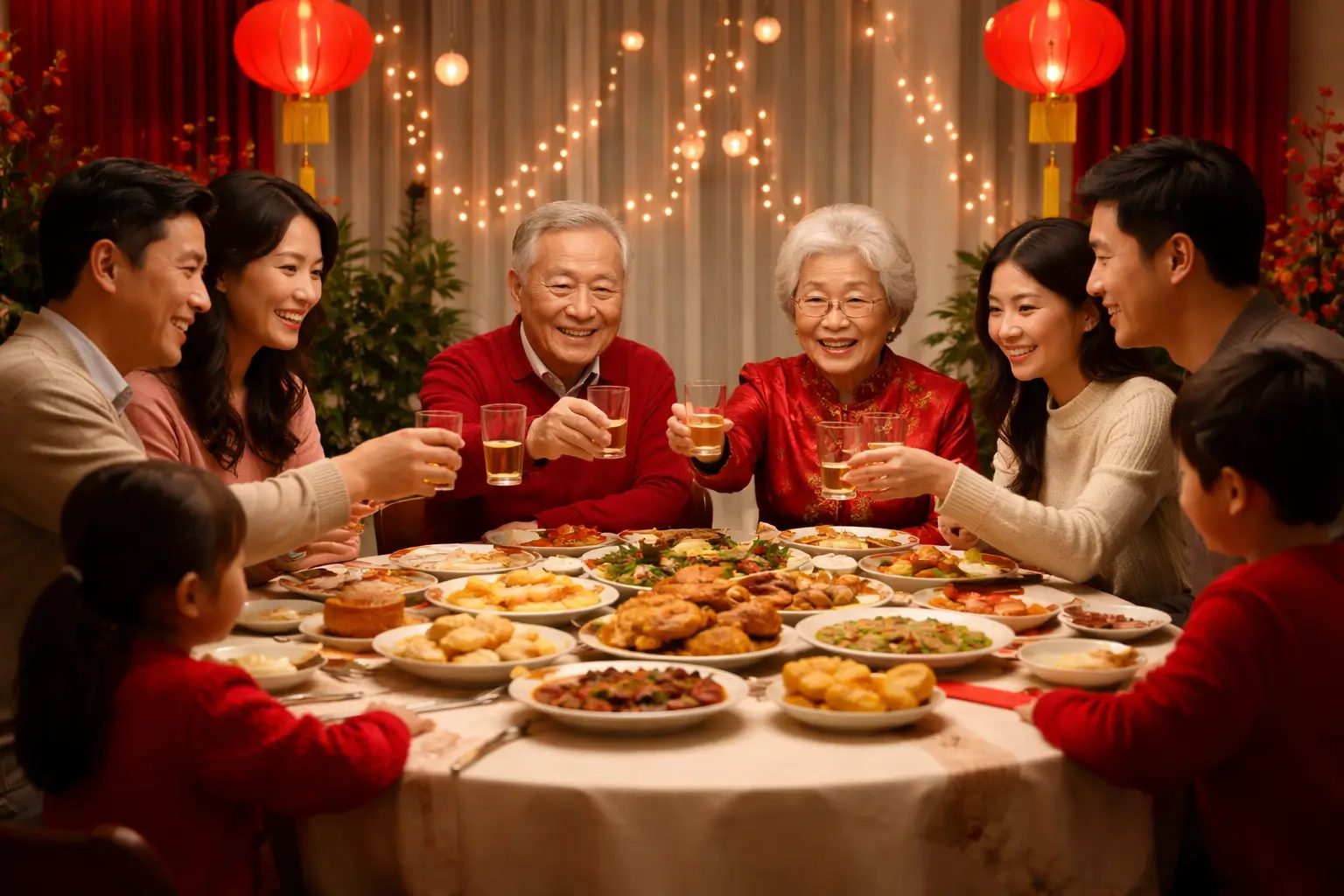
Chinese New Year celebrates the beginning of a new year according to the traditional lunisolar Chinese calendar. At its core, it marks a renewal cycle—closing one year’s fortunes and opening another through family reunion, ritual observance, and symbolic actions meant to invite stability, prosperity, and harmony.
Unlike a single-day holiday, Chinese New Year is a multi-day cultural transition period that resets social bonds, household priorities, and personal intentions. Its importance lies not only in tradition but in how it continues to structure family life, work rhythms, and cultural identity across generations and geographies.
What Chinese New Year Actually Marks
Chinese New Year begins on the new moon between late January and mid-February and signals the transition into a new zodiac year. Each year is associated with one of twelve zodiac animals and one of five elements, forming a repeating 60-year cycle.
What is being marked is not a historical event or religious doctrine, but:
- The completion of an old agricultural and social cycle
- The start of a renewed calendar year
- A collective pause for reflection, reconciliation, and preparation
The holiday’s structure reflects this purpose: days of closure, reunion, symbolic cleansing, and forward-looking rituals.
The Central Meaning: Renewal, Order, and Continuity
Chinese New Year is fundamentally about restoring balance—within families, households, and communities.
Renewal of the Household
Homes are cleaned before the new year to symbolically remove stagnation and misfortune. This is not hygiene alone; it represents intentional reset.
Renewal of Relationships
Family reunions are central. Old disputes are traditionally set aside, debts acknowledged, and respect reaffirmed across generations. The emphasis is not celebration for entertainment, but social continuity.
Renewal of Intent
The holiday reinforces forward-looking values: diligence, responsibility, luck earned through order, and moral alignment rather than chance.
Why Family Is at the Center of Chinese New Year
Chinese New Year prioritizes the family unit over the individual. This is not incidental—it reflects long-standing social organization in Chinese culture.
Key aspects include:
- Reunion dinners as the most important meal of the year
- Honoring elders and ancestors
- Shared rituals that reinforce collective identity
The emphasis on family explains why Chinese New Year remains emotionally significant even for younger generations living abroad or in urban centers.
The Role of Tradition Without Religion
Chinese New Year is often misunderstood as a religious festival. In practice, it is cultural rather than doctrinal.
Rituals vary widely by region and household, but they serve practical symbolic functions:
- Ancestor remembrance reinforces lineage and continuity
- Offerings express gratitude, not worship obligation
- Auspicious symbols reflect cultural psychology, not superstition
Participation does not require religious belief, which is why the festival adapts easily across societies.
Why Symbols Matter During Chinese New Year
Symbols during Chinese New Year are not decorative—they communicate shared meaning quickly across generations.
Common symbolic functions include:
- Red: protection, vitality, social optimism
- Fireworks and noise: disruption of stagnation, marking transition
- Specific foods: linguistic symbolism tied to prosperity, unity, or longevity
These symbols persist because they are collectively understood, not because they are mandated.
The Chinese Zodiac and Its Practical Role
Each Chinese New Year introduces a zodiac animal associated with perceived personality traits and social expectations. While often treated casually today, the zodiac historically helped people:
- Mark time across long cycles
- Frame personal reflection and life stages
- Create shared reference points across communities
In Chinese New Year 2026, the zodiac context will again influence how people discuss expectations, compatibility, and symbolic themes for the year ahead—particularly in media and family conversations.
Why Chinese New Year Still Matters in Modern Life
Despite urbanization and global schedules, Chinese New Year remains one of the largest annual human migrations due to family reunions. This persistence highlights its continuing relevance.
Modern significance includes:
- Coordinating national and regional work calendars
- Reinforcing cultural identity among diasporas
- Providing a structured annual pause in fast-paced societies
Even where traditions are simplified, the core meaning of reset and reconnection remains intact.
Cultural Impact Beyond China
Chinese New Year is celebrated across East and Southeast Asia and by global Chinese communities. Its spread does not dilute its meaning; instead, it adapts.
In multicultural societies, the holiday functions as:
- A public cultural marker
- An educational bridge between communities
- A point of shared visibility rather than assimilation pressure
This adaptability explains why Chinese New Year maintains relevance outside its place of origin.
Why the Date Changes Every Year—and Why That Matters
Because Chinese New Year follows a lunisolar calendar, the date shifts annually. This reinforces the idea that the holiday is cyclical, not fixed, aligning human activity with natural rhythms rather than rigid scheduling.
This flexibility is part of its philosophy: time is relational and seasonal, not purely numeric.
The Deeper Reason It Endures
Chinese New Year matters because it provides something increasingly rare:
- A collective reset
- A culturally accepted pause for reflection
- A reaffirmation of shared values without political or commercial framing
Its endurance is not due to nostalgia, but to functional relevance in maintaining social cohesion.