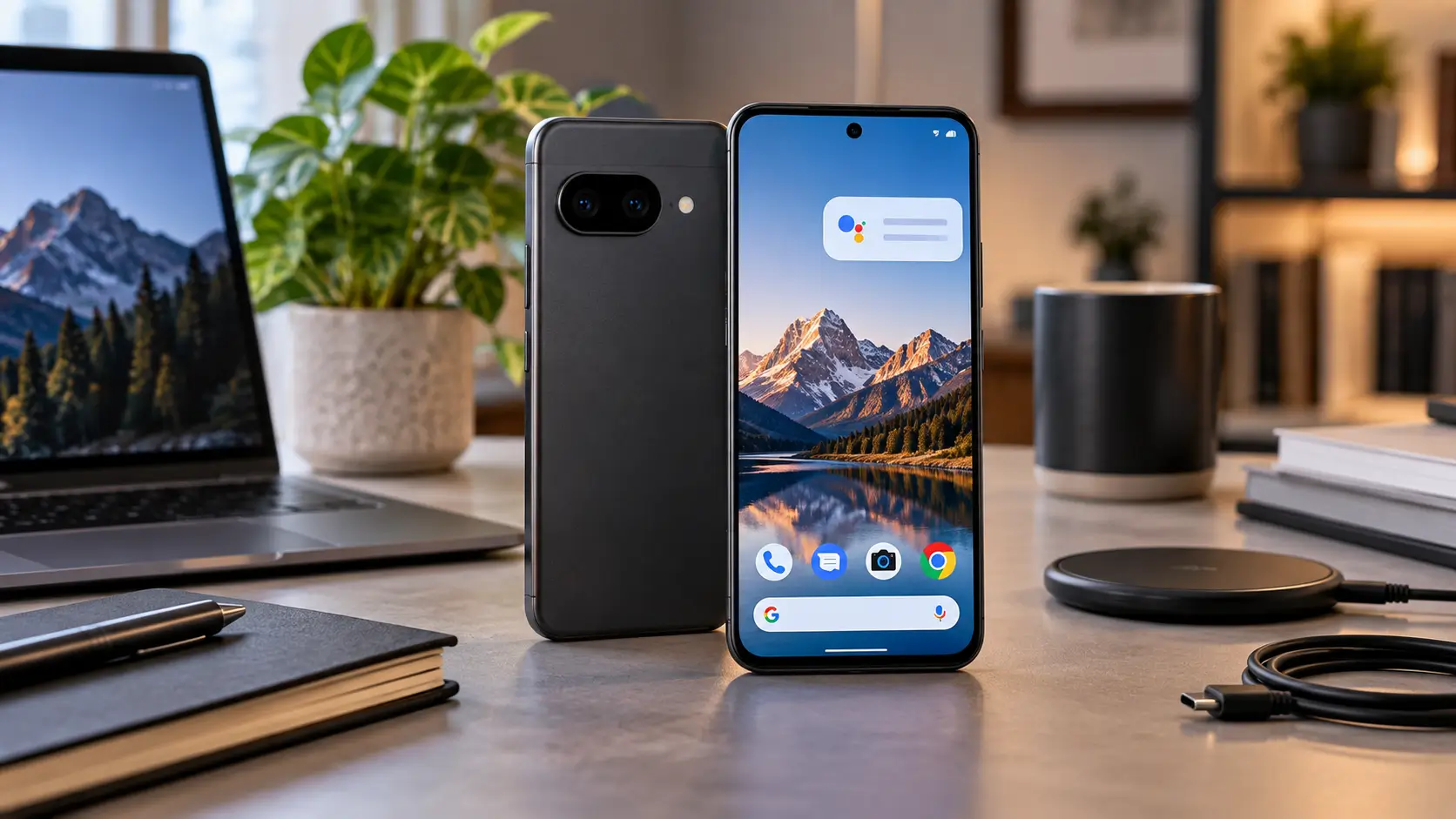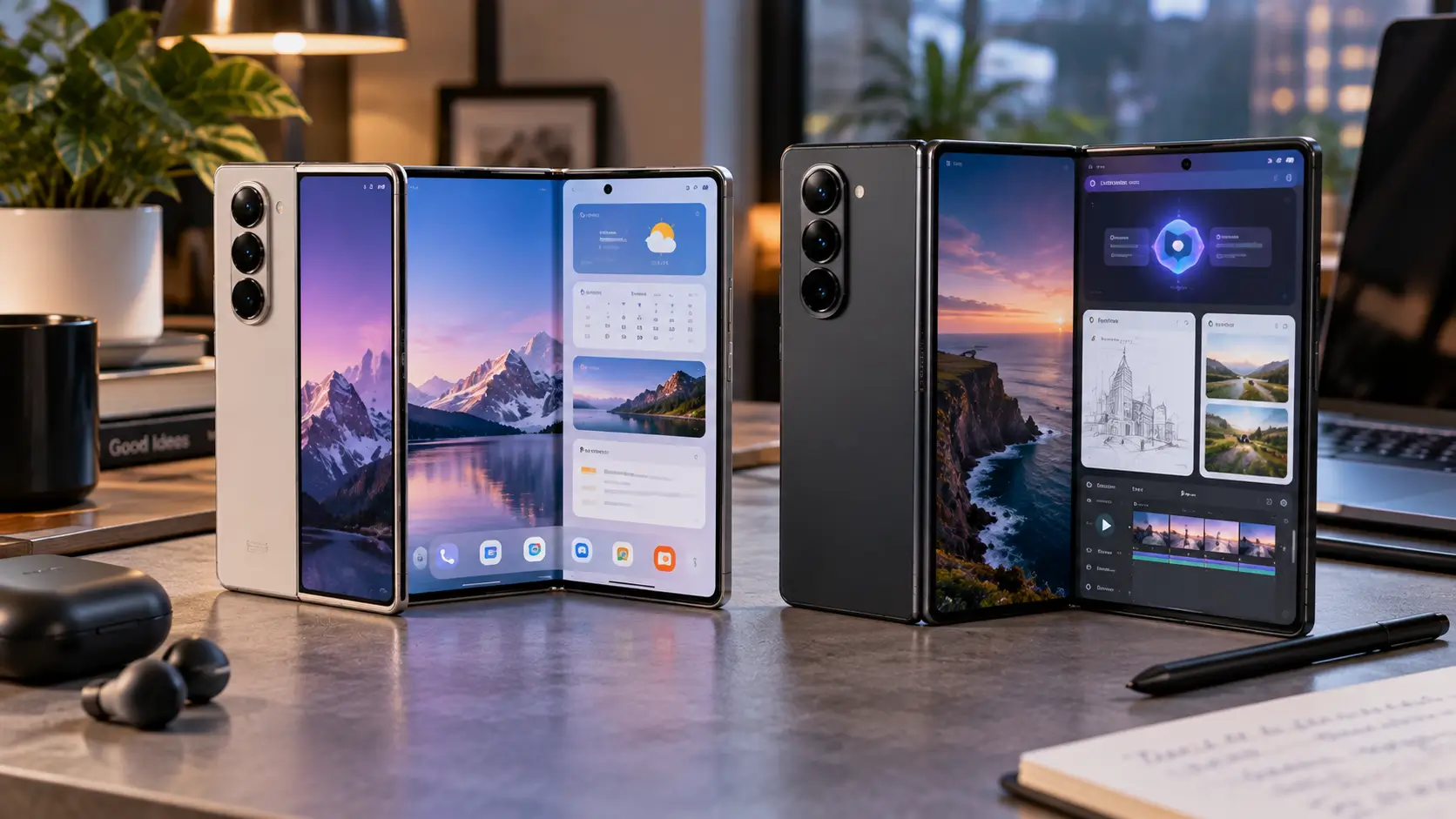
The Apple iPhone Duo and Samsung Galaxy Z Fold8 are two premium book-style foldable smartphones, but they arrive from very different positions in the market.
Apple’s iPhone Duo is the company’s first foldable iPhone. It has a 7.6-inch inner OLED display, a 5.4-inch outer screen, Apple’s A20 Pro chip, dual 48MP rear cameras and up to 2TB of storage. Apple has priced it from ₹2,99,900 in India. However, it will not go on sale immediately: pre-orders begin on October 16, with availability from October 23, 2026.
Samsung’s Galaxy Z Fold8 has been available earlier. Its Indian launch price starts at ₹1,79,999 for the 12GB/256GB model, with 512GB and 1TB configurations available at higher prices. It uses Qualcomm’s Snapdragon 8 Elite Gen 5 for Galaxy, a 7.6-inch main display, 5.5-inch cover display and dual 50MP rear cameras.
The two phones therefore share the same broad idea—a smartphone that opens into a larger screen—but differ considerably in price, weight, software, camera design, durability and ecosystem.
Quick answer
The iPhone Duo costs substantially more in India, starting at ₹2,99,900 compared with ₹1,79,999 for the Galaxy Z Fold8. The base-price difference is ₹1,19,901.
The iPhone Duo is also heavier at 254g, compared with 201g for the Fold8. Apple’s foldable offers IP68 protection, Apple Pencil USB-C support and up to 2TB storage. Samsung’s Fold8 is lighter, offers up to 16GB RAM, supports Samsung’s multitasking ecosystem and uses a 4,800mAh battery.
There is also a major availability difference: the Galaxy Z Fold8 is already on sale, while Apple’s foldable reaches Indian buyers from October 23.
Rather than treating one as universally better, the important question is which combination of hardware, software, form factor and ecosystem fits the buyer.
iPhone Duo vs Galaxy Z Fold8: India price and availability
| Model | Starting India price | Availability |
|---|---|---|
| iPhone Duo 256GB | ₹2,99,900 | October 23, 2026 |
| Galaxy Z Fold8 12GB/256GB | ₹1,79,999 | Available |
Apple lists the iPhone Duo in 256GB, 512GB, 1TB and 2TB capacities. The Indian prices are ₹2,99,900, ₹3,24,900, ₹3,74,900 and ₹4,49,900 respectively.
Samsung lists the Galaxy Z Fold8 at ₹1,79,999 for 12GB/256GB, ₹1,99,999 for 12GB/512GB and ₹2,39,999 for 16GB/1TB in India.
That means the entry-level iPhone Duo costs ₹1,19,901 more than the entry-level Galaxy Z Fold8.
The price gap is important because these are both premium foldables but their Indian starting prices target noticeably different spending levels.
Design and weight
The two phones use a similar book-style folding concept, but their physical proportions are different.
The iPhone Duo weighs 254 grams. When open, it measures 164.6mm wide, 117.8mm high and 5.2mm thick. When folded, its depth is 11.3mm.
The Galaxy Z Fold8 weighs 201 grams. Samsung lists it at 4.5mm thick when unfolded and 9.7mm thick when folded.
That produces a 53-gram difference between the two devices.
Apple uses a titanium frame and hinge cover, while Samsung uses an Armor Aluminum frame and Flex Titanium components in its foldable structure.
For buyers who carry their phone throughout the day, weight and folded dimensions are practical considerations rather than just specification-sheet numbers.
Display comparison
Both phones have 7.6-inch inner displays, but the screen designs are not identical.
The iPhone Duo uses a 7.6-inch Super Retina XDR folding OLED display with 1878 × 2670 resolution, 430ppi, nano-texture treatment and ProMotion up to 120Hz. Its outer display measures 5.4 inches.
Samsung’s Fold8 also has a 7.6-inch main display, but its internal screen uses a 4:3 aspect ratio. The cover display measures 5.5 inches and uses a 10:16 ratio. Samsung lists refresh rates up to 120Hz.
This creates an important difference in how the phones are designed to be used.
Apple keeps the proportions of the inner and outer displays relatively consistent. Samsung deliberately gives the cover screen a taller phone-like shape and the inner screen a wider 4:3 format.
The result is two different approaches to foldable software and content.
Performance and AI
The iPhone Duo is powered by Apple’s A20 Pro chip. Apple says the chip has a six-core CPU, seven-core GPU with Neural Accelerators and a dual 16-core Neural Engine. It also uses a vapor-chamber thermal system.
The Galaxy Z Fold8 uses Qualcomm’s Snapdragon 8 Elite Gen 5 for Galaxy, with Samsung highlighting its CPU, GPU and NPU capabilities for performance and AI workloads.
The two phones also take different approaches to AI.
The iPhone Duo includes Apple Intelligence and Siri AI. Apple says its A20 Pro and Neural Engine are designed to support on-device AI workloads.
Samsung’s Fold8 includes Galaxy AI, with features such as Photo Assist and Now Nudge.
A specification comparison alone cannot establish which AI ecosystem is more useful for a particular user. Feature availability, language support, app integration and ecosystem preferences all matter.
Camera comparison
The iPhone Duo has a 48MP Fusion Main camera and 48MP Fusion Ultra Wide camera.
Apple also provides a 12MP Center Stage camera on the outer display and an under-display FaceTime camera on the inner screen.
Apple has designed several camera features specifically around the foldable form factor.
Duo Preview lets people being photographed see a live preview on the outer display. Smart Take can detect when people are ready and capture a photo automatically. Apple also supports 4K Dolby Vision recording at up to 120fps on the Fusion Main camera.
The Galaxy Z Fold8 has two 50MP rear cameras: a wide camera and an ultrawide camera. Samsung also lists a 10MP cover-screen camera and 10MP main-screen camera.
Samsung adds features such as Dual Recording and its ProVisual Engine for image and video processing.
On paper, both systems provide two high-resolution rear cameras, but their processing and software approaches differ. A genuine camera-quality verdict would require controlled testing in the same conditions.
Battery and charging
Samsung gives the Galaxy Z Fold8 a 4,800mAh battery. Samsung says it supports up to 45W wired charging and 20W wireless charging, with the company’s stated testing showing up to 67% charge in around 30 minutes using a compatible 45W adapter and cable.
Apple does not publish the iPhone Duo’s battery capacity as a conventional mAh figure on its specifications page. Instead, it lists a dual-battery architecture and claims up to 24 hours of typical use, up to 31 hours of video playback using the inner display and up to 44 hours using the outer display.
Apple says wired charging can reach 50% in approximately 20 minutes with a 60W-capable adapter or higher. MagSafe and Qi2 wireless charging support up to 25W.
Because the manufacturers use different battery and testing methodologies, comparing only the mAh number would not provide a complete picture.
Durability
The iPhone Duo has an IP68 rating. Apple specifies protection against dust and water under its stated laboratory conditions, including submersion to 6 metres for up to 30 minutes.
The Galaxy Z Fold8 has an IP48 rating. Samsung specifies protection against water immersion up to 1.5 metres for 30 minutes and protection against solid particles larger than 1mm.
These ratings are not identical and should not be treated as interchangeable.
Neither rating means a foldable should deliberately be exposed to water.
Stylus and productivity
The iPhone Duo supports Apple Pencil (USB-C), although Apple says the functionality is coming later in 2026.
The Galaxy Z Fold8 does not support the S Pen. Samsung explicitly confirms this on its product page.
This is an interesting change from some earlier Galaxy Z Fold generations and is important for buyers who associate Samsung’s Fold line with stylus productivity.
Samsung’s advantage here is instead its Android multitasking environment and wider range of productivity features. The Fold8 also integrates with Samsung’s broader Galaxy ecosystem.
Software
The iPhone Duo runs iOS 27, with Apple redesigning parts of the operating system around the foldable form factor. Apple highlights different orientations, Split View, StandBy and transitions between the outer and inner displays.
The Galaxy Z Fold8 runs Android 17 with One UI 9. Samsung has designed the Fold8’s software around the 4:3 inner display, split-screen workflows and Galaxy AI features.
Samsung states that the Fold8 receives up to seven OS upgrades and security updates. Apple does not publish an equivalent fixed-year update promise for the iPhone Duo on the sources checked here.
For an iPhone owner, the choice therefore also involves the wider Apple ecosystem. For an Android user, the Galaxy Fold8 keeps the device within Google’s and Samsung’s Android ecosystem.
Storage and connectivity
The iPhone Duo offers substantially more maximum storage:
- 256GB
- 512GB
- 1TB
- 2TB
Samsung offers:
- 256GB
- 512GB
- 1TB
Samsung’s 1TB configuration comes with 16GB RAM, while the 256GB and 512GB models have 12GB. Apple does not publish a consumer-facing RAM figure on its official specification page.
Both support Wi-Fi 7.
The iPhone Duo is eSIM-only worldwide, with two active eSIMs supported. It does not accept a physical SIM card.
The Galaxy Z Fold8 supports physical-SIM/eSIM configurations depending on market and carrier.
For Indian users who regularly change physical SIM cards, this is a practical distinction worth checking before purchasing.
iPhone Duo vs Galaxy Z Fold8: key differences
| Area | iPhone Duo | Galaxy Z Fold8 |
|---|---|---|
| Starting India price | ₹2,99,900 | ₹1,79,999 |
| Weight | 254g | 201g |
| Inner display | 7.6-inch OLED | 7.6-inch AMOLED |
| Cover display | 5.4-inch | 5.5-inch |
| Refresh rate | Up to 120Hz | Up to 120Hz |
| Processor | A20 Pro | Snapdragon 8 Elite Gen 5 for Galaxy |
| Rear cameras | 48MP + 48MP | 50MP + 50MP |
| Battery | Dual-battery architecture | 4,800mAh |
| Water/dust | IP68 | IP48 |
| Maximum storage | 2TB | 1TB |
| Stylus | Apple Pencil USB-C | No S Pen |
| Software | iOS 27 | Android 17 / One UI 9 |
| AI | Apple Intelligence / Siri AI | Galaxy AI |
| India availability | October 23, 2026 | Already available |
Which type of buyer should consider each?
The iPhone Duo is particularly relevant to someone who already uses Apple devices and wants a foldable while remaining inside Apple’s ecosystem. Its 2TB storage option, Apple Pencil support, IP68 rating and iOS 27 foldable features are also relevant considerations.
The Galaxy Z Fold8 is relevant to buyers who want a foldable Android device that is already available, weighs considerably less, offers up to 16GB RAM and integrates with Samsung’s multitasking and Galaxy AI environment.
Neither set of characteristics makes one phone universally suitable for everyone.
The biggest practical questions are therefore:
Do you prefer iOS or Android?
Do you need the phone immediately?
Is the extra ₹1,19,901 for the iPhone Duo justified by the Apple ecosystem and its specific hardware features for you?
Do you value lower weight and Samsung’s established foldable software approach?
Those questions are more useful than simply asking which specification sheet looks better.
What Indian buyers should know
The most important point is the availability timeline.
The Galaxy Z Fold8 is already available in India. The iPhone Duo is not scheduled to reach buyers until 23 October 2026, with pre-orders opening on October 16.
That means a buyer shopping today is not comparing two immediately available phones.
Pricing also deserves attention. Samsung’s ₹1,79,999 starting price is significantly below Apple’s ₹2,99,900 starting price. The difference increases further when comparing Apple’s higher-storage configurations.
Before purchasing either phone, Indian buyers should also check retailer pricing, bank offers, exchange programs and warranty terms because these can change the effective purchase cost.
Bottom line
The iPhone Duo and Galaxy Z Fold8 are competing in the same broad foldable category but are not identical products.
Apple’s iPhone Duo brings a new foldable form factor to the iPhone family, A20 Pro, iOS 27, Apple Intelligence, Apple Pencil support, IP68 protection and up to 2TB storage.
Samsung’s Galaxy Z Fold8 offers a lighter 201g design, Snapdragon 8 Elite Gen 5 for Galaxy, up to 16GB RAM, a 4,800mAh battery, Android 17 with One UI 9 and Samsung’s Galaxy AI features.
The Indian pricing difference is particularly significant: ₹2,99,900 for the iPhone Duo versus ₹1,79,999 for the Galaxy Z Fold8 at their respective starting configurations.
The iPhone Duo also has a later availability date, while Samsung’s Fold8 is already available.
For Indian buyers, the decision therefore depends heavily on ecosystem, timing, weight, software preferences, productivity requirements and how much the specific Apple features are worth to them—not simply on which phone has the larger number in a specification table.
FAQ
What is the iPhone Duo price in India?
The iPhone Duo starts at ₹2,99,900 for 256GB in India. Apple also offers 512GB, 1TB and 2TB versions.
What is the Samsung Galaxy Z Fold8 price in India?
The Galaxy Z Fold8 starts at ₹1,79,999 for 12GB RAM and 256GB storage in India.
Which is heavier, iPhone Duo or Galaxy Z Fold8?
The iPhone Duo weighs 254g, while the Galaxy Z Fold8 weighs 201g.
Do both phones have 7.6-inch inner displays?
Yes. Both have 7.6-inch foldable inner displays, although their aspect ratios, resolutions and display technologies differ.
Does iPhone Duo support Apple Pencil?
Yes. Apple says iPhone Duo supports Apple Pencil (USB-C), with support coming later in 2026.
Does Galaxy Z Fold8 support S Pen?
No. Samsung explicitly states that the Galaxy Z Fold8 does not support S Pen.
Is iPhone Duo available in India now?
Not yet as of 19 September 2026. Apple says pre-orders begin October 16 and availability starts October 23.
Does iPhone Duo support a physical SIM?
No. Apple says the iPhone Duo is eSIM-only worldwide and does not support physical SIM cards.
DISCLAIMER
Product comparison disclaimer: Prices, offers, availability and retailer terms can change. The India prices and availability dates in this comparison were checked on 19 September 2026 using manufacturer information and current reporting. Verify the final price, configuration, warranty and availability with Apple, Samsung or an authorised retailer before purchasing.