Few journeys come with expectations as heavy as a taj mahal tour. The monument is not only one of the world’s most photographed landmarks, it is also one of the most regulated, crowded, and misunderstood heritage sites on the planet. Visitors often arrive with a fixed image in mind, only to find themselves confused by ticket queues, entry gates, security rules, guide pricing, weather extremes, and time pressure.
A stress-free visit is not about luxury. It is about sequencing, timing, and knowing how the system works before you arrive.
This guide explains how to plan, enter, explore, and exit the Taj Mahal calmly, efficiently, and with full awareness of what matters most on the ground.
Why Planning Matters More for the Taj Mahal Than Most Landmarks
The Taj Mahal is not a casual stop. It is a protected UNESCO World Heritage Site with:
- Fixed daily entry limits
- Security screening similar to airports
- Multiple ticket categories and gates
- Strict time windows for certain visitors
- Seasonal access restrictions
On peak days, more than 40,000 people pass through a complex built for far fewer.
The difference between a memorable visit and a frustrating one is preparation.
Understanding the Taj Mahal Tour System Before You Arrive
Ticket Types and What They Actually Include
At first glance, Taj Mahal tickets seem simple. In practice, they are layered.
Standard entry tickets provide:
- Access to the main complex
- Entry to the gardens and outer platforms
- Limited time inside the inner mausoleum
Optional add-ons may include:
- Sunrise or sunset entry windows
- Access to the main tomb chamber
- Guided tour services
Foreign visitors and Indian citizens use separate pricing structures. Weekend and public holiday demand can change availability quickly.
Your first exposure to the taj mahal tour experience is the ticket counter or online portal. Mistakes here create delays that follow you through the entire visit.
Choosing the Right Time of Day
Time selection determines crowd density, lighting quality, temperature, and even how long you wait at security.
Sunrise offers:
- Lowest crowd volume
- Soft light for photography
- Cooler temperatures in warmer months
Midday brings:
- Harsh light
- Long queues
- Maximum heat exposure
Late afternoon offers:
- Balanced lighting
- Moderate crowd thinning
- Better comfort in winter months
Avoid national holidays, Fridays (mosque prayer restrictions), and full-moon nights unless you have secured special night viewing access.
Step-by-Step Entry Process at the Taj Mahal
Understanding the physical flow prevents unnecessary confusion.
Step 1: Arrival Zone and Vehicle Restrictions
Private vehicles are not allowed near the monument perimeter.
Expect to:
- Park at designated lots
- Use electric shuttles, rickshaws, or walk
- Pass through outer security checkpoints
Large bags, tripods, food items, and electronics are restricted.
Step 2: Gate Selection and Ticket Validation
There are three main entry gates:
- East Gate (preferred for tourists)
- West Gate (main local entry point)
- South Gate (limited use)
Ticket validation and biometric checks occur before security screening.
Step 3: Security Screening
Procedures resemble airport security:
- Metal detectors
- Bag scanning
- Manual frisking
Prohibited items include:
- Food and drinks (except water in transparent bottles)
- Tobacco products
- Chargers and power banks
- Drones and tripods
Carrying fewer items speeds the process significantly.
Navigating the Complex Without Feeling Rushed
Once inside, many visitors instinctively walk straight toward the mausoleum.
That is often a mistake.
Recommended Walking Sequence
A calmer route:
- Enter through the main gateway
- Pause for the first symmetrical view
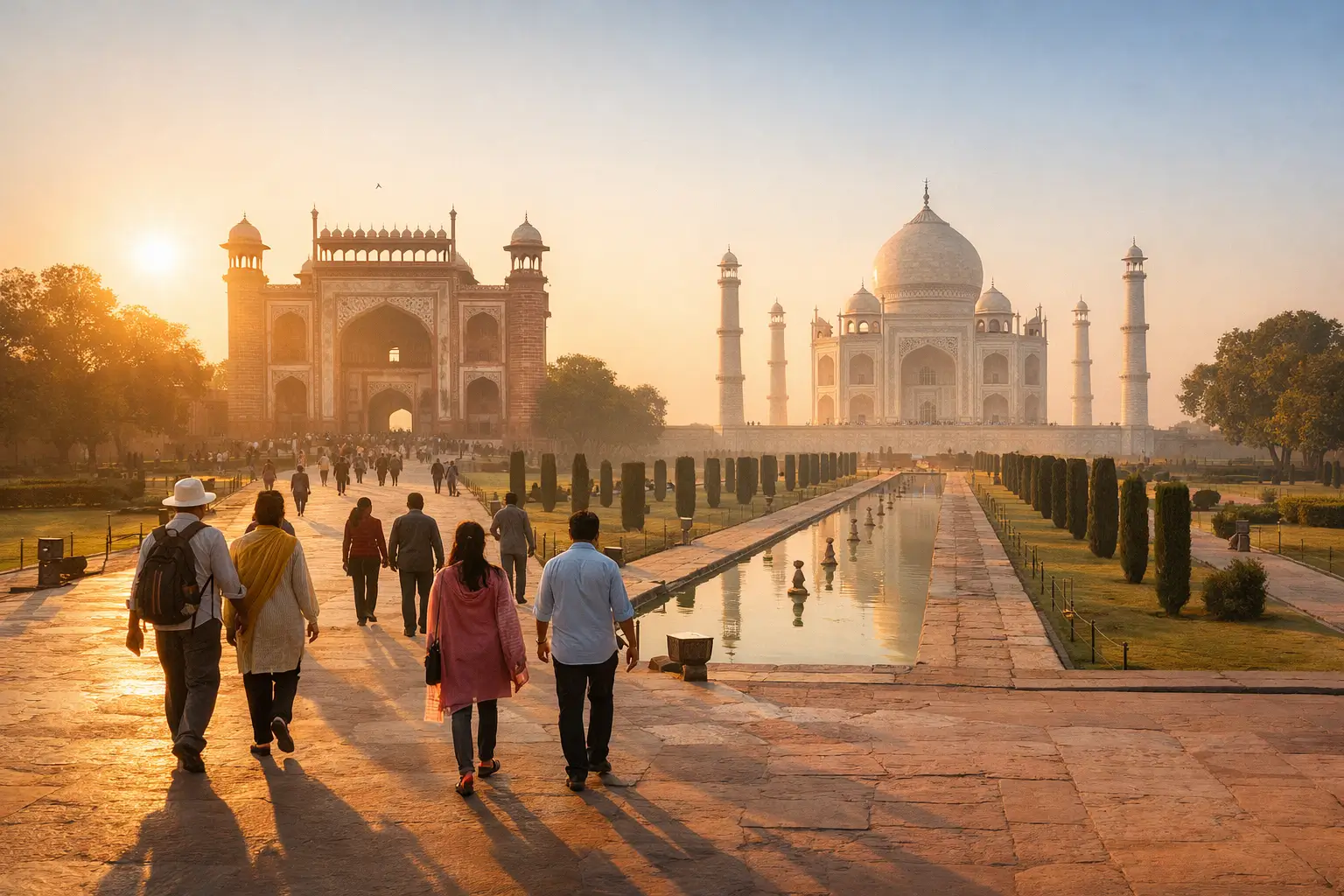
- Walk slowly through the garden axis
- Observe the reflection pool area
- Approach the platform gradually
- Visit the mausoleum interior last
This sequencing spreads your time naturally and reduces bottlenecks.
Understanding the Monument Before You Photograph It
The Taj Mahal is not a single structure. It is a symbolic complex.
Key elements to observe:
- The red sandstone gateway representing transition
- The Charbagh garden layout symbolizing paradise
- The reflecting pool aligning the monument visually
- The four minarets intentionally tilted outward for safety
The central mausoleum houses the symbolic cenotaphs, while the actual tombs lie in a sealed lower chamber.
Knowing this context transforms a sightseeing stop into cultural comprehension.
Choosing Between Guided and Self-Guided Taj Mahal Tours
When a Guide Adds Value
A licensed guide helps with:
- Historical narrative accuracy
- Architectural interpretation
- Crowd navigation shortcuts
- Language translation
Choose official government-approved guides only.
When Self-Guided Works Better
Self-guided visits suit:
- Experienced travelers
- Photographers controlling pacing
- Visitors focused on personal exploration
Audio guides and curated walking apps now provide reliable alternatives.
For many, a short introductory guided segment followed by independent exploration offers the best balance.
Managing Crowds Without Losing the Experience
Crowd management is the hardest part of any taj mahal tour.
Practical strategies:
- Enter as early as possible
- Avoid central staircase during peak minutes
- Step aside near side platforms for quieter views
- Use the mosque or guesthouse sides for breathing space
- Exit the mausoleum interior quickly to reduce pressure
Photography patience matters. Wait 30 seconds and scenes often clear naturally.
Dress, Footwear, and Physical Comfort
Footwear is critical. You will walk on marble, stone, gravel, and grass.
Recommended:
- Cushioned walking shoes
- Anti-slip soles
- Lightweight breathable clothing
- Sun protection in summer
- Layered clothing in winter mornings
Disposable shoe covers are required inside the mausoleum.
Weather, Seasons, and Visibility Realities
Best Months for Visiting
- October to March: cooler, clearer air
- April to June: extreme heat, fewer crowds
- July to September: monsoon humidity, occasional closures
Fog in winter mornings can obscure views until mid-morning.
Air pollution sometimes reduces clarity, especially in December and January.
Health, Safety, and Practical Considerations
- Hydration is essential; carry approved water bottles
- Medical facilities are limited inside the complex
- Elderly visitors should request wheelchair services at entry
- Children require supervision near marble edges
Avoid midday heat exposure between May and July.
Budgeting and Cost Transparency
Typical cost components:
- Entry ticket
- Mausoleum interior access
- Guide fees (optional)
- Transport shuttles
- Photography permits (if applicable)
Avoid unofficial “fast-track” offers outside gates. Most are unnecessary or misleading.
Exit Strategy and Nearby Stops
Exiting efficiently matters as much as entering.
After your visit:
- Use the same gate you entered
- Collect stored belongings promptly
- Arrange transport before peak departure times
Nearby extensions:
- Agra Fort
- Mehtab Bagh sunset viewpoint
- Yamuna riverfront
Common Mistakes That Cause Stress
- Arriving without online tickets during peak season
- Carrying prohibited items
- Choosing midday entry in summer
- Hiring unlicensed guides
- Underestimating walking distances
Avoiding these eliminates most frustrations.
Final Planning Checklist
Before your taj mahal tour, confirm:
- Ticket booked in advance
- Entry gate selected
- Transport arranged
- Weather checked
- Minimal luggage prepared
- Guide decision finalized
Preparation converts complexity into calm.
Disclaimer
This article is for informational purposes only. Entry rules, ticket prices, and regulations may change without notice. Visitors should verify current guidelines with official authorities before travel.