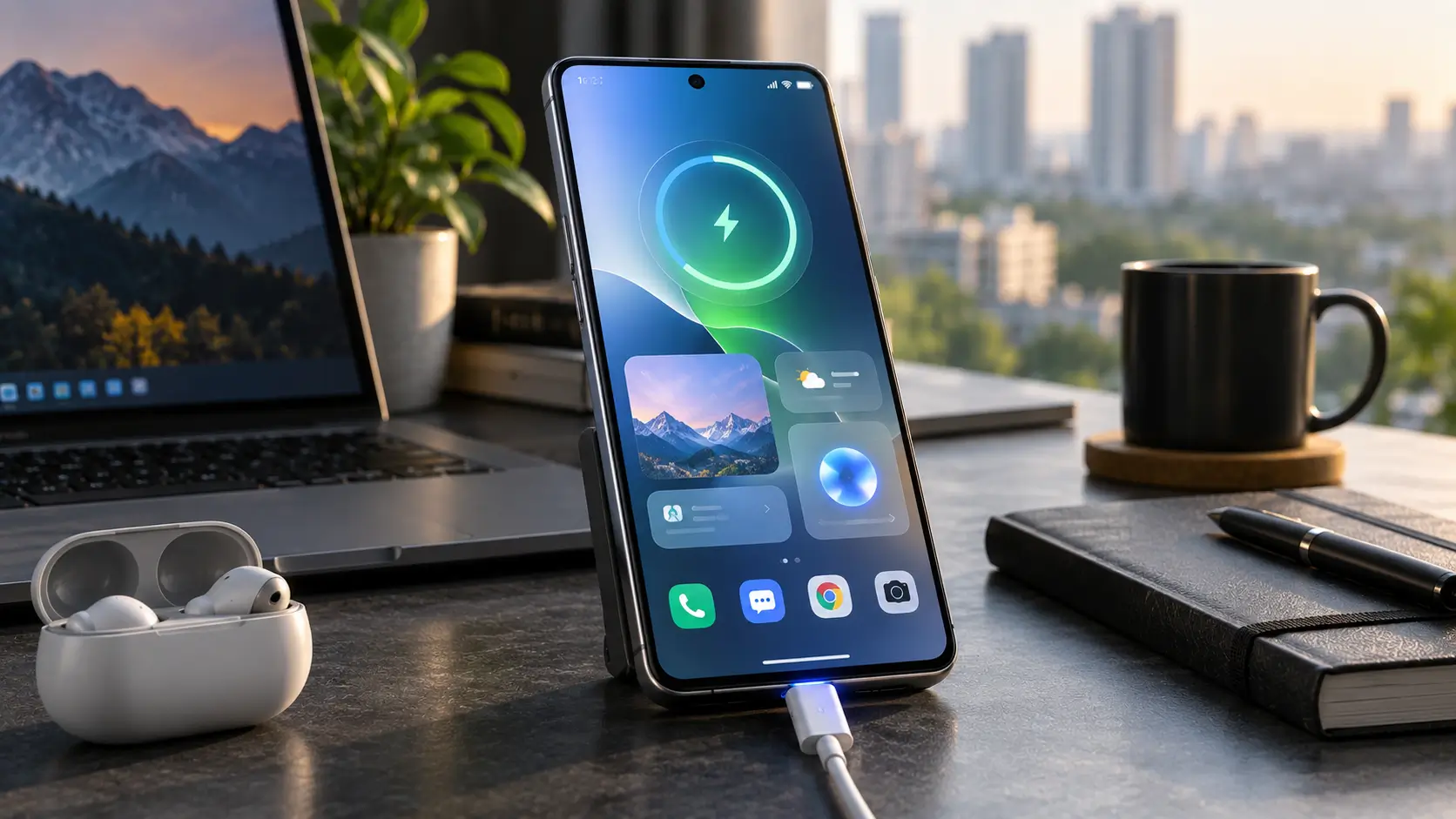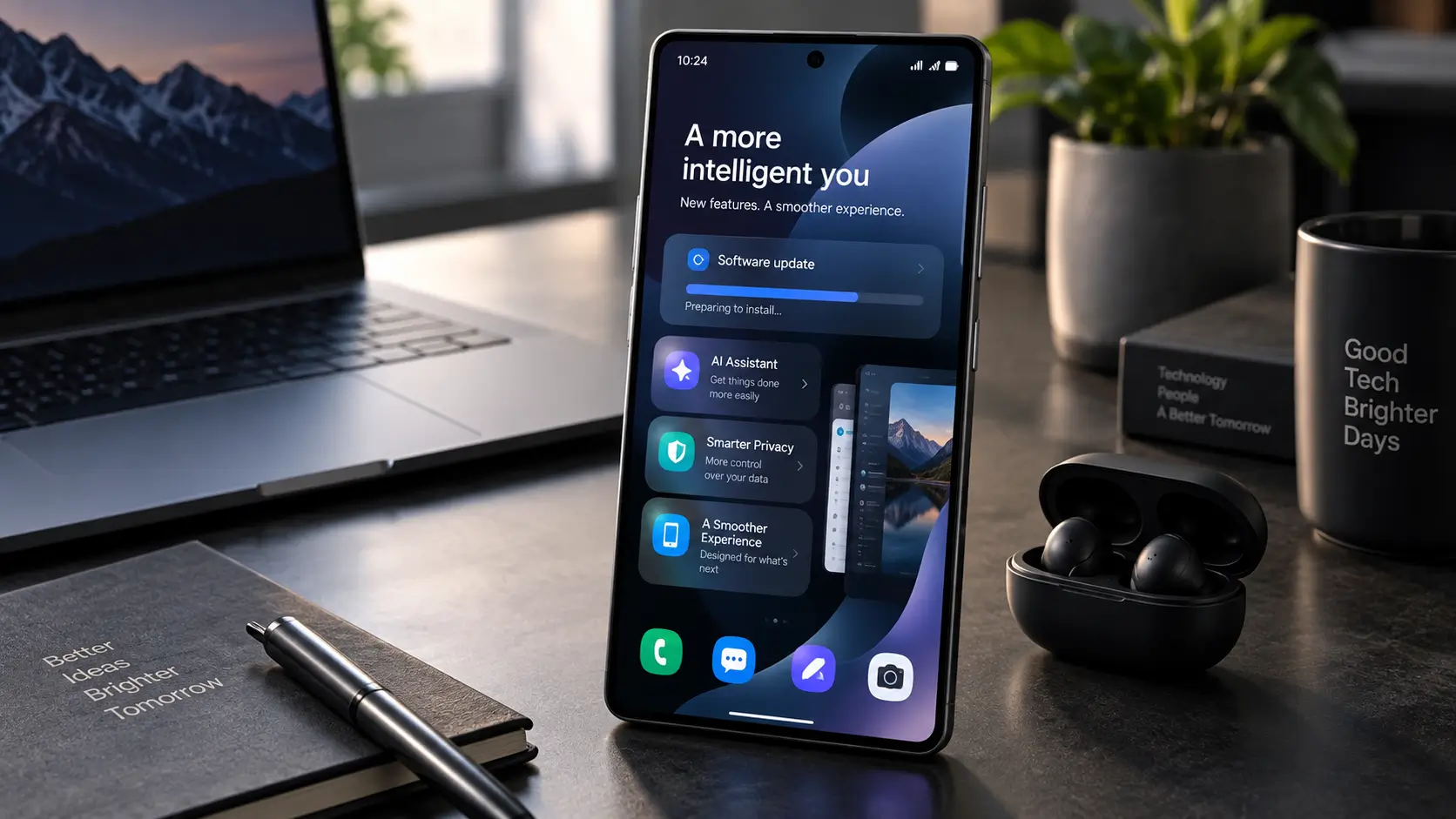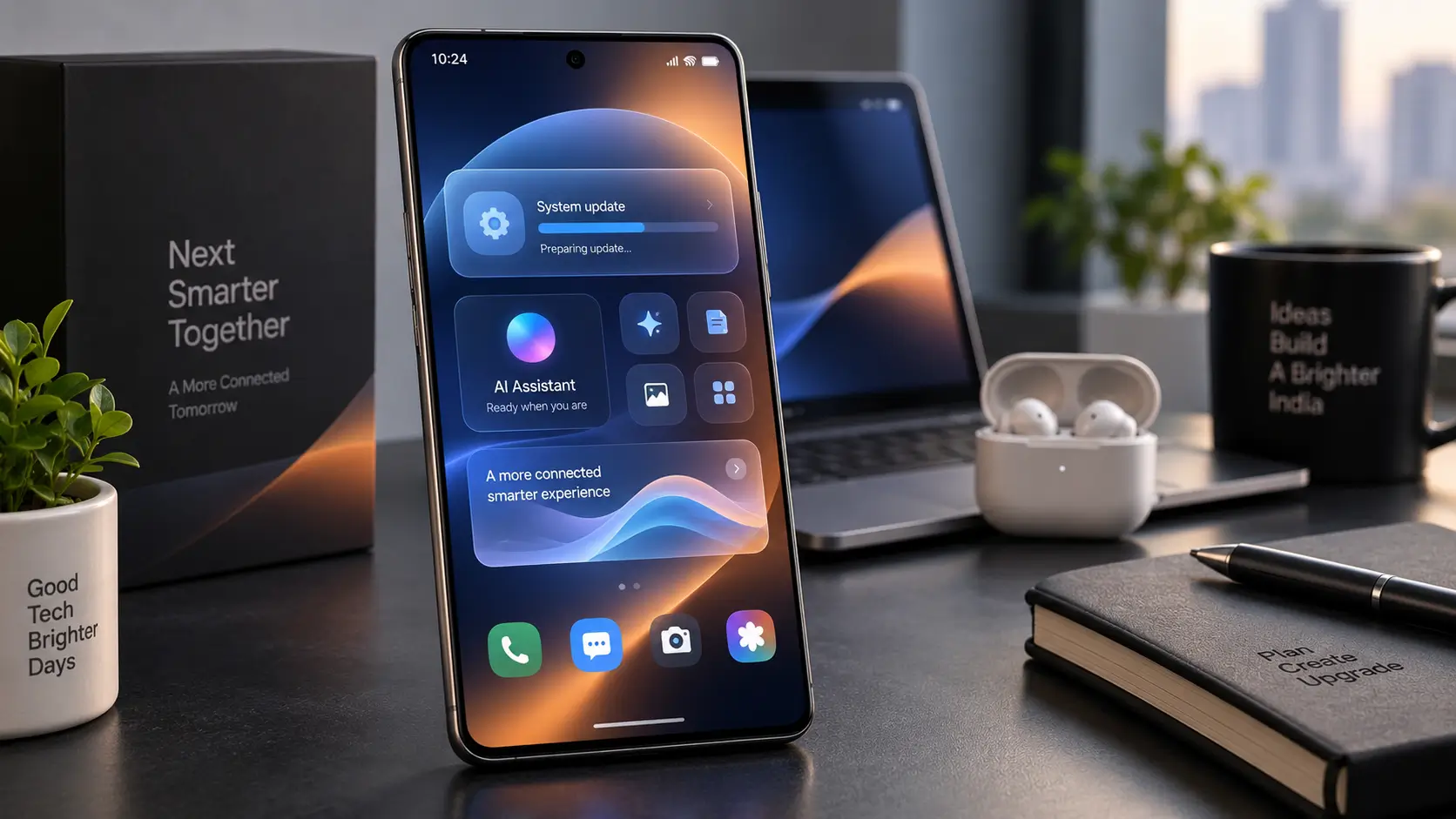
Xiaomi HyperOS 4 is the company’s next major smartphone software update, and it is built around Android 17. Xiaomi has introduced a redesigned visual system, deeper AI capabilities, system-level performance changes and new cross-device functions.
But there is an important distinction between the different stages of the rollout. HyperOS 4 is currently being tested through beta programmes, while Xiaomi has announced a staged stable rollout for China beginning October 15, 2026. The Global and EEA beta programme is already open for selected devices, but Xiaomi has not announced a universal stable release date for India.
That means Indian Xiaomi, Redmi and POCO users should be careful with online “release date” and “eligible device” lists. A Chinese stable schedule, a Global beta build and an India stable OTA are three different things.
Quick answer
Xiaomi HyperOS 4 is an Android 17-based operating system update with a new Soft Light Glass design, expanded customization, HyperCore performance improvements and Super XiaoAI 2.0.
Xiaomi began HyperOS 4 beta testing in China in August. Its Global/EEA beta programme opened in September for selected devices, while the Chinese stable rollout is scheduled to begin on October 15, 2026.
As of September 18, Xiaomi has not announced a universal stable HyperOS 4 release date for India.
What is Xiaomi HyperOS 4?
HyperOS 4 is Xiaomi’s latest generation of its operating-system platform for smartphones and other connected devices.
The update focuses on three broad areas: visual design, system performance and AI-assisted interaction.
The visual overhaul is built around what Xiaomi calls Soft Light Glass, a translucent material and lighting system designed to create more depth and dynamic visual feedback throughout the interface.
At the same time, Xiaomi is changing how the system manages workloads and memory and is expanding Super XiaoAI, its AI assistant.
Is HyperOS 4 based on Android 17?
Yes.
HyperOS 4 is Xiaomi’s Android 17-based software generation.
However, the Android version and Xiaomi’s HyperOS version should not be treated as the same thing. Android provides the underlying platform, while HyperOS adds Xiaomi’s own interface, system services, AI capabilities and ecosystem functions.
This distinction is useful when comparing Xiaomi’s update with Android 17 releases from Samsung, Google and other manufacturers.
What’s new in HyperOS 4?
1. Soft Light Glass design
The most visible change is Xiaomi’s new Soft Light Glass visual language.
The interface uses translucent materials, adaptive lighting and layered depth to make system elements appear more dynamic.
Xiaomi says the system can adapt transparency according to displayed content, while interactions can trigger fluid lighting effects.
The effect is intended to make the interface feel less static.
However, Xiaomi also states that the exact appearance depends on the device model and system version. Some of the more demanding graphical effects are limited to supported hardware.
2. More lock-screen customization
HyperOS 4 gives users more control over the lock screen.
The clock can be resized and arranged in different layouts, with additional typography and styling options.
This is part of a wider effort to make the home and lock screens more configurable rather than relying on a fixed layout.
3. Stacked notifications
Notifications receive a more spatial presentation.
Instead of displaying every notification as an equally flat element, HyperOS 4 can group them into stacked cards.
The objective is to preserve more of the wallpaper while keeping the notification feed readable.
4. Resizable folders
Home-screen folders become more flexible.
Xiaomi’s HyperOS 4 interface allows folders to use different sizes, giving users more control over how applications are arranged.
This can be useful for users who keep large numbers of apps on the home screen.
5. Stacked widgets
Widgets can also be grouped into stacks.
The feature is designed to provide access to multiple information panels without consuming as much home-screen space.
Availability can vary by market and device.
HyperOS 4 also focuses on performance
The visual redesign is only one part of the update.
Xiaomi has added system-level technologies under its HyperCore architecture, including load calculation and memory preloading.
The company says these changes are intended to improve responsiveness by better predicting workloads and preparing resources before they are required.
Xiaomi’s own laboratory comparisons on the Xiaomi 17 Ultra reported that, after nine hours of use, launching 30 applications took 139.7 seconds on HyperOS 4 compared with 169.4 seconds on HyperOS 3, a claimed 17.5% reduction.
These are Xiaomi’s internal laboratory results, not independent benchmark testing. Actual performance can vary depending on hardware, software version, workload and testing conditions.
That distinction matters when evaluating performance claims.
Super XiaoAI 2.0 brings more AI functions
One of HyperOS 4’s largest changes is Super XiaoAI 2.0.
Xiaomi says the assistant uses its MiMo large language model and can handle more complex tasks than a conventional voice assistant.
The company has demonstrated capabilities including:
- task planning;
- content generation;
- image-related actions;
- photo organization;
- travel planning;
- smart-home interaction;
- cross-device functions;
- AI-assisted notes;
- voice recording summaries.
Expert mode
Super XiaoAI 2.0 also introduces an Expert Mode for supported devices and scenarios.
Xiaomi says this mode can support more advanced system-level actions and content-generation capabilities.
The company describes functions including deep research, presentation generation, webpage creation and video generation.
However, AI-generated results can contain errors or incomplete information, so important output should be checked before it is used.
AI can also interact with on-screen content
Another HyperOS 4 feature is the so-called Inspiration Ball.
Xiaomi demonstrates the ability to point at information displayed on the screen and ask the assistant to perform an action.
Examples shown by Xiaomi include using a location to initiate navigation, identifying an item and finding related shopping information, extracting event information for a calendar and performing photo-editing actions.
These functions are dependent on supported devices, applications, languages and regional services.
Cross-device functions are expanding
HyperOS 4 is also designed to connect Xiaomi phones, tablets and computers more closely.
Xiaomi’s official material describes functions such as:
- shared device control;
- cross-device notifications;
- shared clipboard functions;
- file access across compatible devices;
- conversation handoff;
- ecosystem device management.
Some functions require compatible Xiaomi devices, the same Xiaomi Account and particular software versions.
Certain AI and cross-device functions are also limited by region.
HyperOS 4 rollout status
This is where readers need to be particularly careful.
China beta
Xiaomi began its China HyperOS 4 beta programme in August 2026.
The beta programme was divided into multiple waves, covering newer Xiaomi, Redmi and tablet models.
China stable rollout
Xiaomi’s Chinese rollout schedule currently indicates that the stable HyperOS 4 rollout begins on October 15, 2026.
The first wave includes newer Xiaomi 17-series phones, selected Redmi K-series models and Xiaomi Pad 8-series devices.
Later waves extend to additional smartphones, tablets, TVs and wearables.
This schedule is for the Chinese ecosystem and should not automatically be treated as India’s rollout calendar.
Global and EEA beta
Xiaomi has now opened HyperOS 4 Global/EEA beta recruitment.
The first group included:
- Xiaomi 17
- Xiaomi 17 Ultra
- Leica Leitzphone powered by Xiaomi
The programme expanded on September 17 to include:
- Xiaomi 17T Pro
- Xiaomi 17T
- Xiaomi 15
- Xiaomi 15 Ultra
The beta programme is available only to eligible devices using supported Global or EEA software versions.
What about HyperOS 4 in India?
For Indian users, this is the most important unanswered question.
As of September 18, 2026, Xiaomi has not published a universal stable HyperOS 4 India rollout date in the official material reviewed for this article.
That means headlines claiming that HyperOS 4 will definitely arrive in India on a specific date should be treated cautiously unless Xiaomi confirms the date.
The Global/EEA beta programme is an important sign that international testing has begun, but Global beta does not equal India stable rollout.
India-specific availability can also depend on the ROM version installed on the phone, model, carrier considerations and Xiaomi’s regional rollout process.
Which Xiaomi phones get HyperOS 4?
A definitive global/India list should not be created by simply copying third-party eligibility lists.
The following devices are officially associated with the current Global/EEA beta programme:
| Device | Current status |
|---|---|
| Xiaomi 17 | Global/EEA beta |
| Xiaomi 17 Ultra | Global/EEA beta |
| Leica Leitzphone powered by Xiaomi | Global/EEA beta |
| Xiaomi 17T Pro | Global/EEA beta recruitment expanded September 17 |
| Xiaomi 17T | Global/EEA beta recruitment expanded September 17 |
| Xiaomi 15 | Global/EEA beta recruitment expanded September 17 |
| Xiaomi 15 Ultra | Global/EEA beta recruitment expanded September 17 |
This table describes the Global/EEA beta programme, not the complete stable eligibility list for India.
Many other Xiaomi, Redmi and POCO devices are expected by third-party trackers to receive HyperOS 4, but those predictions should be labelled accordingly until Xiaomi confirms them for the relevant region.
What is not confirmed?
Several points remain important:
India stable release date: Not officially announced.
Exact stable date for every Global model: Not officially announced.
Complete India eligibility list: Do not treat third-party lists as official unless Xiaomi confirms them.
Feature availability: Some HyperOS 4 functions vary by device, region, language and software version.
Performance gains: Xiaomi’s published numbers are internal laboratory results rather than independent testing.
How to check for a HyperOS update
On a Xiaomi phone, the standard update path is:
- Open Settings.
- Tap About phone.
- Select Xiaomi HyperOS.
- Tap Check for updates.
Xiaomi’s support documentation gives this procedure for checking system updates.
If HyperOS 4 is not available, that does not by itself prove that the phone is permanently excluded. Rollouts can be staged.
Should Indian users install the HyperOS 4 beta?
Users should treat beta software differently from a stable update.
A beta build can contain bugs, compatibility problems or temporary battery and temperature changes.
Xiaomi’s Global beta information specifically describes the programme as an early version intended for testing and feedback. Xiaomi also notes that after an upgrade, background app recompilation and optimization can temporarily increase power consumption or device temperature before the system settles.
For a primary everyday phone, users who depend on maximum stability may prefer to wait for the official stable release rather than installing beta software solely to access new features early.
What HyperOS 4 means for Indian Xiaomi users
The biggest change is not one individual feature.
HyperOS 4 represents Xiaomi’s broader attempt to combine three things:
A more expressive interface: Soft Light Glass, deeper visual effects and more customization.
A more optimized system: HyperCore changes for workload and memory management.
A more capable AI layer: Super XiaoAI 2.0 and Xiaomi’s MiMo model.
For Indian users, however, the practical experience will depend heavily on the specific phone and regional software version.
Features shown by Xiaomi in China may not necessarily appear identically on an Indian or Global device.
Bottom line
Xiaomi HyperOS 4 is a substantial Android 17-based update rather than a simple visual refresh. Its major changes include the Soft Light Glass interface, expanded home-screen customization, HyperCore performance work, Super XiaoAI 2.0 and broader cross-device functionality.
As of September 18, 2026, the software is moving through beta testing internationally, while Xiaomi’s Chinese stable rollout is scheduled to begin October 15.
For Indian Xiaomi, Redmi and POCO users, the most important fact is that there is not yet a universal official India stable-release date. Treat unofficial device lists and India rollout predictions as estimates until Xiaomi confirms them.
For now, the safest approach is to monitor Xiaomi’s official channels and check the software-update section of the phone when the regional rollout begins.
FAQ
What is Xiaomi HyperOS 4?
Xiaomi HyperOS 4 is Xiaomi’s Android 17-based operating system update, introducing a redesigned interface, performance improvements and expanded AI capabilities.
Is HyperOS 4 based on Android 17?
Yes. Xiaomi HyperOS 4 is based on Android 17.
When will HyperOS 4 stable release?
Xiaomi’s Chinese rollout schedule starts stable HyperOS 4 distribution on October 15, 2026. This is not an India or universal Global release date.
Is HyperOS 4 available in India?
HyperOS 4 does not yet have a universally announced India stable-release date as of September 18, 2026. Global/EEA beta testing has begun, but that should not be treated as confirmation of an India stable rollout.
What are the main HyperOS 4 features?
Major features include Soft Light Glass, expanded lock-screen customization, stacked notifications and widgets, resizable folders, HyperCore performance improvements and Super XiaoAI 2.0.
Which Xiaomi phones are currently in the Global HyperOS 4 beta?
The Global/EEA programme initially included the Xiaomi 17, Xiaomi 17 Ultra and Leica Leitzphone powered by Xiaomi. Recruitment expanded on September 17 to the Xiaomi 17T Pro, 17T, Xiaomi 15 and Xiaomi 15 Ultra.
How do I check for a HyperOS update?
Go to Settings → About phone → Xiaomi HyperOS → Check for updates.
Will every HyperOS 4 feature work on every Xiaomi phone?
No. Xiaomi says availability can vary according to device model, region, language and software version.
DISCLAIMER
HyperOS 4 is being rolled out in stages, and availability can differ by device, region, software version and language. China, Global/EEA and India rollout schedules should not be treated as interchangeable. Verify the latest update information with Xiaomi before installing beta software or relying on a specific release date.