Apple Pay could finally be coming to India, but the most important detail is that the reported launch is not yet an official Apple announcement.
Reuters reported on September 18, 2026, that Apple is preparing to launch Apple Pay in India in October, initially with Axis Bank credit cards. The report cites three people familiar with the matter. Reuters also reported that Apple has held discussions with HDFC Bank and ICICI Bank, although agreements with those banks had not been finalized at the time.
Apple’s own current Apple Pay availability information still does not list India as a supported Apple Pay market.
That makes the current situation straightforward: Apple Pay India is a reported upcoming development, not an already-confirmed launch.
Quick Answer
Apple Pay is reportedly coming to India in October 2026, beginning with Axis Bank credit cards, according to Reuters.
However, Apple has not publicly confirmed the Indian launch as of September 19, 2026.
If the reported rollout happens, Indian iPhone users could gain a new way to make contactless card payments through Apple Wallet and compatible Apple devices, alongside India’s existing UPI payment ecosystem.
Is Apple Pay Available in India Right Now?
No official Apple Pay India launch has been confirmed yet.
Apple’s current feature-availability information lists the countries and regions where Apple Pay is supported, and India is not currently included in that list.
Apple’s India support documentation does explain the normal Apple Pay setup process. Users generally add an eligible debit or credit card to Apple Wallet, authenticate the card with the issuing bank when required, and then use a compatible Apple device for payments.
The important difference is that having Apple Pay documentation on Apple’s Indian website does not mean the service is currently available with Indian-issued cards.
What Did Reuters Report?
Reuters reported on September 18 that Apple is preparing an India rollout for October.
According to the report, Axis Bank would be the first banking partner, with Axis Bank credit cards supported initially.
Reuters said Apple has also been in discussions with HDFC Bank and ICICI Bank. However, the report said commercial terms with those banks had not been finalized.
All three sources cited by Reuters spoke anonymously because the discussions were private.
Apple did not publicly confirm the reported launch in the Reuters report.
For readers, this distinction matters. An October launch is currently best described as reported or planned, rather than confirmed.
Why Axis Bank Matters
Axis Bank is reportedly expected to be the first Indian bank to support Apple Pay.
The reported rollout would therefore probably begin with a relatively limited set of eligible cards rather than opening Apple Pay to every Indian credit or debit card immediately.
This would also mean that an iPhone user having a card from another Indian bank should not assume that the card will work on day one.
Apple Pay depends on participation by card issuers and payment networks. Apple explains that users need a supported card from a participating issuer to set up the service.
So even if Apple launches Apple Pay in India in October, the initial supported-card list will be an important part of the rollout.
What About HDFC Bank and ICICI Bank?
Reuters reported that Apple has discussed Apple Pay support with HDFC Bank and ICICI Bank.
Neither should currently be described as confirmed launch partners.
The commercial arrangements reportedly remained unresolved when Reuters published its September 18 report.
That means Indian users should wait for Apple or the individual banks to publish official support information before assuming that a particular HDFC or ICICI card will work with Apple Pay.
How Does Apple Pay Work?
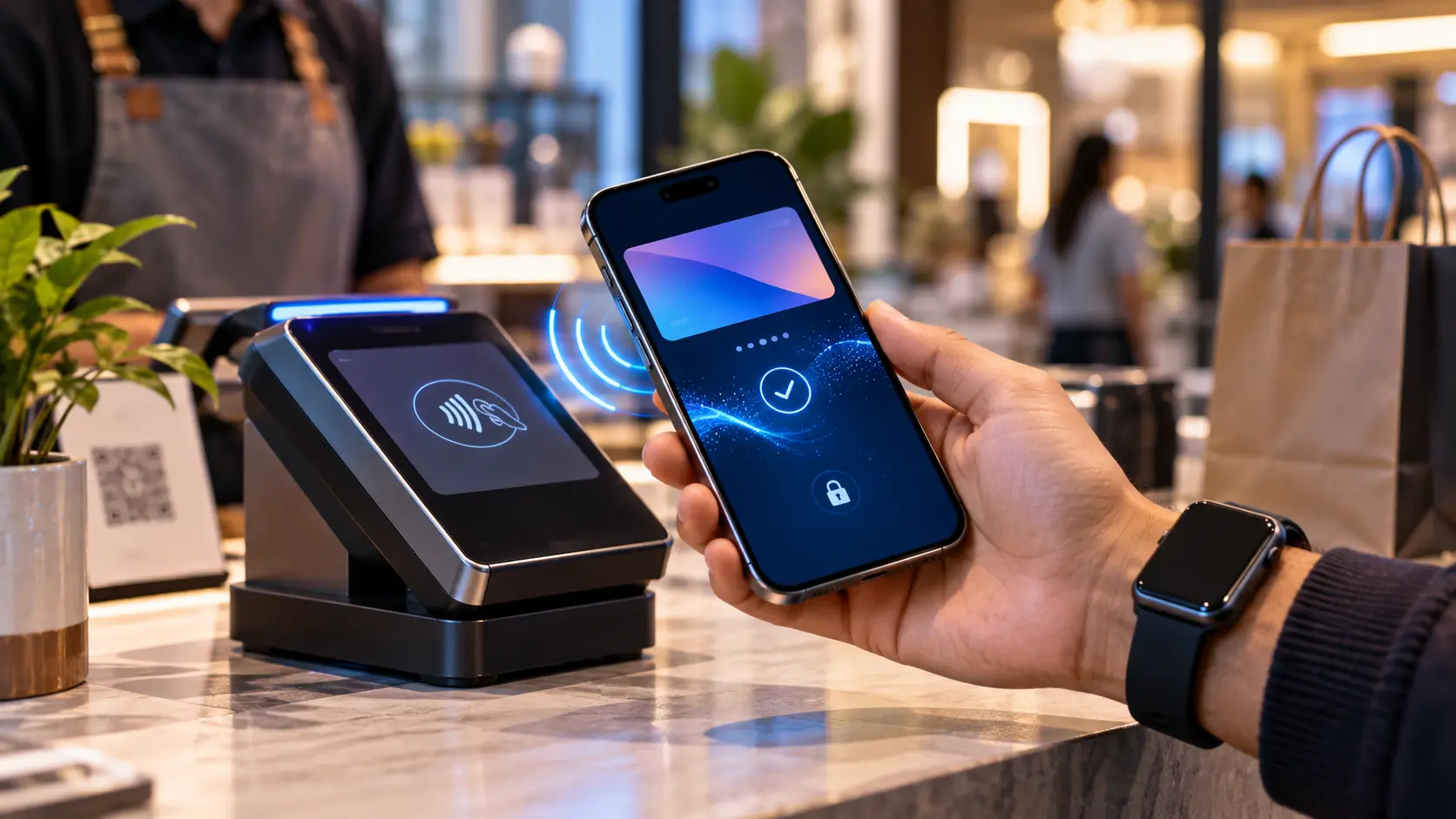
Apple Pay is designed to let users pay using compatible Apple devices without handing the physical card to the merchant.
When a supported card is added to Apple Wallet, payment credentials are tokenised rather than simply exposing the original card number to the merchant during a transaction.
For an in-store purchase, the user typically authenticates the payment using Face ID, Touch ID or the device passcode and brings the compatible device near a contactless payment terminal.
The exact experience depends on the device, card issuer, payment network and market.
Apple’s support documentation states that Apple Pay requires a compatible device, a supported card from a participating issuer and an Apple Account signed in to the device.
Apple Pay vs UPI in India
Apple Pay would enter a market that already has a very mature mobile-payment ecosystem.
India’s UPI system supports QR payments, account-to-account transfers and increasingly NFC-based Tap & Pay functionality.
NPCI’s 2026 guidelines document UPI Tap to Pay, while recent reporting has highlighted the expansion of NFC-based UPI payments.
This creates an important distinction.
Apple Pay is primarily a card-wallet system.
UPI is an account-based payment system.
An Apple Pay transaction can use an eligible card stored in Apple Wallet, while UPI transactions generally move money through a linked bank account using the UPI ecosystem.
Therefore, Apple Pay would not simply be another version of Google Pay or PhonePe.
Its role in India would be closer to bringing Apple’s card-based contactless wallet experience to Indian-issued cards.
Could Apple Pay Replace UPI?
It is unlikely that Apple Pay would simply replace UPI for Indian users.
The two systems serve different purposes.
UPI is deeply integrated into India’s digital-payment infrastructure and is widely used for QR-based merchant payments, person-to-person transfers and other account-based transactions.
Apple Pay would provide an alternative card-based contactless payment experience for eligible Apple-device users.
For an iPhone owner who already uses UPI, Apple Pay could therefore become an additional payment option rather than a replacement.
The practical usefulness will depend heavily on which banks and card networks participate and how widely merchants accept compatible contactless payments.
What Indian iPhone Users Should Expect
If the reported October rollout takes place, users should expect a phased introduction rather than universal availability from day one.
The first question will be whether their bank and specific card are supported.
The second will be whether their iPhone or Apple Watch is compatible and running the required software.
The third will be merchant acceptance.
A compatible Apple device alone will not guarantee that every payment terminal can accept the transaction. The merchant’s payment infrastructure must support the relevant contactless payment method.
Apple’s normal Apple Pay process also requires card-issuer approval where applicable.
Is Apple Pay Safe?
Apple Pay uses tokenisation and device authentication as part of its payment architecture.
That does not mean digital payments are completely risk-free.
Users should still protect their Apple Account, device passcode and banking credentials, and should contact their card issuer if they notice an unauthorized transaction.
Apple also states that it is a service provider rather than a bank and that cards used through Apple Pay are provided by the card issuer.
For Indian users, the bank’s own security policies and card terms will remain important after Apple Pay becomes available.
What Is Confirmed and What Is Not?
The current situation can be summarized simply.
Confirmed: Apple Pay is an established Apple service and is supported in many global markets.
Confirmed: Apple’s current availability information does not list India.
Reported: Apple is preparing an October 2026 India rollout.
Reported: Axis Bank credit cards are expected to be supported first.
Reported: Apple has discussed partnerships with HDFC Bank and ICICI Bank.
Not confirmed: A final public Apple launch date for India.
Not confirmed: Complete Indian bank and card support.
This distinction should remain until Apple and participating banks publish their official launch information.
What This Means for Indian Users
The potential India launch is significant because it would bring Apple’s card-based contactless wallet model into one of the world’s most developed digital-payment markets.
But Indian users already have extensive digital-payment options through UPI.
The more interesting question is therefore not whether Apple Pay will “replace” UPI. It is whether Apple can build enough bank and card support to make contactless card payments genuinely convenient for Indian iPhone users.
If Axis Bank is indeed the first partner, the initial rollout may be relatively narrow. Wider adoption would depend on additional banks, card networks and merchant acceptance.
For now, Indian iPhone users should treat October as the reported target, not a guaranteed launch date.
Bottom Line
Apple Pay may finally be coming to India, with Reuters reporting an October 2026 rollout beginning with Axis Bank credit cards.
But Apple has not officially confirmed that launch as of September 19.
The reported development is still important because it could give Indian iPhone and Apple Watch users a native card-based contactless payment option through Apple Wallet.
The biggest questions now are when Apple will make the launch official, which Axis Bank cards will qualify, when HDFC and ICICI support might arrive, and how broadly Apple Pay will be accepted by Indian merchants.
Until those details are officially published, the safest description is Apple Pay is reportedly preparing to enter India—not that Apple Pay has already launched.
FAQ
Is Apple Pay available in India?
No. As of September 19, 2026, Apple’s current Apple Pay market-availability information does not list India. A launch has been reported for October, but Apple has not publicly confirmed it.
When will Apple Pay launch in India?
Reuters reported that Apple is preparing an October 2026 India rollout, but Apple has not publicly confirmed a specific launch date.
Will Axis Bank support Apple Pay in India?
Reuters reported that Axis Bank credit cards are expected to be the first Indian cards supported by Apple Pay. This remains a reported rollout plan rather than an official Apple announcement.
Will HDFC Bank and ICICI Bank support Apple Pay?
Reuters reported that Apple has discussed support with HDFC Bank and ICICI Bank, but commercial terms had not been finalized when the report was published.
Is Apple Pay the same as UPI?
No. Apple Pay is primarily a card-based digital wallet using tokenised payment credentials, while UPI is India’s account-based instant-payment infrastructure.
Can Apple Pay replace UPI in India?
Apple Pay would more likely complement UPI than replace it because the two systems use different payment models and support different use cases.
How does Apple Pay work?
Apple Pay allows an eligible debit or credit card to be added to Apple Wallet and used on compatible devices for supported contactless payments, subject to card-issuer and regional availability.
Will Apple Pay work on Apple Watch in India?
Apple’s standard Apple Pay system supports compatible Apple Watch devices, but whether an Indian-issued card can be added will depend on official Indian availability and participating card issuers.
DISCLAIMER
Apple Pay India disclaimer: This article covers a reported upcoming service rollout. As of September 19, 2026, Apple has not publicly confirmed an India launch date or complete list of participating Indian banks. Bank support, launch timing, card eligibility and availability may change. Verify the latest information with Apple and the relevant card issuer before relying on the reported rollout.